
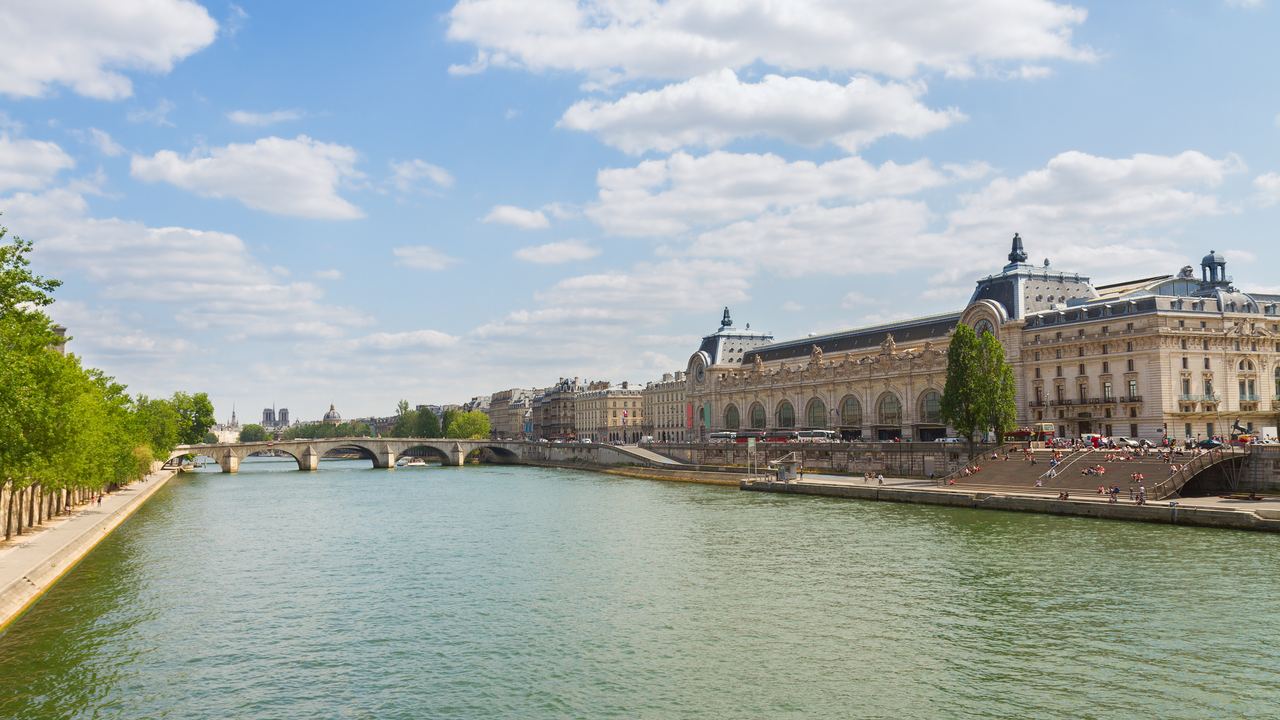
Out of the 44 statements examined below, 13 are true, 16 are false, 9 are partially true, 2 are debatable, and 4 are based on no source that we were able to find. Three verdicts are provided before the visit: Impression, soleil levant is not at the Musée d'Orsay, the Starry Night at the Musée d'Orsay is not the one at the MoMA, and the station was not inaugurated on May 28, 1900. Each verdict links to a notice from the Ministry of Culture, a Mérimée record, or, if none of those are available, a Wikipedia page that we name.
How to read the verdicts
True means that we have a primary source or two concurring sources. Partially: the statement mixes two facts, of which only one is correct. Disputed: the sources contradict each other, and we state this. Not established: we have searched without finding anything, which is not the same as "false."
The Joconde database entry provides an inventory, details about how the artwork entered the collection, and the dates of its acquisition. However, it does not specify which room the artwork is currently displayed in, and we do not provide that information either, as the display arrangements can change.
Where are the paintings and sculptures that we believe are actually at the Musée d'Orsay?
| What's being read | Verdict | Here's what the sources say |
|---|---|---|
| "Impression, Sunrise is at the Musée d'Orsay." | Incorrect | It is currently at the Musée Marmottan Monet, which received it as a donation in 1940. It was stolen in 1985, but was recovered in December 1990 (Wikipedia). |
| "The Water Lilies are at the Musée d'Orsay." | Partially | The main collection is located at the Musée de l'Orangerie. The Musée d'Orsay holds "Water Lilies in Blue" (RF 1981 40, acquired in 1981) and "The Water Lily Pond, Green Harmony" (RF 2004, bequeathed in 1911). |
| "The 'Starry Night' at the Musée d'Orsay is, in essence, the 'Starry Night'." | Incorrect | The Musée d'Orsay holds the painting "The Rhône" from 1888, painted in Arles (RF 1975 19, donated with a usufruct right in 1975, acquired by Orsay in 1995). "The Starry Night" from 1889 is at the MoMA. |
| "The Little Dancer of the Orsay Museum is made of wax." | Incorrect | The Musée d'Orsay holds a bronze sculpture (RF 2137), which was acquired in 1930 and entered the collection in 1931. The original wax model is held by the National Gallery of Art in Washington. |
| "A Sunday on La Grande Jatte is at the Musée d'Orsay." | Incorrect | Seurat's painting is at the Art Institute of Chicago; it was exhibited at the eighth Impressionist exhibition in 1886. The Musée d'Orsay has "The Circus." |
| "The Card Players painting at the Musée d'Orsay is worth $250 million." | Incorrect | The "Orsay" version is a two-player game (RF 1969, legs from 1911). In 2011, Qatar purchased another version, reportedly for a price estimated between $250 and $320 million (as reported by Vanity Fair, cited by Wikipedia). |
| "The painting by Whistler is called 'Whistler's Mother'." | Partially | The description refers to a "Black and white study, No. 1," with the subtitle "or The Artist's Mother." The artwork was purchased by the state in 1891 (inventory number RF 699). |
| "There is only one Moulin de la Galette ball." | Incorrect | The painting at the Musée d'Orsay measures 131 x 175 cm. Renoir also painted a smaller version (78 x 114 cm), which is in a private collection and was sold in 1990 for 78 million dollars (Wikipedia). |
| "The Musée d'Orsay houses five paintings depicting the Rouen Cathedral." | True | Five entries: RF 1999, 2000, 2001, and 2002 (acquired under the 1911 legislation), and RF 2779 (acquired in 1907). |
| "Monet's "The Bridge at Argenteuil" has been damaged." | True | On the night of October 6, 2007, during the "White Night" event, the canvas was torn by approximately ten centimeters and subsequently restored (Wikipedia). |
| "The parquet floor sanders are part of the Caillebotte collection." | Incorrect | No, it is a donation from the heirs of Gustave Caillebotte and Renoir, which was accepted in addition to the bequest and entered the collection along with it in 1894. The museum's record lists it as a donation: "Accepted by the State as a donation from the heirs of Gustave Caillebotte, through Auguste Renoir, his executor." (RF 2718). |
How did these paintings come to be in the museum?
Here, the core of the legends is concentrated. Almost every major painting in the museum has its story of acquisition, donation, or bequest, and the Mona Lisa entry states it in a single line: mode of acquisition, year, and sometimes provenance. The page on the museum's masterpieces repeats these lines for over sixty works.
| What's being read | Verdict | Here's what the sources say |
|---|---|---|
| "Olympia was acquired through a public offering." | True | The inscription reads: "Donated through public subscription, at the initiative of Claude Monet," in 1890. The painting had remained in the possession of Manet's widow. |
| "Olympia caused a scandal." | True | Painted in 1863, it was exhibited at the 1865 Salon, where it caused a sensational scandal (Wikipedia). |
| "Olympia has always been at the Louvre, and then at the Musée d'Orsay." | Incorrect | She joined the Musée du Luxembourg in 1890, then moved to the Louvre, and was only assigned to the Musée d'Orsay in 1986 (note). |
| "Le Déjeuner sur l'herbe was rejected by the Salon." | True | Rejected by the jury in 1863, it was exhibited at the exhibition of works not admitted, known as the "Salon des Refusés," which opened on May 15, 1863. |
| "The painting known as 'Le Déjeuner sur l'herbe' was originally called 'Le Bain'." | True | This is its original title; the description specifies "formerly known as 'The Bath'." It was acquired through the Moreau-Nélaton donation in 1906 (inventory number RF 1668). |
| "Lacan hid 'The Origin of the World'." | True | The painting has been part of the collection since 1955 (according to the catalog). His brother-in-law, André Masson, created a double-sided frame for it (Wikipedia). It was donated in 1995. |
| "Khalil-Bey commissioned 'The Origin of the World'." | Partially | The document lists Khalil-Bey as the owner. The word "order" originates from secondary sources, not from the document itself. |
| "The Birth of Venus was purchased by Napoleon III." | True | Inventory number RF 273: "Acquired from the personal property of Napoleon III in 1863," and subsequently transferred to the national museums by court order in 1879. |
| "The Caillebotte bequest has been rejected." | Incorrect | It was not rejected: it was initially accepted in principle, then reduced through an agreement in 1895-1896, with approximately forty works selected from around sixty to seventy that were proposed (sources indicate 65, 67, or 70). The "rejection" is a rumor that originated with Octave Mirbeau in December 1894, and was then amplified by an article by Arsène Alexandre on January 12, 1895 (information from the museum's page on the Caillebotte bequest, accessed on November 17, 2026). |
The station and the museum: what is dated, and what is being discussed?
| What's being read | Verdict | Here's what the sources say |
|---|---|---|
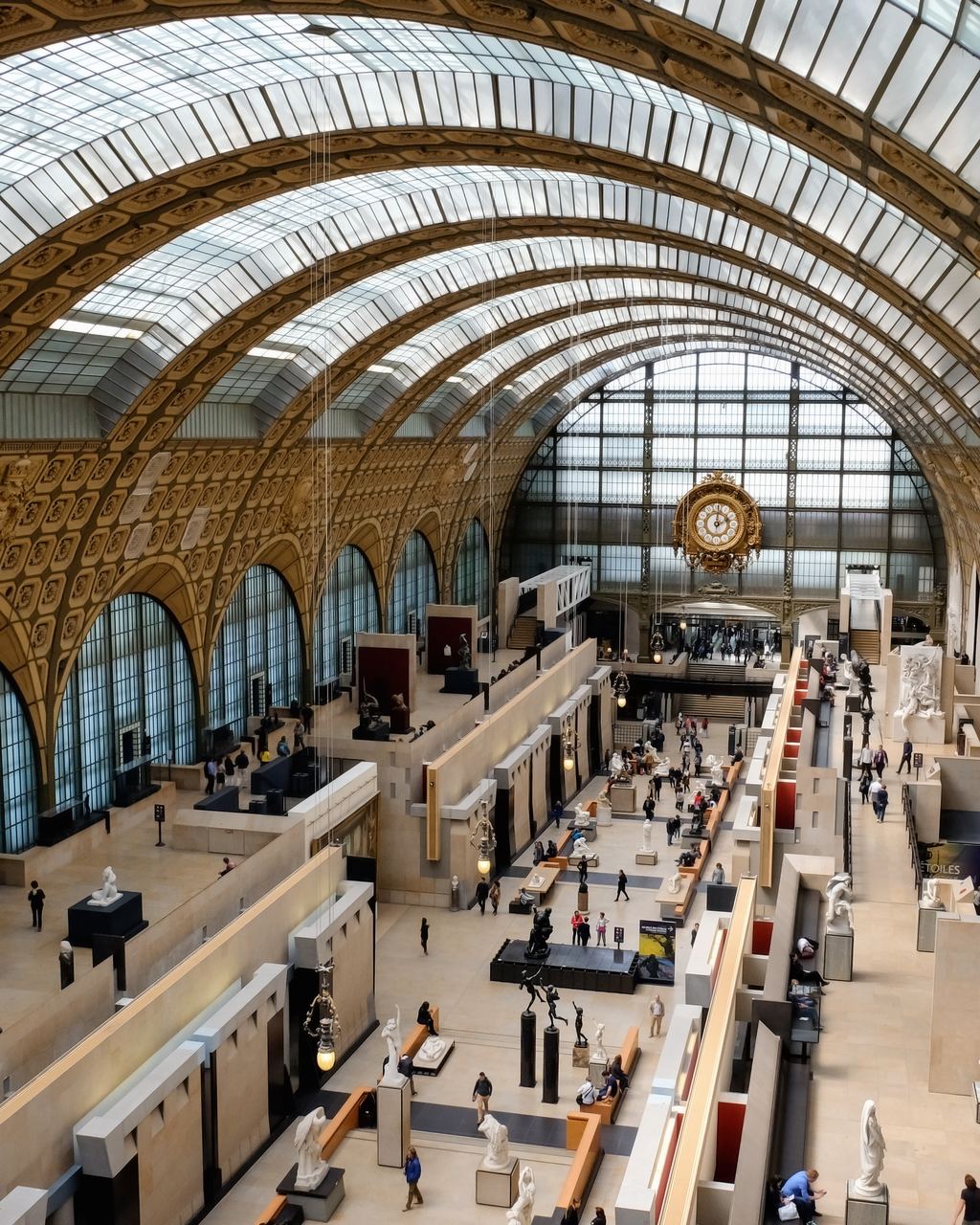
| "The station was inaugurated on May 28, 1900." | Partially | On July 14, 1900, the station and the hotel were inaugurated (Mérimée PA00088689). On May 28th, the electrified line was put into service (Wikipedia). |
| "Three architects designed the train station." | Incorrect | In 1897, the company consulted with Magne, Bénard, and Laloux. Laloux was selected in 1898; he was the author. |
| "It was the first railway station in the world to be electrified." | Discussed | Wikipedia (French version) only states that only electric locomotives entered the station. The phrase "first urban terminal station to be electrified" comes from Wikipedia (English version); we have not verified it. |
| "The hotel near the train station closed in 1973." | True | Mérimée: "In 1973, the hotel closed." |
| "Orson Welles filmed 'The Trial' at a train station." | True | The museum mentions the abandoned train station as one of the film locations used in Orson Welles' adaptation of Kafka's work (museum website); the film was released in 1962. |
| "A press campaign saved the train station." | True | The Ministry of Culture stated that the building was "threatened with demolition" and was "saved by a press campaign" that convinced Jacques Duhamel to designate it as a historical monument in 1973. |
| "Le Corbusier wanted to demolish it." | Partially | Wikipedia states that the proposal is to build a block of apartments there instead. No date or primary source is provided. |
| "The train station has been designated a historical monument since 1973." | Partially | It was added to the supplementary inventory on March 8, 1973 (information about the museum can be found on musee-orsay.fr), and then officially registered on March 15, 1978 (as recorded in the Mérimée database). |
| "Gae Aulenti designed the museum." | Partially | The transformation of the building has been entrusted to the ACT group, the winner of the 1979 competition. Gae Aulenti is responsible for the interior design (Ministry of Culture). |
| "The Musée d'Orsay opened on December 1st, 1986." | Partially | François Mitterrand inaugurated it on December 1, 1986; it opened to the public on December 9th (according to a statement from the ministry). |
| "Mitterrand bought the train station." | Incorrect | The decision to establish the museum dates back to the inter-ministerial meeting of October 20, 1977, initiated by Giscard d'Estaing; Mitterrand confirmed the project and inaugurated the museum on December 1, 1986 (museum website). |
| "The train station is still a train station." | True | The RER C train line runs underneath the museum, at the "Musée d'Orsay – Valéry Giscard d'Estaing" station, which is the station's full name according to Wikipedia. |
| "After the fire, the ruins remained for twenty-seven years." | True | The palace was set on fire during the night of May 23-24, 1871; the ruins were demolished starting in 1898. Chassériau's frescoes remained exposed to the open air for twenty-seven years (Wikipedia). |
Visits, statistics, exhibitions: the common misconceptions that keep resurfacing
| What's being read | Verdict | Here's what the sources say |
|---|---|---|
| "The Musée d'Orsay has the largest collection of Impressionist art in the world." | Discussed | The statement comes from the French Wikipedia. We found neither a comparative count nor a source from the museum; therefore, we wrote "one of the most important." |
| "Nearly 5 million visitors to the Musée d'Orsay." | Partially | The Musée d'Orsay received 3,785,134 visitors in 2025, a record slightly below the 2023 figure of 3,871,498. Combining the Musée d'Orsay and the Musée de l'Orangerie, the total number of visitors is approximately 4.9 million (according to a statement from the institution). |
| "Thursday night is free of charge." | Incorrect | It has its own separate pricing for evening hours, which is displayed on the [ticket page](https://dorsay.museum/billets-audioguides/). The free admission on the first Sunday of each month is another rule. |
| "Photography is prohibited." | Incorrect | Visitor Regulations (articles 60 and 61), as of November 6, 2026: Photography and video recording are permitted for strictly private use only, without the use of flash, tripods, or extension poles. Photography may be prohibited for certain artworks, and is completely prohibited in some temporary exhibitions. |
| "All of the Impressionist exhibitions were a failure." | Incorrect | 1879: Nearly 16,000 visitors, and the profits were redistributed to the exhibitors; 1882: Apparently a critical and commercial success. The years 1874, 1876, 1877, 1880, and 1881 were either unprofitable or poorly received (information from the Wikipedia pages for each exhibition). |
| "The Impressionists chose that name for themselves." | Incorrect | The 1874 exhibition was not labeled in any way. The term, which is derogatory, was popularized by the journalist Louis Leroy in the newspaper Le Charivari (Wikipedia). |
| "Manet was an Impressionist and exhibited with them." | Incorrect | Wikipedia describes him as being considered the leader of this young school, "with which he, incidentally, does not exhibit any works." |
| "Tuesday is the worst day to come." | Not applicable | No daily visitor counts are published. The museum’s only attendance chart dates from 2021: see our guide to visitor numbers. |
| "The structure weighs more than the Eiffel Tower." | Not applicable | The quantities of metal involved are not mentioned in either the Mérimée database or the museum's publications. No website that provides this information cites any sources. |
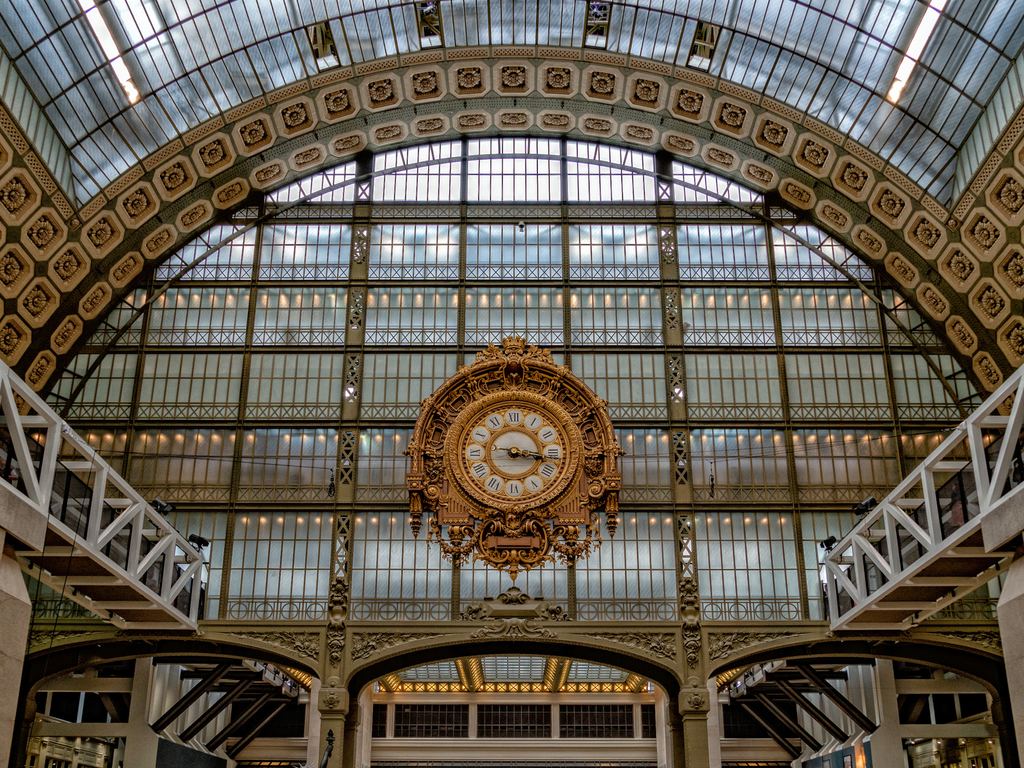
| "The glass roof covers tens of thousands of square meters." | Not applicable | The same observation applies to the glass surfaces. Mérimée provides the dimensions of the main nave (32 meters high, 40 meters wide, and 138 meters long), but not the area of the glass. |
| "A hidden staircase leads up inside the clock tower." | Not applicable | We found no source, neither in the museum nor in Mérimée's archives. It's a legend that keeps being repeated. |
The last three lines deserve a mention. These figures, a tonnage of metal, surface areas of glass, a hidden staircase, are copied from site to site. We have not found any primary sources: the Mérimée record does not provide them, nor does the museum. When a figure is copied without an origin, the correct approach is not to disprove it, but not to repeat it. The weight that is documented, on the other hand, is more modest: three tons for the rhinoceros by Jacquemart, below.
Eight documented stories
Olympia, purchased by those who loved it
In 1889, Claude Monet launched a subscription campaign so that the state could acquire Olympia, which remained with Manet's widow. The inscription retained the wording: "Donated through a public subscription, initiated by Claude Monet." The painting entered the collection in Luxembourg in 1890 and only arrived at Orsay in 1986. Its complete history is in the file of masterpieces.
The painting "Le Déjeuner sur l'herbe" was originally titled "Le Bain."
Manet initially titled it Le Bain. The jury of the 1863 Salon rejected it, and it was shown in the "exhibition of works not admitted," which opened on May 15, 1863, and which the public immediately dubbed the "Salon des Refusés" (see the eight Impressionist exhibitions). It entered the collection through the donation of Étienne Moreau-Nélaton in 1906, under the number RF 1668. Do not confuse it with Claude Monet's Déjeuner sur l'herbe, of which Orsay preserves two fragments.
The Origin of the World, with a double-sided frame
In 1955, Jacques Lacan acquired the Courbet painting together with Sylvia Bataille. In his house in Guitrancourt, he asked his brother-in-law, the painter André Masson, to build a double-sided frame and to paint another work on top of it (Wikipedia). The painting did not enter a public collection until 1995, as a form of payment of inheritance taxes, as indicated in the accompanying information.
A table, four addresses
The Impressionist paintings belonging to the state have traveled extensively. They were initially at the Musée du Luxembourg. For those from the Caillebotte bequest, the records date back to 1929 for their assignment to the Louvre and 1986 for their arrival at Orsay. Between the two, there is a third location, the Galerie nationale du Jeu de Paume, for which the record for Olympia dates back to 1947. Four public locations for paintings that have never actually left the state's collections.
The Musée d'Orsay burned, and its frescoes remained hidden for twenty-seven years
Before the train station, there was a palace, built starting in 1810 for the Council of State and the Court of Accounts. It was burned down by the Communards during the night of May 23-24, 1871. The main staircase of the Court of Accounts featured frescoes by Théodore Chassériau, painted from 1845 to 1848. The ruins were demolished starting in 1898, and only 60 m² of frescoes could be salvaged, after twenty-seven years exposed to the open air (Wikipedia).
An empty station that has served many purposes
The passenger service has ceased, the museum does not yet exist, and the building is still in use. After the call from Abbé Pierre in 1954, the "station of hope" became a storage space for flea markets (Wikipedia). The building then served as a setting for several films, including Orson Welles' The Trial, and later as a refuge for the Renaud-Barrault theater company and for auctioneers during the reconstruction of the Drouot hotel (the museum site).
Eighteen cities along the coastline
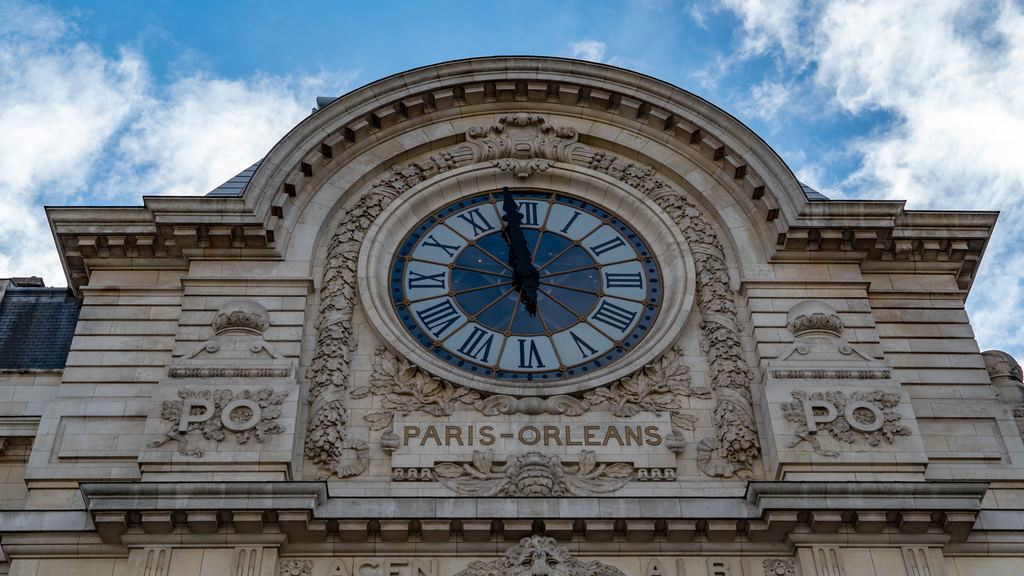
On the Seine side, the facade features eighteen destinations of the former Compagnie d'Orléans: Agen, Albi, Rodez, Tulle, Poitiers, Limoges, Orléans, Bourges, Bordeaux, Toulouse, Nantes, Angers, Vannes, Lorient, Quimper, Aurillac, Blois, and Tours (Wikipedia). This stone facade concealed a metal structure: Laloux hid the glass roof behind a richly decorated facade (Wikipedia).
Jacquemart's rhinoceros
The Rhinocéros by Jacquemart (RF 3753) was commissioned by the state for the 1878 World's Fair and was intended for the Trocadéro Palace (Joconde record). It measures 2.86 meters in height and weighs three tons; it was one of four cast iron animals around the palace fountain (Wikipedia). Placed at the Porte de Saint-Cloud from approximately 1935 to 1985 (Joconde record), it was later installed in front of the Musée d'Orsay (Wikipedia).
FAQ
Can you see the Mona Lisa at the Musée d'Orsay?
No, it's at the Louvre Museum. The Musée d'Orsay houses works from 1848 to 1914.
Is the "Starry Night" painting at the Musée d'Orsay the same one as the one at the MoMA?
No. The one at the Musée d'Orsay dates from 1888 and was painted in Arles, on the Rhône river. The one at the MoMA, from 1889, was painted in Saint-Rémy-de-Provence.
Where can I see Olympia and Le Déjeuner sur l'herbe?
Both works are held at the Musée d'Orsay, with inventory numbers RF 644 and RF 1668. Please note that the display arrangements may change. To confirm whether a particular work is currently on display, please check the artwork's record or the museum's website.
When did the Musée d'Orsay open?
The train station and hotel were inaugurated on July 14, 1900. May 28, 1900, marked the start of operations for the electrified line.
Who built the Orsay station?
Victor Laloux was selected in 1898 by the Paris-Orléans Railway Company, following a consultation with three architects in 1897.
Why did the train station become a museum?
The hotel closed in 1973, and the building, threatened with demolition, was saved thanks to a press campaign. On October 20, 1977, the interministerial council decided to create a 19th-century museum there; the ACT group won the 1979 competition; and the museum opened to the public on December 9, 1986.
Is Tuesday really the worst day of the week?
It is impossible to state definitively: the museum does not publish daily visitor counts, and the only data available dates back to 2021. Our report on visitor numbers includes this information.
Is Orsay still a train station?
Yes, there is a station in the basement: the RER C line stops at the "Musée d'Orsay – Valéry Giscard d'Estaing" station.
Next up
The station's history
From 1810 to the museum: the dates associated with the station, including those that contradict each other.
Museum masterpieces
Over sixty works, along with their inventory numbers and how they were acquired.
Paris: A City of Paintings
The real-life locations depicted by the Impressionists, and how to get there.
Data verified on . Joconde database entries, Mérimée PA00088689 record, Ministry of Culture, visitor regulations. Wikipedia pages referenced in the text. Politique éditoriale