
This page answers sixty questions that those preparing to visit the Musée d'Orsay may have, with an answer of two to four sentences and a link to the page on our website that covers the topic in detail. The opening hours, entry rules, and booking conditions were taken from the museum's website on November 6, 2026, and may change. We do not provide any prices: the ticket categories are explained, and the amounts are on the Tickets and audio guides page.
This website is independent and has no affiliation with the Musée d'Orsay or the public institution that manages it. When the museum doesn't provide information on a particular topic, we provide it instead of leaving the information blank.
The three answers that avoid the most unpleasant surprises are: booking is highly recommended but not mandatory (except for the Paris Museum Pass and the first Sunday), entry depends on your ticket (Quai with a timed museum ticket or a Paris Museum Pass with a time slot; Parvis for everything else, including reseller tickets and luggage), and any luggage larger than 56 x 45 x 25 cm is not allowed.
Here are the concise answers, at a glance
| Subject | In a nutshell | Details page |
|---|---|---|
| Closed days | Monday, May 1st; December 25th | Access, entrances, and hours |
| Book time slot | Highly recommended; mandatory for the Pass holders and on the first Sunday of the month | Tickets and audio guides |
| Time-based ticket | Quayside entrance, Seine side | Access, entrances, and hours |
| Luggage, lack of a ticket, reduced mobility | Entrance Plaza | Access, entrances, and hours |
| Maximum baggage size | 56 x 45 x 25 cm; mandatory placement at the bottom | What to take |
| Exit and re-enter | Impossible: all exits are final | Access, entrances, and hours |
| Flash, tripod, selfie stick | Restricted | What to take |
| Draw | Pencil drawing, maximum size 30 x 60 cm, part of the permanent collection | What to take |
| Thursday Night | Closing time: 9:45 PM. Nighttime rates apply, and admission is not free | Thursday night event |
| First Sunday of the month | Free for everyone, but registration is required | Free admission; first Sunday |
| Under 18 years old | Free with ID | Free admission; first Sunday |
| Dogs | Only guide dogs and assistance dogs are allowed | Accessibility |
| Museum app | No results found | Tickets and audio guides |
Practical information: schedules, services, and map
When is the Musée d'Orsay closed?
On Mondays, May 1st, and December 25th. On other days, it is open from 9:30 AM to 6:00 PM, with extended hours on Thursdays. The opening hours may vary, but the days of closure change much less frequently. For details: Access, entrances, and opening hours.
What time does it close?
The last entry to the museum is at 5:00 PM, for the temporary exhibitions it's 5:15 PM, and the rooms begin to close at 5:30 PM. The museum's visitor regulations also state that the sale of tickets for the day ends at 5:00 PM. Arriving at 4:45 PM, you have three-quarters of an hour remaining. Related page: Access, entrances, and opening hours.
What changes with the Thursday night event?
The museum closes at 9:45 PM that evening, with the last entry at 9:00 PM, and rooms starting to empty from 9:15 PM. It is not free: a special evening rate applies to visits starting from 6:00 PM. Next, read: The Thursday evening event.
Where is the cloakroom, and is there a charge to use it?
It is free and self-service, located immediately to the right after the security check. You must not leave any documents, payment methods, cameras, phones, or valuable items there (article 26 of the regulations). You must retrieve your deposit on the same day. See also: What to bring and what is prohibited.
Is there a museum app available?
We couldn't find any: the museum doesn't mention any on its website, except for an audio guide that can be downloaded on your phone for certain major exhibitions (QR code on the electronic ticket), which does not cover the permanent collections; the audio guide apps available in app stores are from third parties. The museum's audio guide, on the other hand, is available during renovations at a dedicated counter, at the top of the nave. For details: Tickets and audio guides.
Do the rooms have numbers, and how do you read the map?
The museum's floor plan numbers its rooms, but the exhibits change, and some rooms are under renovation from one season to the next. Therefore, we never mention specific numbers; we refer to levels (0, 2, 5, Amont pavilion) and by major section, with the caveat that the exhibits change. Associated page: Museum floor plan, level by level.
Are the paintings being moved?
Yes. The artworks are sometimes on loan, undergoing restoration, or being moved to a different location, and the museum informs visitors that some may not be visible. The museum guide indicates which rooms are closed for renovation. To see a specific artwork, check its entry on the museum's website the day before your visit. Then, read: Museum map, level by level.
Is the museum open during the construction work?
Yes. The renovation work on its reception areas began on March 10, 2026, and will continue until the summer of 2028; the museum states that it remains open and that the collections are accessible without changes. What is changing is the entrance through which you enter, depending on your ticket. See also: Access, entrances, and opening hours.
How early should you arrive before the scheduled departure time?
The museum requests that visitors arrive at least fifteen minutes before the time slot indicated on the ticket (works page). This allows time for security checks, which the museum itself says can slow down entry. For details: Access, entrances, and opening hours.
Tickets and reservations
Do I need to book a time slot?
Online booking is strongly recommended for everyone during the renovations, but it is mandatory only in two cases: the Paris Museum Pass and the first Sunday of the month (free admission). Some websites state that a time slot is required for everyone; the museum does not say this. Related page: Tickets and audio guides.
How much is the entrance fee?
We do not publish any prices in our guides, because they change. The museum distinguishes between the full price (different online and in person), the reduced price (sold in person only), the Thursday evening special price, and the "Child & Family" price. The most up-to-date prices are on our ticket page. Next, please read: Tickets and audio guides.
Can I purchase my ticket at the venue?
Yes, subject to availability; the reduced fare is only available for purchase in this way. During the works, online purchase is highly recommended, and without a ticket, you should present yourself at the entrance of the Parvis. See also: Access, entrances, and opening hours.
What happens if I arrive late for my appointment?
We have not found any published guidelines regarding late arrivals from the museum. The electronic ticket specifies the access information, and the museum requests that you arrive fifteen minutes prior. If you have any doubts, please contact the seller of your ticket before you leave, not at the entrance. For details: Tickets and audio guides.
Can you exit and re-enter using the same ticket?
No. The pricing page is clear: the ticket is valid for one entry, and any exit is final. Plan your lunch before your visit or on-site, at the restaurant or the museum's cafes. Related page: Where to eat.
How can you identify a fake ticket selling website?
The museum warns on each of its pages: its ticketing website is billetterie.musee-orsay.fr, with https and the .fr extension. Our website is independent and has no connection with the museum: we direct users to tickets and tours sold by third-party providers, which is different from the museum's ticketing service. Next, please read: Tickets and audio guides.
Does the Paris Museum Pass work at the Musée d'Orsay?
Yes, with a mandatory time slot from March 10, 2026, until the summer of 2028, and entry via the Quai with a time-stamped ticket (Paris Museum Pass page). See also: Access, entrances, and opening hours.
Is there a combined ticket available with the Rodin Museum?
Yes: a combined ticket for the Musée d'Orsay and the Musée Rodin, valid for three months for a visit to each of the two museums, with no reservation required (price page). Its price is not displayed on the museum's price page; our page Tickets and audio guides provides the information we have. Combined tickets sold by third-party providers are presented on our Orsay + Louvre page. For details: Orsay + Louvre and other visits.

Entrance, baggage, security, and visitor regulations
Quay or Plaza: Which entrance should you use?
During the works, the Quai entrance, on the Seine side, is used for timed tickets and the Paris Museum Pass. The Parvis entrance welcomes priority visitors, those without tickets, holders of a reseller ticket, people with luggage, those with reduced mobility, and groups (works page). Please check the gate indicated on your ticket. Related page: Access, entrances, and opening hours.
Where can I enter with a suitcase or a large bag?
Through the Parvis: the museum requests that visitors with luggage enter. Size matters: 56 x 45 x 25 cm is the maximum allowed. For larger backpacks and carry-on suitcases, depositing them at the cloakroom is mandatory; otherwise, the luggage will not be allowed inside and will not be kept (regulations, articles 15 and 25). Next, please read: What to bring and what is prohibited.
Do online tickets have a separate queue?
Tickets with scheduled entry times have their own entrance, located on the Quai side, which is separate from the Parvis where visitors without tickets enter. The museum does not publish any waiting times, and we do not provide them either. See also: Access, entrances, and schedules.
How long should I expect to wait without a ticket?
No duration is published by the museum. Some guides suggest between fifty and ninety minutes, without stating how they measured this. What is confirmed: without a ticket, it's the area in front of the museum, and security checks slow down entry, according to the museum itself. For details: Access, entrances, and opening hours.
Is it allowed to enter with a backpack?
Yes, if it remains small. Large backpacks must be left at the free cloakroom, and all bags are checked at the entrance as part of the Vigipirate plan (visitor regulations). Related page: What to bring and what is prohibited.
Is photography allowed, and is the use of flash permitted?
Photos and videos for strictly private use are permitted. The use of flash, lighting, tripods, and selfie sticks is prohibited (articles 60 and 61). In some rooms and exhibitions, a sign or label may prohibit all photography. To read next: What is allowed and what is prohibited.
Is there a dress code?
The museum does not publish any such rules, and we have not found anywhere an obligation to cover shoulders or knees. Swimsuits, underwear, bare chests, bare feet, and concealed faces are prohibited (article 14). See also: What to bring and what is prohibited.
Is it allowed to eat and drink in the rooms?
No: the regulations prohibit eating or drinking outside of designated areas. Water fountains are available to fill water bottles, particularly on level -1 near Lille and at the end of the nave (on the museum services page). For details: What you can bring and what is prohibited.
Is it permissible to draw in the classrooms?
Yes, using pencil (graphite or colored), on a support no larger than 30 x 60 cm, and only in the permanent collections. Ink and fixative are strictly prohibited (articles 59 and 66). Associated page: What to bring and what is prohibited.
What the museum doesn't say, and what we won't say for it
Five answers are circulating everywhere and have no public source. The grace period for appointments: the museum requests fifteen minutes' advance notice, nothing more. The waiting time at the entrance: no figures are available, only anecdotes. The best day to visit: the only official schedule dates back to 2021 and is only indicative. The dress code: there is no other dress code than the prohibitions outlined in the regulations. The quietest time to visit: no published hourly schedule is available.
Whenever you encounter a definitive statement about any of these points elsewhere, look for the methodology used to arrive at that conclusion. If the methodology is missing, treat the figure as an opinion. We chose to write "no data available" rather than adding our own potentially biased information to the existing body of knowledge.
Duration and itinerary
How long does it take to visit the Musée d'Orsay?
Allow approximately two hours for the main visit, one hour for an express tour focused on a few key works, or half a day if you want to read, sit down, and have lunch on site. These are our suggested timeframes, not a fixed duration set by the museum. Next, please read: How much time should you plan for?
Can one grasp the essential in just one hour?
Yes, but with certain conditions: one hour is sufficient for the nave and the Impressionist collection (level 5), subject to availability, but not for the rest. Our one-hour tour indicates what you will have to skip. See also: How much time to allow.
Where should we start: the 5th floor or the ground floor?
Two approaches. You can either go directly to level 5 for the Impressionists when the rooms are still empty, or follow the chronological order starting from level 0, which covers the years 1850-1870. The museum doesn't impose anything; our page provides the order we recommend for each duration. For details: How much time to allocate.
Can a guide of my choosing provide commentary during the visit?
Only if authorized: guide-lecturer card, or written authorization requested at least one week in advance. A group starts with seven people and can increase to twenty-five for adults, with the museum's audio guides mandatory. Related page: How to choose your visit.
Should I rent an audio guide?
It is not mandatory. The museum rents one out, with over 300 descriptions of artworks in ten languages. If you prefer a continuous explanation, compare it with a guided tour before choosing. Next, read: Tickets and audio guides.
Is it possible to visit both the Musée d'Orsay and the Musée de l'Orangerie on the same day?
Yes: You can walk between them, via the Léopold-Sédar-Senghor bridge and the Tuileries Garden. Each museum has its own ticket and its own closing days. The choice between them, and with the Louvre and the Marmottan, is made on the page that compares them. Also see: Orsay, Louvre, Orangerie or Marmottan.
Is it worth visiting even if you don't like Impressionism?
Yes: the collections cover the period from 1848 to 1914, and the Impressionists are only a part of them. There is also the realism of Courbet and Millet, the Nabis, Symbolism, Art Nouveau, sculpture, and architecture. For details: The artistic movements.
A plan, not a schedule
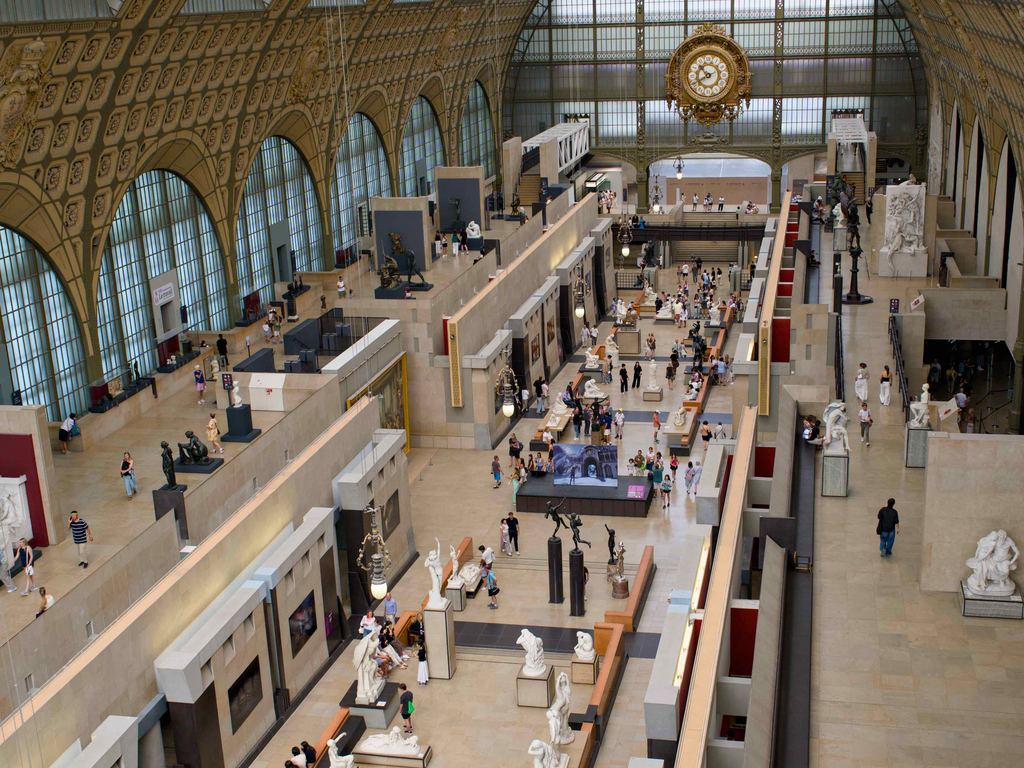
The museum is located in an old train station: a central nave, long galleries on either side, intermediate terraces, and, at the top, the rooms dedicated to the Impressionists. It's easier to get around by remembering three levels (0, 2, 5) rather than looking for room numbers that change. Our page about the floor plan explains what each level contains and how to navigate it.
When to go, how crowded it gets, and whether it's free
What is the best time to visit the museum?
The museum does not publish any monthly visitor statistics, so any answer is an inference. The only public indicator is the hotel occupancy rate in the Île-de-France region (Insee), which is lower in January and February. Our page details the monthly, daily, and hourly trends, and states what it does not know. Related page: When to visit.
What day is the least crowded?
The only schedule published by the museum is an archive from 2021: Wednesday and Friday are "moderate," Thursday and Saturday are "busy," and Tuesday and Sunday are "high." This page no longer exists on the current website, and the schedule was described as indicative. On its accessibility page (2022), the museum also advises visiting on Wednesday or Friday morning, or in the evening from Thursday at 6:45 PM, for a more relaxed visit. Next, read: Visitor numbers.
Is Tuesday really the worst day of the week?
The 2021 ranking classifies it as "important." The most common explanation, the closure of the Louvre on that day, is plausible, but the museum does not state this: it is a hypothesis, not a measure. See also: Visitor numbers.
Are there fewer people there when it first opens?
No timetable is published. The 2021 schedule categorizes morning and afternoon at the same level each day and does not designate any quiet hours. Arriving at 9:30 AM remains a reasonable gamble, not a certainty. For details: When to arrive.
How many visitors does the museum receive?
3,785,134 in 2025, according to the public institution's press release. The record was in 2023, with 3,871,498; 2019, often cited, is the record before the pandemic. "Nearly 5 million" refers to the combined figures for Orsay and the Orangerie. Related page: Visitor numbers.
Is admission free on the first Sunday of the month?
Yes, for everyone, with a mandatory appointment to be booked (except for those holding the Carte Blanche). On other days, those who are entitled to free admission can enter without booking, upon presentation of proof. Next, please read: Free admission and the first Sunday.
Who gets in for free?
Specifically, those under 18, EU or EEA citizens aged 18-25, job seekers, visitors with disabilities accompanied by an assistant, and holders of the "Pass Éducation" card, upon presentation of proof (price page). The complete list is detailed on the dedicated page. See also: Free admission and the first Sunday of the month.
Is the Thursday night event free of charge?
No: The evening rate applies to all Thursdays starting at 6 PM. The confusion likely stems from the first free Sunday at the Musée d'Orsay, or from the free admission to the Louvre on the first Friday of the month after 6 PM (except in July and August, according to the Louvre's website). For details: Evening hours on Thursdays.
Free admission on the first Sunday? Please read the conditions before getting up early
Who gets in free, how to book the required time slot, and who may be better off choosing another day.
Works and history of the building
Where can you see Van Gogh's "The Starry Night"?
At Orsay, it is The Starry Night (over the Rhône), painted in Arles in September 1888 (inventory number RF 1975 19, donated in 1975 with a usufruct right, at Orsay since 1995). It is on loan to the Tokyo Metropolitan Art Museum from November 14, 2026, to March 28, 2027; the date of its return to the gallery has not been announced. The other one, the one from Saint-Rémy, is at the MoMA in New York. We do not specify the gallery: they change. Associated page: Masterpieces, inventory and provenance.
Can you see the Mona Lisa or the Water Lilies at the Musée d'Orsay?
Neither one nor the others. The Mona Lisa is at the Louvre, and the large collections of Water Lilies are at the Orangerie; the Orsay museum houses some of Monet's Blue Water Lilies. Impression, soleil levant is at the Musée Marmottan Monet. To read next: Orsay, Louvre, Orangerie, or Marmottan.
Where are Le Déjeuner sur l'herbe, Olympia, and L'Origine du monde?
In the Orsay collections: works by Manet, Le Déjeuner sur l'herbe (RF 1668) and Olympia (RF 644), and by Courbet, L'Origine du monde (RF 1995 10). Our page provides the inventory number for each work and details how it entered the museum. See also: Masterpieces, inventory, and provenance.
Is Degas's sculpture, "The Little Dancer," made of wax?
The Orsay sculpture is a bronze with a patina (RF 2137), cast between 1921 and 1931, according to the Ministry of Culture, and acquired in 1930 (physically entered in 1931). Its exact title is The Little Dancer of Fourteen Years. For details: Masterpieces, inventory and provenance.
What are the differences between the Musée d'Orsay, the Louvre, and the Centre Pompidou (Beaubourg)?
Especially the chronology: Orsay showcases art from 1848 to 1914, the Louvre features art from before 1848, and the Centre Pompidou continues with modern and contemporary art, although the time periods don't perfectly align. Related page: Orsay, Louvre, Orangerie or Marmottan.
When did the Musée d'Orsay (formerly the Gare d'Orsay) open, and who built it?
It was inaugurated on July 14, 1900; May 28th marked the start of railway service. The architect was Victor Laloux, chosen in 1898 after the 1897 consultation, which also included Magne and Bénard: a single author, not three. To read next: From the station to the museum.
Was the building nearly demolished?
Yes: Abandoned as a train station, it was threatened with demolition, notably to make way for a luxury hotel. According to the Ministry of Culture, a press campaign convinced Jacques Duhamel to designate it as a historical monument in 1973; the Mérimée database only records the classification of March 15, 1978. The museum opened to the public on December 9, 1986. See also: From train station to museum.
Family and accessibility
Is the museum suitable for children?
Yes: Free for those under 18 years old, a games area for children aged 6-12 (Les Petits M'O), family visits and workshops by age group, and a party room open free of charge during each school holiday period. Children under 13 must be accompanied by a responsible adult. For details: Visit with your family.
Do children pay, and do their parents?
Those under 18 years old enter free of charge. Adults accompanying them may be eligible for the "Child & Family" rate, valid for a maximum of two adults, who are residents of the European Union; online, tickets for adults and young people are booked together. Related page: Tickets and audio guides.
Is it possible to enter with a stroller?
The museum does not accept strollers, large prams, or baby carriers with metal frames (services page, 2025); the regulations allow for umbrella strollers. Elevators and ramps provide access to the entire route. Next, read: Visiting with family.
Where can I change a baby?
The museum indicates a baby area on level -1, near the adult group reception. It does not mention a changing table, and we were unable to confirm its availability. See also: Visiting with family.
Is there an audio guide available for children?
Yes, there is an audio guide designed for young audiences, for those under 12 years old, available in French and English. For more details: Tickets and audio guides.
Is the museum accessible to people in wheelchairs?
Yes: elevators and ramps serve the entire route, including the exhibitions and commercial areas, according to the museum. Chairs, folding stools, and canes are available free of charge at the cloakroom, without reservation, upon presentation of identification. People with reduced mobility enter through the Parvis. Related page: Accessibility of the museum.
What resources are available for people with autism, visual impairments, or hearing impairments?
A social script, and a small free sensory bag for autism, free audio guides with audio description for visually impaired people, magnetic induction loops at the ticket office, information desk, and bookstore, and guided tours in sign language. Details are available on our accessibility page. Next, please read: Museum Accessibility.
Does a guide get paid?
No: Visitors with disabilities, holding a valid disability or priority card, are admitted free of charge with one accompanying person. It is not mandatory to book or go to the ticket counter (booking remains possible, and the museum recommends it for visitors with priority access): simply present the proof of eligibility. See also: Museum Accessibility.
Around the museum
Where can I eat inside the museum?
The museum page lists four locations: the Restaurant, the Café Campana, the Terrace (seasonal), and the Café de la Gare, located under the vaulted ceiling. Each requires an entrance ticket, and the Restaurant does not accept reservations. Opening hours and menus should be checked on-site. For details: Where to eat.
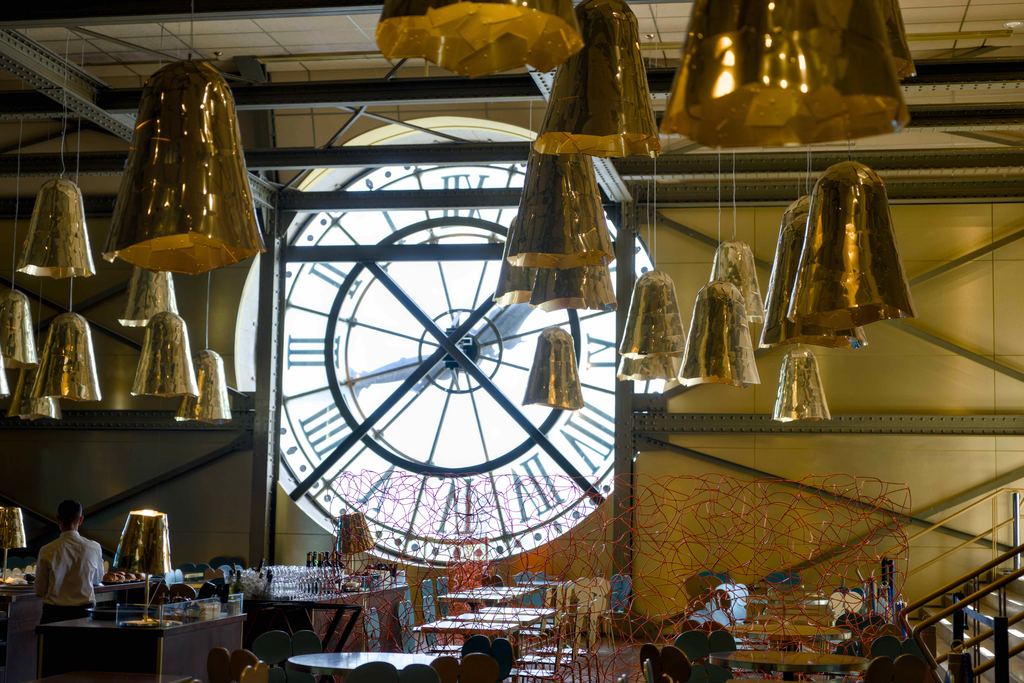
Can one have a coffee while looking at the clock?
Yes, at the Café Campana, located near the exit of the Impressionist gallery, on the 5th floor, facing one of the large exterior clocks, according to the museum. Access requires an entrance ticket. Related page: Museum floor plan.
In which neighborhood should I stay if I want to be able to walk to everything?
The 7th arrondissement and Saint-Germain-des-Prés are the closest. Our page compares six possible locations, with their connections to the museum, without mentioning any hotels or providing prices. Next, read: Where to stay.
How do I get to the museum?
Metro line 12, Solférino station, or RER C, Musée d'Orsay station (museum page). Several bus lines and a Vélib' station are nearby. The address is Esplanade Valéry Giscard d'Estaing, 75007 Paris. See also: Access, entrances, and opening hours.
Learn more
Each of the answers above links to a page that provides further details. These four cover the majority of the questions.
If you prefer a ticket with a specific time slot
Tickets with specific time slots and audio guides are sold by third-party providers, with up-to-date pricing.
Admission ticket reserved for the Musée d'Orsay, without priority access
Single entry ticket for the permanent collection, and, subject to availability, for temporary exhibitions, but without priority access through security checks.
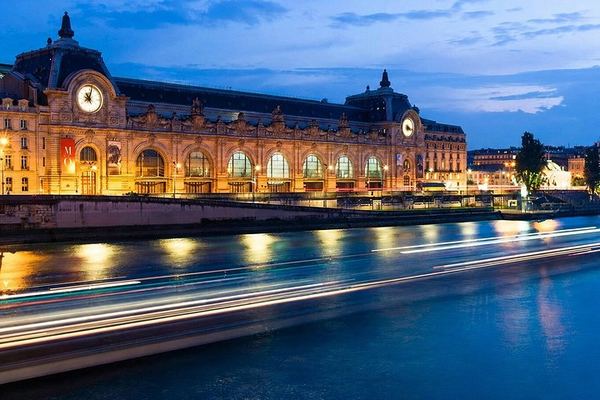
Admission ticket to the Musée d'Orsay, including an English audio guide. A private guide is available as an optional extra
The ticket is valid all day and includes a one-hour digital audio guide in English. A private guide is available as an option, not in the base ticket.

Combined ticket for the Musée d'Orsay and the Musée Rodin, valid all day
Two museums, one ticket: enter Orsay and the Musée Rodin at any time on your chosen date, for a self-guided visit of the collections and the Rodin garden.
Ratings collected by Tiqets, Viator and Tripadvisor
Data verified on . Museum pages, visitor regulations, and ministerial data reviewed on November 6, 2026. Politique éditoriale