We use strictly necessary cookies and — only with your consent — analytics cookies to improve your experience and measure how our content performs. You can accept everything, reject everything, or choose in detail. More information in the Privacy Policy and in the Cookie Policy .
Cookie preferences
Choose which categories to allow. You can change your preferences at any time from the "Manage cookie preferences" link in the site footer.
Strictly necessaryAlways on
Technical cookies essential to the operation of the site (security, and storing your own privacy choices). They cannot be disabled.
Store your personalisation choices (language, currency, layout) so your next visits are consistent.
Measure how you use the site, in aggregate form (Google Analytics 4, Core Web Vitals). They help us understand which content works.
Would serve personalised ads and measure the effectiveness of campaigns on other sites. No technology in this category is currently active: it stays here so that nothing can be switched on in future without an explicit choice by you.
Levels 0, 2, 5, the Amont pavilion, and level -1: what each floor of the Musée d'Orsay contains, how to navigate between them, and why there are no room numbers.
Photo: Freepik stock via Magnific, Premium license
The Musée d'Orsay is visited across three main floors, numbered 0, 2, and 5, to which are added the Amont pavilion (levels 3 and 4) and a level -1 for services. On level 0: painting and sculpture from approximately 1848 to 1870, from Courbet to Manet. On level 5: the Impressionists, Van Gogh, Seurat, Gauguin. On level 2: the Nabis, Symbolism, Toulouse-Lautrec, the sculpture terraces, and Art Nouveau. This page details each level, explains how to move from one to another, and refers to the official plan when it is best to rely on it.
The museum layout changes with each season, and the exhibition arrangement changes regularly: paper-based artworks are rotated, and some areas are under renovation. Therefore, we describe levels and sections, never room numbers. Source: museum guide "Europe, summer 2026," accessed on November 6, 2026.
How the museum is organized: a cross-section view of the former train station
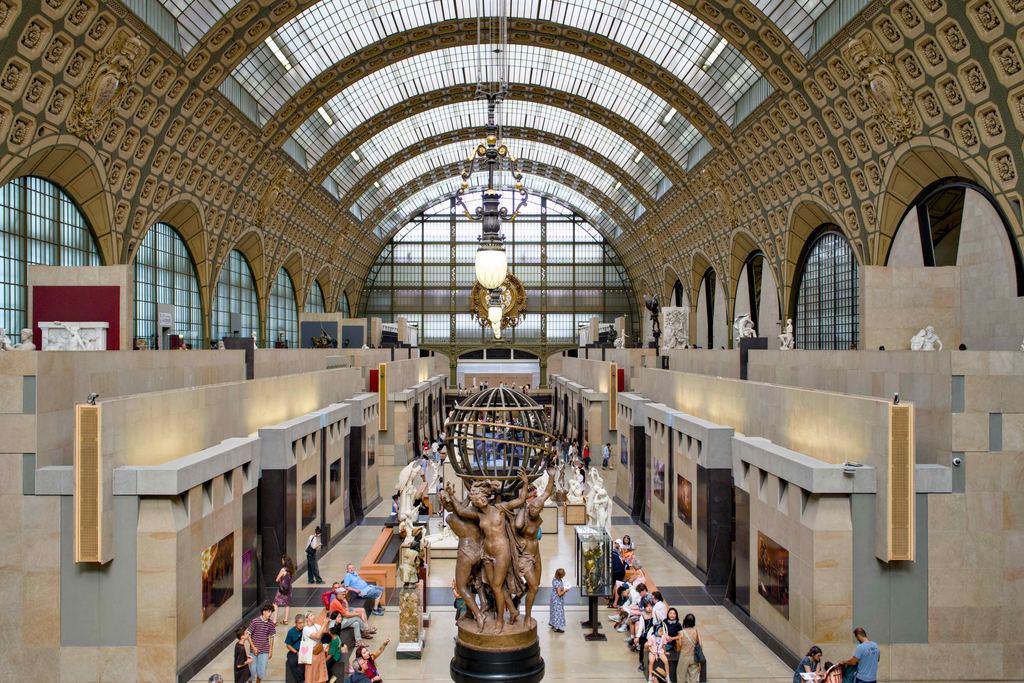
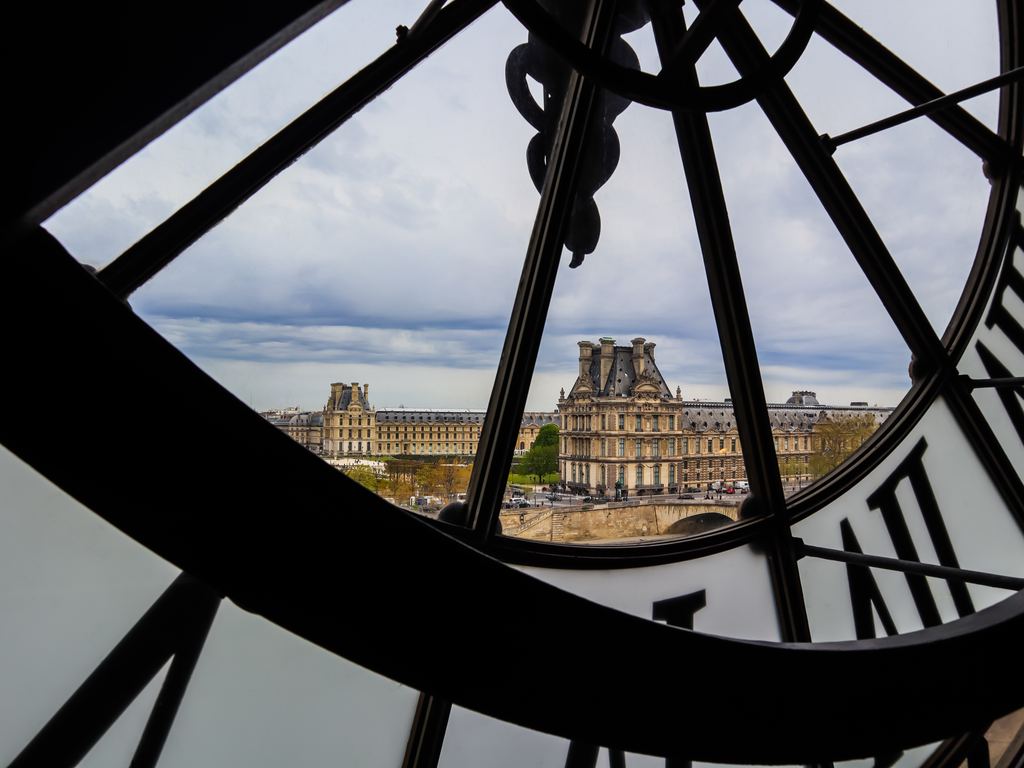
The building is the former Orsay railway station, and its original station layout is still evident in the design. At level 0, the nef (the former hall of tracks) is bordered by two galleries, the Seine and the Lille, which house the painting sections. The floors are arranged around a large central atrium. The level 5 runs along the roof and passes behind the large clocks on the facade, which the plan indicates with a pictogram. The level 2 is an intermediate floor on the sides of the nave, with the sculpture terraces. The Amont pavilion is an annex dedicated to Art Nouveau, and it has its own levels 3 and 4. The history of these places has its chapter, From the Orsay station to the museum.
The main hall of the Musée d'Orsay, lined with sculptures, under the vaulted ceiling of the former railway station. · urbanshow2018 / Magnific
Level 0: From Courbet to Manet, and the sculpture gallery
This is the arrival level. The floor plan shows the entrance, the cloakroom, the information desk, the audio guide counter, a café, and the bookstore, as well as the areas for temporary exhibitions. Regarding the collections, it follows the order of history: paintings from the 1850s and 1860s, just before Impressionism. It includes, by section, academic art (Cabanel, Bouguereau, Gérôme), the realism of Courbet and Millet, portraits and scenes of modern life, Manet, Degas, the early works of Cézanne, and then the 1860s works of Bazille, Monet, and Renoir. The central aisle features sculpture from 1850 to 1880.
Here are some works to look for, according to the sections of the guide: Gustave Courbet, A Burial at Ornans (1849-1850) and The Origin of the World (1866); Jean-François Millet, The Gleaners (1857); Édouard Manet, Olympia and Le Déjeuner sur l'herbe (1863); Jean-Léon Gérôme, Young Greeks Cockfighting (1846); Alexandre Cabanel, The Birth of Venus (circa 1863); Jean-Baptiste Carpeaux, The Dance (between 1865 and 1869), in the sculpture of the Second Empire. To find out when and how these works entered the collections, see our section on masterpieces. The Gleaners is on loan to the Tokyo Metropolitan Art Museum from November 14, 2026, to March 28, 2027; the date of its return to the gallery has not been announced.
Level 5: Impressionists, Van Gogh, Seurat, and Gauguin
This is the floor that houses the most famous paintings, and the floor plan indicates it in red, starting from level 0, with the label "Impressionism, Neo-Impressionism, Post-Impressionism." It begins with the Salon de l'horloge, then presents Impressionism (Cézanne, Degas, Manet, Monet, Morisot, Pissarro, Renoir) and the Moreau-Nélaton collection. The following section is dedicated to neo- and post-impressionism: Van Gogh, Seurat and Signac, the Pont-Aven group (Émile Bernard, Gauguin, Sérusier), Gauguin in Tahiti, Redon and the Nabis, the Chat noir cabaret, and cinema from 1895 to 1914.
Works to look for, according to the sections of the summer 2026 guide: Claude Monet, Poppies (1873); Auguste Renoir, Bal du moulin de la Galette (1876); Vincent van Gogh, The Starry Night (over the Rhône, 1888) and Van Gogh's Bedroom at Arles (1889); Georges Seurat, The Circus (1891); Paul Gauguin, Arearea (1892); Paul Sérusier, The Talisman (1888). The level also houses the Café Campana, The Terrace (in season), and a souvenir shop at the entrance to the Impressionist gallery. The Starry Night and Arearea are on loan to the Tokyo Metropolitan Art Museum from November 14, 2026, to March 28, 2027; the date of their return to the gallery has not been announced.
Level 5
Clock floor
The floor plan highlights two large clocks on the facade, located on the 5th floor: one near the Clock Room, and the other at the level of the Campana Café. This café, designed by the Campana brothers, is situated facing one of the exterior clocks, according to the museum's dining section. These clocks are remnants of the old train station; their history is detailed on the page about the building, and the 5th floor is the level where you can get closest to them.
Level 2: Nabi artists, Symbolism, Toulouse-Lautrec, and Art Nouveau
The intermediate floor groups together sections that are easily missed if you go directly to level 5. According to the floor plan, you can find: the sculpture terraces (including the Rodin terrace), the Nabis (Bonnard, Denis, Vallotton, Vuillard), Toulouse-Lautrec and the world of entertainment, Symbolism and Naturalism, portraits from 1880 to 1914, figures of work, historical painting, modern decorations from 1905-1914, the Zeineb and Jean-Pierre Marcie-Rivière collection, the Philippe Meyer donation, and Art Nouveau from Belgium, Spain, France, and Italy. This is also where the Ballroom and the Restaurant are located.
The restaurant is located in a setting from the Belle Époque, a historical monument, with frescoes by Gabriel Ferrier and Benjamin Constant; it does not accept reservations and requires a museum entrance ticket (restaurant page). Works to look for in this area: Henri de Toulouse-Lautrec, La Clownesse Cha-U-Kao (1895); Gustave Moreau, Orphée (1865); Pierre Puvis de Chavannes, Le Pauvre Pêcheur (1881).
Pavilion Amont (levels 3 and 4): Art Nouveau beyond France
Accessible from level 2, the Amont pavilion extends the Art Nouveau style. According to the guide plan, the level 3 showcases Art Nouveau from Central Europe, Northern Europe, and Scandinavia, while level 4 features Art Nouveau from Austria, Great Britain, and the United States.
Level -1 and Level 1: The services
The services are located outside the galleries. On the level -1, the museum has a baby care area (near the adult group reception) and water fountains (near Lille). Another fountain is located at the back of the nave, near the Paris area, and a third is on level 1, in the waiting area. The visitor guide also indicates restrooms, some of which are adapted for people in wheelchairs. The basic services (free cloakroom, information, audio guides) are located on level 0: the floor that serves as the reception area.
According to the summer 2026 master plan, the room numbering system will change, and the layout of the floors will also be different.
Level
What's inside
Services
Priority for whom?
0
Courbet, Millet, Manet, young Degas, early Cézanne, Bazille, Monet, and Renoir from the 1860s; sculpture from 1850-1880; temporary exhibitions
Entrance, cloakroom, information desk, audio guides, café, bookstore
Those who want to understand the origins of the Impressionist movement
2
Nabis, Symbolism, Toulouse-Lautrec, sculpture terraces, Art Nouveau from Belgium, Spain, France, and Italy
Restaurant, Event space
Those who return, or those who are drawn to Art Nouveau and sculptures
3 and 4 (Amont Pavilion)
Art Nouveau from Central Europe, Northern Europe, Austria, Great Britain, and the United States
Not specified
Those who appreciate design and decorative arts
5
Impressionism, Van Gogh, Seurat, Gauguin, Pont-Aven, Redon, cinema (1895-1914)
Café Campana, La Terrasse, souvenir shop
Almost everyone
-1
No collections
Baby area, fountains
Families and groups
How do you progress from one level to the next?
The museum states that, thanks to the elevators and access ramps, the entire museum route, temporary exhibitions, and commercial areas are accessible to people with reduced mobility and those with strollers. Escalators and stairs complete the facilities: the visitor guide indicates access to the upper floors at both ends of the ground floor. The visitor regulations prohibit using escalators in the wrong direction, or with a stroller or wheelchair (articles 37 and 49), and give priority to people with reduced mobility in the elevators (article 47). For families and for accessibility, the Orsay en famille and accessibilité pages detail what this means.
How to read the museum's floor plan/guide
The floor plan is on a single page that stacks the levels, with a color legend that is quickly understood: orange for restaurants and cafes, green for the bookstore-shop, the audio guide, information, and the cloakroom, purple for a temporary exhibition or display, and hatching for areas undergoing renovation. Each level is drawn with a list of its sections on the left and the corresponding room numbers next to it. It is this list that you need to keep in mind, not the numbers: if a section moves, the plan for the following season will show it.
Why doesn't this plan list any room numbers?
Because they are not reliable. The museum's guide map numbers the rooms, but it changes with each season (each edition indicates the season, here "summer 2026"), and the museum rearranges its collections: works on paper are rotated due to their fragility, and some areas are under renovation. The museum's "Visiting Conditions" page warns that some works are not visible and that the guide map indicates the rooms closed for renovation. Once on site, the free guide map is the only up-to-date reference: download it before your visit, from the museum's website, and look for the "under renovation" markings.
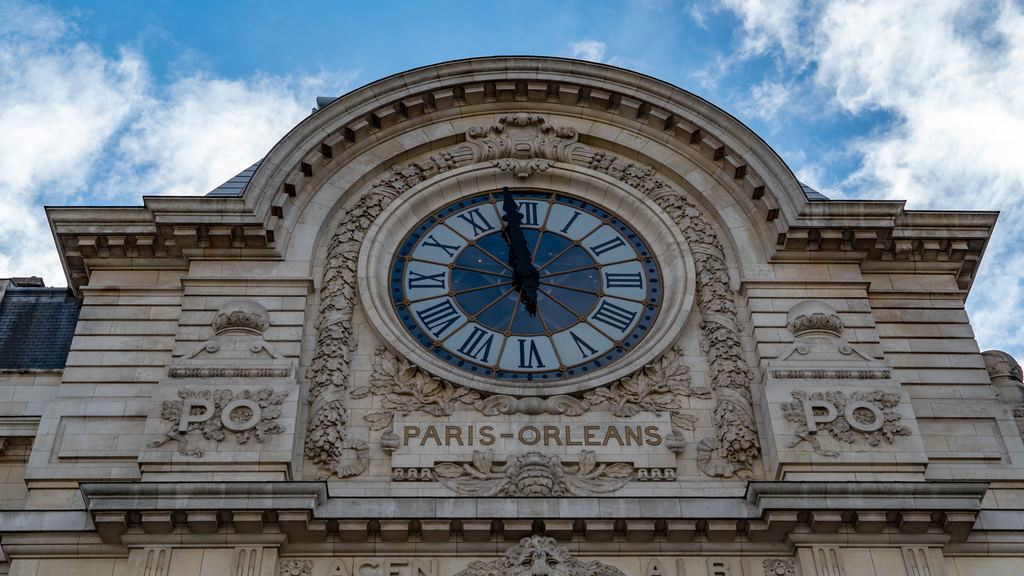
The clock on the facade of the Musée d'Orsay, with the inscription "Paris-Orléans" from the former railway company. · Freepik stock via Magnific, Premium license
What route, and for what duration?
Once you have identified the different levels, choose two or three of them, depending on the amount of time you have available.
On which floor is the Van Gogh exhibit located at the Musée d'Orsay?
On the 5th floor, in the section dedicated to Neo-Impressionism and Post-Impressionism. We do not provide room numbers; please refer to the museum's floor plan for the most up-to-date list.
Where are the Impressionists?
Level 5. The works of Bazille, Monet, and Renoir from the 1860s, which preceded the movement, are at level 0.
Where is Manet's painting, "Olympia"?
The museum guide places Manet on the ground floor, featuring his Realist works and scenes of modern life. The official descriptions of the artworks do not specify the room number; please check the museum guide upon arrival.
Where can you find Art Nouveau?
For Belgium, Spain, France, and Italy, the event will be held at Level 2. For the rest of Europe, as well as Austria, the United Kingdom, and the United States, it will be held in the Amont pavilion (Levels 3 and 4).
Are there elevators available for all floors?
The museum states that the entire route is accessible to people with reduced mobility and to those with strollers, thanks to the elevators and ramps. More details can be found on the accessibility page.
Where can I eat inside the museum?
The restaurant is located on the 2nd floor, the Campana café is on the 5th floor, facing one of the clocks, and the Gare café is under the central nave. The opening hours are subject to change: please consult the museum's dining page and our page on where to eat.
Where are the water fountains?
According to the museum, the exhibition can be found on level -1, near the Lille section, at the back of the nave, close to the Paris area, and on level 1 in the waiting area.
Where can I find a map of the museum?
The free visitor guide can be downloaded from the museum's website ("Europe, Summer 2026" edition, available online since May 2026) and is also available at the information desk. It is updated each season.
Data verified on . Levels according to the "Europe, Summer 2026" guide; services and regulations as observed on the museum website on November 6, 2026. Politique éditoriale