
The Musée d'Orsay showcases art produced between 1848 and 1914, and this period encompasses a dozen overlapping movements: Realism, the Barbizon school, academic painting, Impressionism, Neo-Impressionism, Synthetism, Nabis, Symbolism, Art Nouveau, and sculpture. This page provides, for each movement, the dates, the names, what can be recognized with the naked eye in a painting, a work from the museum with its inventory number, and the floor where to find it. Level 5 includes Impressionism and Post-Impressionism, level 0 includes what precedes it, level 2 includes the Nabis, Symbolism, and Art Nouveau, according to the museum's floor plan as of November 6, 2026.
The movements of Orsay, summarized in a table
| Movement | Approximate dates | Names to remember | Recognize | An example from the Musée d'Orsay (inventory) | Where to search |
|---|---|---|---|---|---|
| Realism | Approximately 1848 to 1870 | Courbet, Daumier, Millet | Ordinary people, depicted in a very large format, with muted colors | Courbet, "A Burial at Ornans" (RF 325) | Level 0 |
| Barbizon School | 1830s to 1870 | Rousseau, Millet, Daubigny | Landscapes and farmers, painted on location near Fontainebleau | Millet, The Gleaners (RF 592) | Level 0 |
| Academic painting ("salon" or "establishment" painting) | Approximately 1820 to 1890 | Cabanel, Gérôme, Couture | Smooth surfaces, idealized nudes, classical subjects | Cabanel, "The Birth of Venus" (RF 273) | Levels 0 and 2 |
| Impressionism | 1874 to 1886 | Monet, Renoir, Degas, Pissarro, Morisot | Quick and striking touch, light colors, a moment captured | Monet, Poppies (RF 1676) | Level 5 |
| Neo-Impressionism | From 1886 | Seurat, Signac | Small touches of pure color, placed side-by-side | Seurat, "The Circus" (RF 2511) | Level 5 |
| Post-Impressionism | circa 1885-1910 | Cézanne, Van Gogh, Gauguin, Toulouse-Lautrec | Retrospective label: everyone creates their own | Van Gogh, The Starry Night (RF 1975 19) | Level 5 |
| Pont-Aven School of Synthesis | Approximately 1888-1890 | Gauguin, Bernard, Sérusier | Areas of color outlined with a dark line | Gauguin, "La Belle Angèle" (RF 2617) | Level 5 |
| Nabis | circa 1888-1900 | Denis, Bonnard, Vuillard, Sérusier | Decorative motifs, solid blocks of color, interior scenes | Denis, Homage to Cézanne (RF 1977 137) | Levels 2 and 5 |
| Symbolism | Approximately 1880-1900 | Moreau, Puvis de Chavannes, Redon | Silent figures, myth, dream, blurred backdrop | Moreau, Orpheus (RF 104) | Level 2 |
| Art Nouveau | 1890 to 1914 | Guimard, Gallé, Majorelle | Curved lines inspired by nature | No inventory records were found by us | Level 2 and the Amont Pavilion |
| Sculpture | Approximately 1850 to 1930 | Carpeaux, Rodin, Claudel, Pompon | From academic modeling to simplified forms | Carpeaux, The Dance (RF 2884) | Levels 0 and 2 (terraces) |
An artistic movement isn't a drawer. Millet belongs to the Barbizon school and realism; Degas combines elements of realism and impressionism. The dates are those found in textbooks, not rigid boundaries.
Realism: To depict the world as it is, on a large scale
Realism emerged around 1848. Gustave Courbet proclaimed it in 1855, when he opened his Pavilion of Realism in Paris, next to the World's Fair. The principle: to represent contemporary life and ordinary people on a scale previously reserved for historical subjects. A Burial at Ornans (RF 325, 1849-1850, acquired by the national collections in 1881 through a donation) measures 3.15 m by 6.68 m according to the Joconde entry, and depicts a village funeral.
To recognize it: faces without idealization, black and brown clothing, a historical painting format for a mundane subject. Daumier (The Laundress, RF 2630) and Courbet are the leading figures; Millet also features. According to the summer 2026 guide, the works from this period are located on level 0, along with those of Manet and Degas.
The Barbizon School: Painting from life
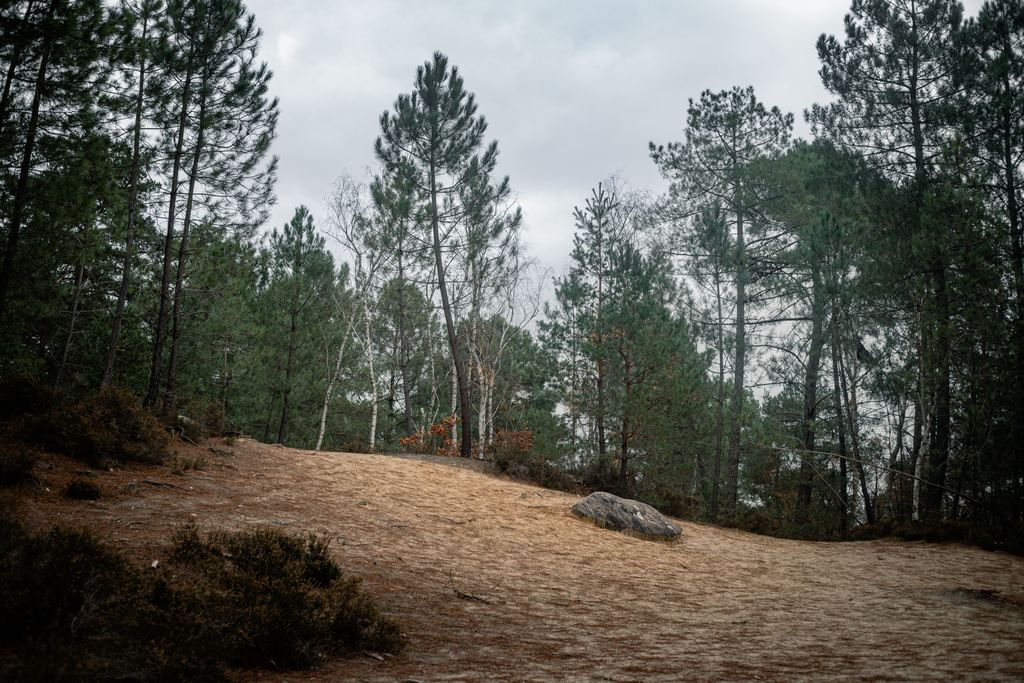
Starting in the 1830s, landscape artists (Théodore Rousseau, Jean-François Millet, Charles-François Daubigny) settled around Barbizon, on the edge of the Fontainebleau forest, to paint "en plein air et d'après nature" (Wikipedia). They did not form a school in the strict sense: the label came later. Millet combined landscape and farm work, as in The Gleaners (RF 592, 1857, donation with reserved usufruct, physical entry in 1890) or The Angelus (RF 1877, bequest 1909). Key features to look for: low skies, dark earth, silhouettes of peasants in silhouette.
The Gleaners is being lent to the Tokyo Metropolitan Art Museum from November 14, 2026, to March 28, 2027; the date of its return to display has not been announced.
Academic painting, or "salon" painting: the term and the concept
The Academy of Fine Arts teaches and awards prizes for historical painting, mythology, and idealized nudes. It sets the official taste of the Second Empire and the early years of the Third Republic. The nickname "academic" is a mocking term: Wikipedia traces its origin back to 1882, with Théodore de Banville, probably alluding to the shiny helmets of David's heroes, which resembled those of firefighters. The term has been used to condemn an entire century of painting; Wikipedia considers it reductive.
When the Orsay museum opened in 1986, displaying these paintings alongside the Impressionists caused controversy: many saw it as a rehabilitation of the "academic" artists (Wikipedia). The museum chose to display both. La Naissance de Vénus by Cabanel (RF 273) was acquired by Napoleon III at the 1863 Salon, the year of the Salon des Refusés, and then assigned to the national museums in 1879 by a court decision (Joconde record). Key features: a smooth painting where the brushstrokes are not visible, porcelain-like flesh tones, and an ancient subject. Les Jeunes Grecs faisant battre des coqs by Gérôme (RF 88, 1846) and Les Romains de la décadence by Couture (INV 3451, 1847) belong to the same academic tradition. For the context of the Salon, read about the eight Impressionist exhibitions.
Impressionism: Light before subject matter
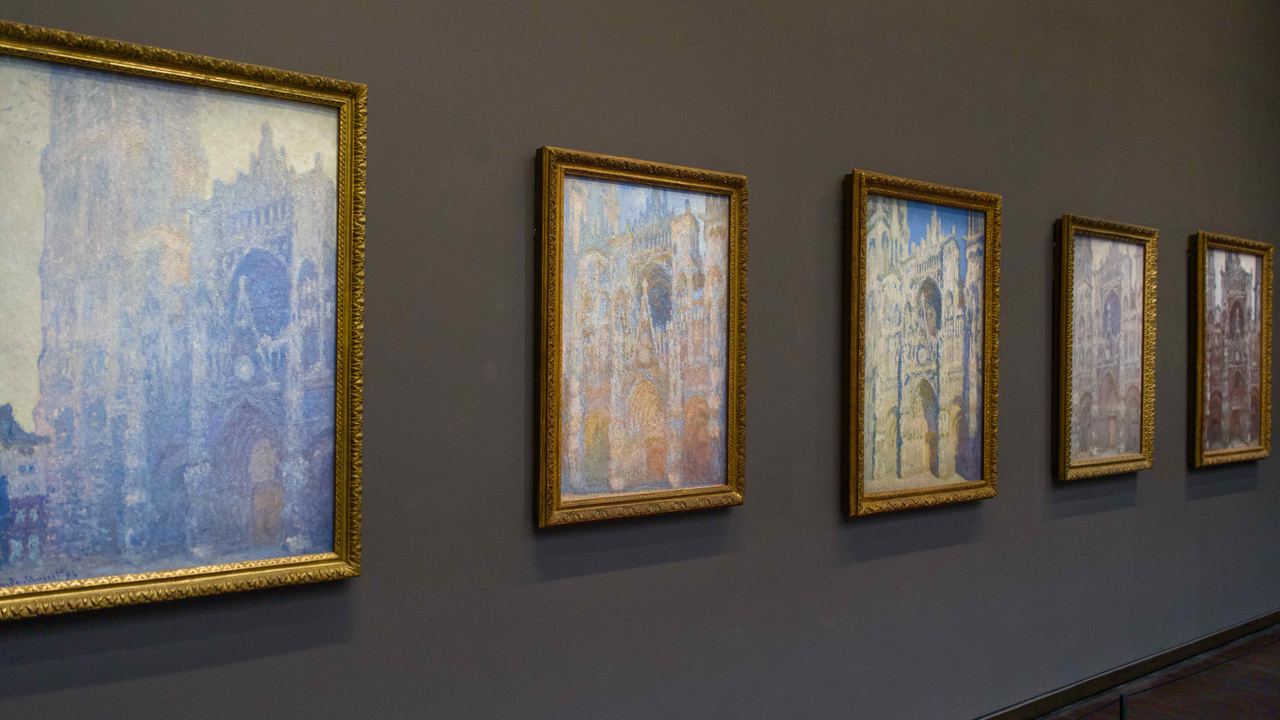
From 1874 to 1886, eight exhibitions brought together Monet, Renoir, Degas, Pissarro, Morisot, Sisley, Caillebotte, and others. They painted with quick, visible strokes, placing light colors side by side instead of mixing them, and often began their paintings on location, outside of the studio. The subjects were those of modern life: train stations, balls, boating. Monet revisited the same subject under different lights: the Musée d'Orsay has five of the Rouen Cathedrals (RF 1999, 2000, 2001, 2002 and 2779).
To see the touch up close, look at Monet's Poppies (RF 1676, 1873, donation Moreau-Nélaton 1906), which was shown at the first exhibition in 1874: the flowers are red patches, and the figures are barely sketched forms. According to the summer 2026 guide, this section is on level 5. Renoir's Bal du moulin de la Galette (RF 2739) and Monet's La Gare Saint-Lazare (RF 2775) are part of the Caillebotte bequest.
Look at the surface of the artwork before you decide: if you see brushstrokes, you're likely looking at something from the Impressionist movement or later; if you see no brushstrokes, it's probably from the academic tradition.
Neo-Impressionism: Color applied in small brushstrokes
Georges Seurat and Paul Signac rationalize Impressionism: instead of mixing pigments, they apply small dabs of pure colors side by side, which the eye recomposes from a distance. This technique is commonly called pointillism; Seurat preferred "divisionism" or "chromo-luminarism." Camille Pissarro adopted the method and promoted the presence of Seurat and Signac at the eighth exhibition of 1886. The Circus by Seurat (RF 2511, 1891, bequeathed 1924) is a large canvas, and the description specifies that the frame was painted by the artist; The Bather (RF 1947 15, 1887), painted on wood, is a small study that can be viewed up close.
A Sunday Afternoon on the Island of La Grande Jatte, the manifesto of the movement, is not at the Musée d'Orsay: it is at the Art Institute of Chicago.
Post-Impressionism: a label, not a school
The term is retrospective. It is attributed to the British critic Roger Fry, who popularized it with the exhibition Manet and the Post-Impressionists at the Grafton Galleries in London, from November 1910 to January 1911 (Wikipedia; sources differ on the exact year of the first use). It refers to those who went beyond Impressionism without forming a group: Cézanne, Van Gogh, Gauguin, Seurat, Toulouse-Lautrec. Therefore, there is no "post-Impressionist style" to recognize, but rather personal approaches: in Cézanne, a brushstroke that builds volume; in Van Gogh, a visible brushstroke and saturated colors; in Toulouse-Lautrec, outlined figures, painted on cardboard, as in The Cha-U-Kao Clown (RF 2027).
The Orsay museum houses The Card Players by Cézanne (RF 1969, bequest from Camondo 1911). This is the version with two players, not the one that the Qatari royal family purchased in 2011 (Wikipedia). Van Gogh's Room in Arles (RF 1959 2) entered the collection through acquisition (Joconde record): purchased by the Japanese collector Matsukata Kōjirō, it is at Orsay as a result of the peace treaty with Japan, like Vairumati by Gauguin, as the record states. The Starry Night (RF 1975 19) is the one painted in Arles, on the Rhône, at the end of September 1888: donated in 1975 with a usufruct right, it has been at Orsay since 1995, according to the museum's record. The Starry Night from Saint-Rémy (1889) is at the MoMA in New York. The Starry Night at Orsay is on loan to the Tokyo Metropolitan Art Museum from November 14, 2026, to March 28, 2027; the date of its return to the gallery has not been published.
Synthesism and the Pont-Aven school: characterized by areas of flat color
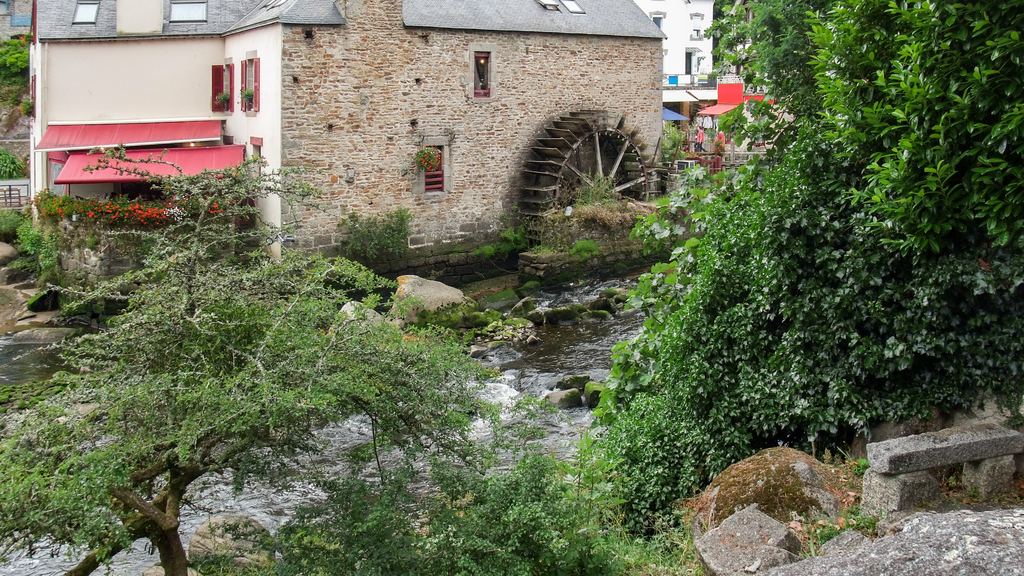
In 1888, Paul Gauguin, Émile Bernard, and their friends worked in Pont-Aven, a Breton town in Finistère. They simplified the forms using flat areas of color surrounded by a dark outline, a technique known as cloisonnism, by analogy with cloisonné enamel and stained glass. The name "synthetism" is what they gave themselves to distinguish themselves from the Impressionists (Wikipedia). La Belle Angèle (RF 2617, 1889, donation Manuel 1927) is a portrait of Angèle Satre, from Pont-Aven: note the dark outlines and the large areas of color.
Paul Sérusier painted The Talisman (RF 1985 13) the same year, following Gauguin's advice: a landscape reduced to a few areas of color, which became the manifesto of the group. Arearea (RF 1961 6, 1892), painted in Tahiti, extends this style with even more vibrant colors. Arearea will be lent to the Tokyo Metropolitan Art Museum from November 14, 2026, to March 28, 2027; the date of its return to display has not been announced.
Nabis: The prophets of decoration
"Nabi" means prophet in Hebrew. Between 1888 and 1900, Maurice Denis, Paul Sérusier, Pierre Bonnard, Édouard Vuillard, and their friends applied the lessons of Gauguin: flat areas of color, motifs, and surfaces conceived as decorations. Denis's painting, Homage to Cézanne (RF 1977 137, 1900, donation Manuel 1928, 180 x 240 cm), is a group portrait: according to the description, Redon, Vuillard, Vollard, Sérusier, Denis himself, Roussel, Ranson, Bonnard, Mellerio, and Marthe Denis are depicted around a still life by Cézanne. For those interested in the "nabis," look at the plan: level 2 dedicates a section to them, and level 5 brings together Redon and the "nabis."
Symbolism: Suggesting rather than describing
Born in poetry, Symbolism reaches its full force in the 1890s. It seeks to suggest ideas and dreams rather than to describe. Gustave Moreau does this with myths in jewel-toned colors: Orpheus (RF 104, 1865) shows a young Thracian woman carrying the poet's head on her lyre, purchased by the State in 1866. Pierre Puvis de Chavannes, on the other hand, chooses a muted palette: The Poor Fisherman (RF 104, 1865) (RF 104, 1865) (RF 104, 1865) (RF 104, 1865) (RF 104, 1865) (RF 104, 1865) (RF 104, 1865) (RF 104, 1865) (RF 104, 1865) (RF 104, 1865) (RF 104, 1865) (RF 104, 1865) (RF 104, 1865) (RF 104, 1865) (RF 104, 1865) (RF 104, 1865) (RF 104, 1865) (RF 104, 1865) (RF 104, 1865) (RF 104, 1865) (RF 104, 1865) (RF 104, 1865) (RF 104, 1865) (RF 104, 1865) (RF 104, 1865) (RF 104, 1865) (RF 104, 1865) (RF 104, 1865) (RF 104, 1865) (RF 104, 1865) (RF 104, 1865) (RF 104, 1865) (RF 104, 1865) (RF 1
Art Nouveau: From organic lines to furniture
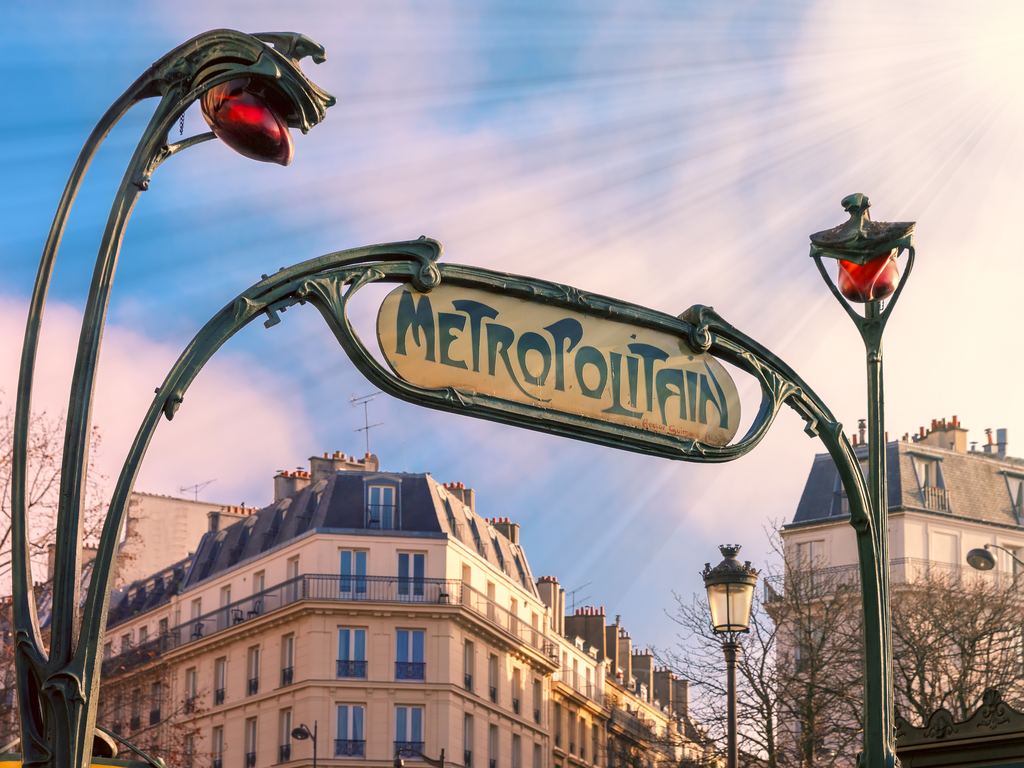
Art Nouveau spread throughout Europe between 1890 and 1914, with sinuous lines inspired by plants. Hector Guimard designed the entrances to the Paris Metro in 1900; Émile Gallé and Louis Majorelle worked in Nancy on glass and furniture. The Musée d'Orsay dedicates a large section of decorative arts to this style, on level 2 and in the pavillon Amont (levels 3 and 4), which brings together Art Nouveau from Central Europe, Northern Europe, Scandinavia, Austria, Great Britain, and the United States. We have not found any inventory records for this section; rather than mentioning a specific object, we prefer to refer you to the official plan.
Sculpture: From Carpeaux to Pompon
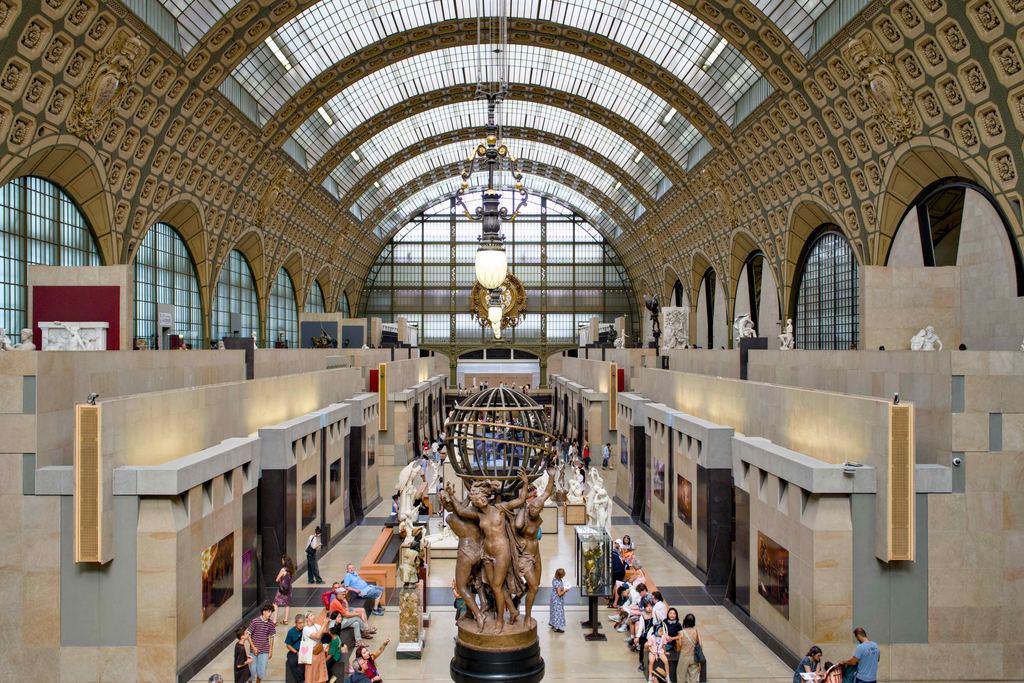
From academic modeling to simplified forms
The Dance by Jean-Baptiste Carpeaux (RF 2884) is a stone high-relief commissioned for the facade of the Paris Opera and purchased by the State in 1869: the original was deposited in 1964, and a copy by Paul Belmondo took its place on the Opera. Auguste Rodin exhibited The Age of Bronze in Brussels in 1877 under the title The Vanquished, and then at the Salon of the same year; the bronze at Orsay (RF 676) was purchased by the State at the Salon of 1880. Camille Claudel (1864-1943), a student and collaborator of Rodin, has her place in this story, but we have not found any inventory records that can be used to cite one of her works. The White Bear by François Pompon (RF 3269, stone, dated 1925 according to the record, purchased in 1926) shows the simplification of volumes that followed: a smooth silhouette, without anatomical detail.
Where to find each department, floor by floor
| Level | Here's what the plan outlines: |
|---|---|
| Ground floor | Paintings from 1850 to 1870 (Courbet, Millet, Manet, Degas, Bazille, Monet, and Renoir from the 1860s), sculptures from 1850 to 1880, central gallery; temporary exhibitions |
| Intermediate (level 2) | Naturalism, Symbolism, portraits, historical painting; Nabi movement; Toulouse-Lautrec; Art Nouveau; sculpture terraces; modern interiors, 1905-1914 |
| Upper Pavilion (levels 3-4) | Art Nouveau from Central Europe, Northern Europe, and Scandinavia; Austria, Great Britain, and the United States |
| 5 | Impressionism; Neo- and Post-Impressionism (Van Gogh, Seurat and Signac, Gauguin in Tahiti, Redon and the Nabis); clock exhibition |
This allocation is valid for the summer of 2026 and may change: the layout evolves from one season to the next. For details level by level, see our floor plan guide; for durations, the estimated time required.
FAQ
What is the difference between Impressionism and Post-Impressionism?
Impressionism (1874-1886) was a group of artists who exhibited together. Post-Impressionism is a term applied retrospectively, particularly by Roger Fry in 1910, to painters who either left the group or were never part of it: Cézanne, Van Gogh, Gauguin, and Seurat.
On which floor are the Impressionist paintings located at the Musée d'Orsay?
According to the summer 2026 guide, at level 5. Please note that the signage may change: the map provided at the entrance is the definitive guide.
Is "The Starry Night at Orsay" the famous "Starry Night" painting?
No. The one at Orsay depicts the Rhône in Arles (September 1888); The Starry Night from Saint-Rémy (1889) is at the MoMA in New York.
What does "pompiers painting" mean?
It's an ironic nickname for 19th-century academic painting. Wikipedia traces the written use of the term back to 1882 and suggests it alludes to the gleaming helmets of ancient figures.
Where can you see the Nabi paintings at the Musée d'Orsay?
According to the summer 2026 curriculum guide, these topics will be covered in level 2, which includes a dedicated section, and also in level 5, with Redon.
Can I see the Impressionist paintings separately, and in a short amount of time?
Yes, with a program focused on level 5. Our page how much time to plan offers programs of 1 hour, 2 hours, and a half-day.
Should you visit the Musée d'Orsay or the Musée Marmottan to see Impressionist art?
Visit the Orsay museum for an overview of the period from 1848 to 1914; the Marmottan Monet museum to see Impression, soleil levant and a collection focused on Monet. See Orsay, Louvre, Orangerie or Marmottan.
Learn more
Masterpieces and their inventory
Each artwork is listed with its number and its method of acquisition.
The eight Impressionist exhibitions
Dates, locations, absentees, and notes regarding Caillebotte.
The glossary
Cloisonnism, divisionism, and compartmentalization: these are the terms used by cartels.
Data verified on . Movements and dates: Wikipedia (French version); works and inventories: Joconde database entries; levels: summer 2026 guide. This is an independent website, not affiliated with the Musée d'Orsay. Politique éditoriale