
This glossary brings together 96 words that you will encounter when visiting the Musée d'Orsay, in the labels, descriptions, and works on the 19th century: movements, techniques, institutions, vocabulary used to describe the artworks, and words related to the former train station. Each term has its definition, and, when we were able to verify it, an example of a work from the museum with its inventory number. When we do not have a reliable source, the box remains empty: a dash is better than citing a work from memory. For the movements described in detail, see the overview of the movements.
To read a label: first, note the title, the artist, the date, and the technique used. Then, look for the inventory number (identified by "RF" followed by a number) and the method of acquisition (e.g., bequest, donation, purchase). These last two lines explain how the artwork came to be in the museum's collection.
Movements, trends, and periods
The labels for artistic movements are almost all posthumous: "Impressionist," "Post-Impressionism," or "School of Pont-Aven" were invented later, often by critics. The dates that follow are simply points of reference. The word Impressionism, for example, originated from a mocking remark in 1874.
| Term | Definition | Example in Orsay |
|---|---|---|
| Academicism | Painting that adheres to the rules taught by the Academy: noble subjects (history, mythology), careful drawing, sophisticated composition, and a smooth surface. The term is often used in a derogatory way since the late 19th century. | Cabanel, "The Birth of Venus" (RF 273) |
| Fire art | The term is an ironic nickname for academic painting that focuses on grand subjects. Wikipedia cites the first written use of the term in 1882, by Théodore de Banville; the image it evokes is that of the gleaming helmets of ancient heroes. | Gérôme, "Young Greeks Crowing Roosters" (RF 88) |
| Neoclassicism | A return to antiquity and a focus on precise drawing characterized the artistic landscape around 1800; Ingres was a late inheritor of this style. | Ingres, "The Source" (RF 219, legs 1878) |
| Romanticism | Emerging in the late 18th century and dominant until the 1850s, this movement prioritized emotion, color, and literary or exotic themes over strict adherence to rules. | Clésinger, Woman bitten by a snake (RF 2053) |
| Barbizon School | Landscape painters settled in Barbizon, near the Forest of Fontainebleau, starting in the 1830s, to paint outdoors. The movement was informal. | Millet, The Gleaners (RF 592) |
| Realism | A movement from the mid-19th century that depicted contemporary life and ordinary people on a large scale. Courbet championed this movement with his "Pavilion of Realism" in 1855. | Courbet, "A Burial at Ornans" (RF 325) |
| Naturalism | Extending realism, it emphasizes social determinism and observation. The term originated in literature (Zola) before being applied to certain painters. | Bastien-Lepage, "The Hay Harvest" (inventory number not recorded) |
| Impressionism | This painting style aims to capture the fleeting impression of light through quick brushstrokes and light colors. The name originates from an article by Louis Leroy in the newspaper "Le Charivari" on April 25, 1874. | Monet, Poppies (RF 1676) |
| Neo-Impressionism | The method of Seurat, Signac, and their colleagues involved using small, pure color strokes, placed next to each other, which the eye then blends together. They exhibited alongside the Impressionists for the first time in 1886. | Seurat, "The Circus" (RF 2511) |
| Pointillism | The common name for the neo-impressionist technique, which involves applying color in small dots, is "pointillism." Seurat preferred the terms "divisionism" or "chromo-luminarism." | Seurat, "Reclining Woman" (RF 1947 15) |
| Divisionism | This technique involves breaking down tones into pure color elements, intended to blend in the viewer's eye rather than on the palette. Another name for this is chromo-luminarism. | -- |
| Post-Impressionism | This retrospective label, attributed to the critic Roger Fry, refers to Cézanne, Van Gogh, Gauguin, Seurat, and their contemporaries who went beyond Impressionism. It does not designate a specific group. | Cézanne, The Card Players (RF 1969) |
| Synthesis | The term used by Gauguin, Émile Bernard, and their associates to distinguish themselves from Impressionism: simplified forms and colors, rendered in flat areas with defined outlines. Pont-Aven, 1888. | Gauguin, "La Belle Angèle" (RF 2617) |
| Cloisonnism | Areas of color separated by dark outlines, reminiscent of cloisonné enamel and stained glass. Associated with Émile Bernard and Louis Anquetin. | Gauguin, "La Belle Angèle" (RF 2617), for the overall impression |
| Pont-Aven School | This label was applied retrospectively to the artists who came to Pont-Aven, in Brittany, at the end of the 19th century, around Gauguin (including Bernard and Sérusier). | Sérusier, "The Talisman" (Collection Fine Arts, 1985, No. 13) |
| Symbolism | This late 19th-century art movement suggests ideas and dreams rather than depicting reality. Originating in poetry, it gained popularity in painting, with artists like Moreau, Puvis de Chavannes, and Redon. | Moreau, Orpheus (RF 104) |
| Nabis | A group of young painters (Denis, Sérusier, Bonnard, Vuillard) who, around 1888-1900, applied the lessons of Gauguin. "Nabi" means "prophet" in Hebrew. | Denis, Homage to Cézanne (RF 1977 137) |
| Art Nouveau | European decorative style from around 1890-1914, characterized by curved lines inspired by nature (Guimard, Gallé, Majorelle). | -- |
| Viennese secession | Founded in Vienna in 1897, this association of artists, including Klimt, broke away from official art. The movement is now retrospectively associated with Art Nouveau. | -- |
| Eclecticism | A blend of historical styles, typical of the architecture and decorative arts of the Second Empire and the Third Republic. | -- |
| Orientalism | Representations of the Orient, whether imagined or observed during travel, by Western artists of the 19th century. | -- |
| Japonism | The influence of Japanese prints and art on European artists, from the 1860s to the 1890s. | -- |
| Pre-Raphaelites | British society founded in 1848, which advocates for the authenticity of painters who predate Raphael. | -- |
| Aesthetics | The "art for art's sake" doctrine, championed by Whistler, who titled his paintings "arrangements" or "symphonies." | Whistler, Arrangement in Grey and Black No. 1 (RF 699) |
| Naive art | Paintings by self-taught artists with a direct vision, devoid of academic perspective; Henri Rousseau, known as "Le Douanier," is a well-known example. | Rousseau, La Guerre (RF 1946 1) |
| Beautiful Era | A period of peace and urban development, roughly from 1890 to 1914. The exact boundaries of this period are debated by historians. | -- |
| Second Empire | The reign of Napoleon III, from 1852 to 1870. | Carpeaux, "The Dance" (RF 2884, acquired in 1869) |
| Third Republic | The French political system from 1870 to 1940. The Orsay station was built under this regime, from 1898 to 1900. | -- |
| City of Paris | The Parisian uprising of March to May 1871. The Orsay Palace burned during the night of May 23-24, 1871. | -- |
Techniques and materials
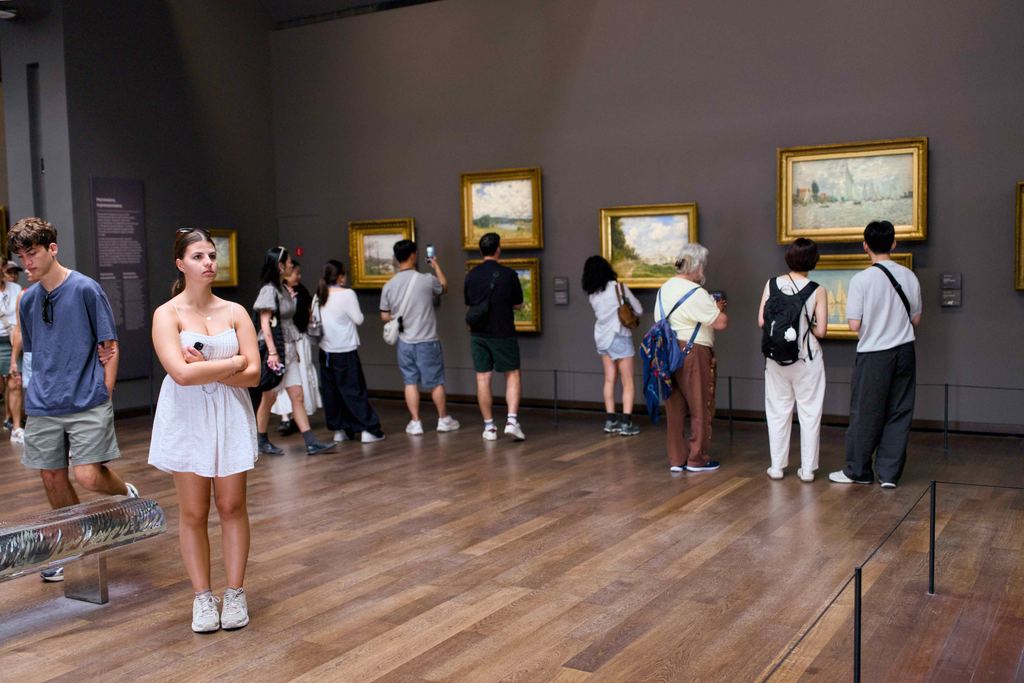
Technique often tells us more than the subject. A visible brushstroke, impasto, a dark outline or a black patina can help us date a work and place it in context. The examples below come from the technique fields in the collection records.
| Term | Definition | Example in Orsay |
|---|---|---|
| Oil on canvas | Oil-based pigments applied to a stretched canvas: this was the standard technique used for paintings in the 19th century. | Manet, Olympia (RF 644) |
| Pastel | Dry pigment sticks. These are fragile and require display in low-light conditions, and their presence in the exhibition is not guaranteed. | Degas, "The Bather" (RF 4046, pastel on cardboard) |
| Carton | A rigid and lightweight support on which Toulouse-Lautrec painted in oil. | Toulouse-Lautrec, "The Clown Cha-U-Kao" (RF 2027) |
| Outdoor painting | Painting en plein air, outside the studio: the availability of paints in tubes made this easier in the 19th century. The Barbizon school and later the Impressionists made it a common practice. | -- |
| Button | The brushstroke: In Impressionism, it is quick and remains visible. | Monet, Poppies (RF 1676) |
| Wheelbase | A thick layer of paint that preserves the texture and character of the brushstrokes. | -- |
| Sketch, study | A preparatory or research work that precedes the finished painting. | Seurat, "Reclining Woman" (RF 1947 15) |
| Series | The same subject is revisited from different perspectives. Monet painted the Rouen Cathedral in 1892 and 1893. | Five Cathedrals of Rouen (RF 1999, 2000, 2001, 2002, 2779) |
| Lost-wax casting | Bronze casting process: a wax model is replaced with molten metal. | Degas, "Little Dancer of Fourteen Years" (RF 2137) |
| Test, print | This is a cast replica made from a model. "The Little Dancer" was cast in bronze after Degas's death, by the foundry Hébrard. | Degas, "Little Dancer of Fourteen Years" (RF 2137) |
| Finish | Surface coloration of bronze, achieved through chemical or thermal treatment. | Rodin, The Age of Bronze (RF 676, black patina) |
| Plaster | Material used for the sculpted model, before it is cast in bronze or carved from marble. | -- |
| Size with adjustments | A method that transfers the measurements taken from a model onto a block of stone or marble. | Pompon, the Polar Bear (RF 3269) |
| High relief, low relief | Sculpture in which the motifs stand out from the background to varying degrees. | Carpeaux, "The Dance" (RF 2884, high relief) |
| Sandstone | High-temperature fired ceramic. | Gauguin, Oviri (OAO 1114) |
| Marble | Pierre is very busy with sculpture. | Clésinger, Woman bitten by a snake (RF 2053) |
Institutions, exhibitions, and the art market
In the 19th century, every painter's career went through a jury and the Académie. Understanding who makes the decisions explains the parallel exhibitions and the role of the state as a buyer. To learn about the history of these exhibitions, read our article on the eight Impressionist exhibitions and the Salon des Refusés.
| Term | Definition | Example in Orsay |
|---|---|---|
| Academy of Fine Arts | Official Artists' Association. In the 19th century, it set the tone for official taste and appointed members of the Salon juries. It protested against the donation of the Caillebotte collection to the Luxembourg Museum. | -- |
| Living room | This is an official art exhibition in Paris, and it's almost a necessary step for artists who want to secure commissions and build a clientele. A jury selects the works that will be exhibited. | Cabanel, The Birth of Venus (RF 273); Rodin, The Age of Bronze (RF 676, purchased at the 1880 Salon) |
| Exhibition of Rejected Works | The exhibition opened on May 15, 1863, at the request of Napoleon III, to showcase the works that had been rejected by the jury. According to Wikipedia, this included over 3,000 works out of the 5,000 submitted. | Manet, "Le Déjeuner sur l'herbe" (RF 1668), originally titled "Le Bain" (The Bath) |
| Independent Artists' Exhibition | An exhibition without a jury, established in 1884 by the Société des artistes indépendants. | Van Gogh, "The Starry Night" (RF 1975 19), exhibited in 1889 |
| Joint-stock company of painters, sculptors, and engravers | Founded on December 27, 1873, this society organized the first Impressionist exhibition. Each member paid 5 francs per month, and the society took 10% of the sales (Wikipedia). | Monet, "Poppies" (RF 1676), exhibited in 1874 |
| Rome Prize | The Academy competition sends its winner to the Villa Medici. Victor Laloux, the architect of the Orsay station, was the winner. | -- |
| School of Fine Arts | A state-run art school in Paris, founded in 1817. | -- |
| Admissions committee | Committee that accepts or rejects the works submitted to the exhibition. | -- |
| Art dealer | Art dealer. Paul Durand-Ruel supported the Impressionists and rented his gallery on Rue Le Peletier for the 1876 exhibition. | Caillebotte, "The Floor Scrapers" (RF 2718), exhibited in 1876 |
| Luxembourg Museum | The Museum of Living Artists (1818-1937): Works entered the museum during the artists' lifetimes and were then transferred to the Louvre. | Manet, "Olympia" (RF 644), exhibited at the Luxembourg Museum from 1890 to 1907 |
| National Gallery of the Jeu de Paume | This was formerly the jeu de paume (a type of historical racquet sport) court at the Tuileries Palace, which later became a gallery dedicated to Impressionist art from 1947 to 1986, before the collection was moved to the Musée d'Orsay. | -- |
| National Museum of Modern Art | According to the Ministry of Culture, it is one of the three main sources of the Musée d'Orsay's collections, alongside the Louvre and the Jeu de Paume. | -- |
| Orangerie Museum | The Musée des Tuileries houses the extensive collection of Monet's Water Lilies. It has been affiliated with the Musée d'Orsay since 2010. | Monet, "Water Lilies (Blue)," (RF 1981 40), which is not the entire collection at the Musée de l'Orangerie |
| National Museums Association (RMN) | Established in 1895, this public institution merged in 2011 with the Grand Palais to form the RMN-Grand Palais. It produces and distributes images from the museums, which is why its name appears in the photo credits. | -- |
| Public institution comprising the Musée d'Orsay and the Musée de l'Orangerie | The organization has been a legal entity since 2010. The name of Valéry Giscard d'Estaing was added in 2021. | -- |
| Historical monument, classification | The highest level of protection for this property is afforded to the former Orsay railway station, which was designated as a historical monument on March 15, 1978 (reference: Mérimée database, PA00088689). | -- |
| Registration as a historical monument | The level of protection is lower than the official classification. According to the "History of the Museum" page on the Musée d'Orsay website, Orsay was added to the supplementary register of historical monuments on March 8, 1973; the Mérimée database only mentions the classification from 1978. | -- |
| Merimee Database | The national architectural heritage database, maintained by the Ministry of Culture and accessible on the POP portal. | -- |
| Joconde Database | Collective catalog of the collections of French museums: each entry provides an inventory, dimensions, technique, style, and year of acquisition. | -- |
| Art purchasing service for living artists | A state agency that purchases artworks from living artists, particularly at exhibitions like the Salon. | Moreau, Orpheus (RF 104); Carpeaux, The Dance (RF 2884) |
The words on the labels and instructions
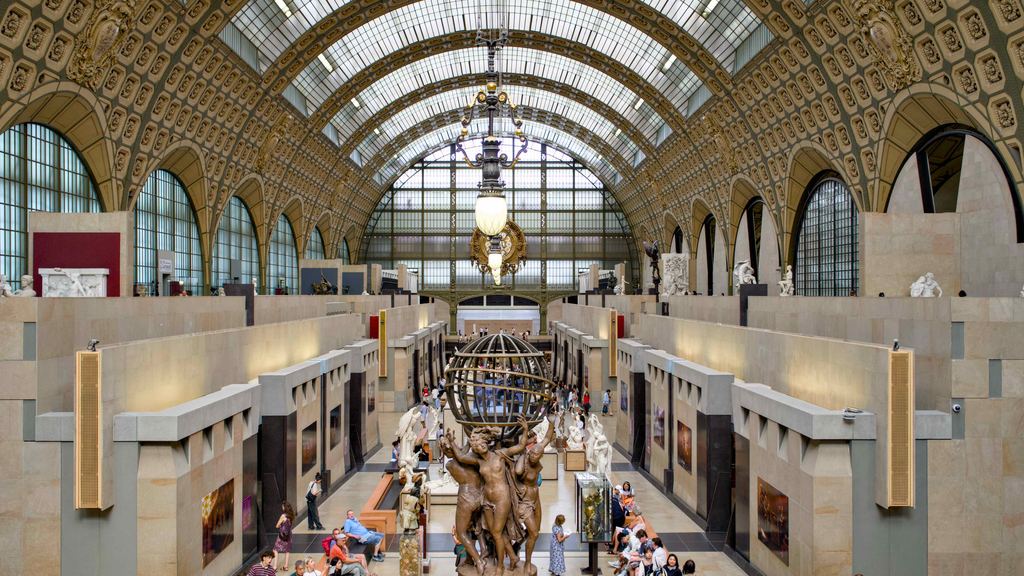
Each artwork carries a history of acquisition: bequest, donation, manual donation, gift, subscription. These words, found in the Joconde records, explain why a particular painting is at Orsay and not at the Louvre or in New York. Our page on masterpieces of the museum provides an inventory and the method of acquisition for each one.
| Term | Definition | Example in Orsay |
|---|---|---|
| Legs | Acquisitions through bequests: the Caillebotte bequest (1894), the bequest from Count Isaac de Camondo (1911). | Renoir, "Bal du moulin de la Galette" (RF 2739); Cézanne, "The Card Players" (RF 1969) |
| Donation | A donation involves the transfer of ownership during the donor's lifetime. It can be made "subject to usufruct," meaning the donor retains possession of the artwork until their death, which can create a discrepancy between the year of acquisition and the actual physical transfer of ownership. | Manet, Émile Zola (French collection, accession number RF 2205, donated in 1918, officially added to the collection in 1925) |
| User manual | Transfer of ownership by handshake, without a notarized deed. | Manet, "Asparagus" (French National Collection, 1959, inventory number 18) |
| Payment in kind | Artwork accepted by the state as payment of inheritance taxes. | Courbet, "The Origin of the World" (French National Collection, 1995, inventory number 10) |
| Public offering | Public collection to acquire a work of art. | Manet, "Olympia" (RF 644), 1889-1890, inspired by Monet |
| Cession (peace treaty with Japan) | Entry method for "Van Gogh's Room in Arles" and "Vairumati" by Gauguin in 1959. The "Vairumati" entry note specifies: "application of the peace treaty with Japan." | Van Gogh, "Van Gogh's Bedroom in Arles" (RF 1959 2) |
| Purchase after order | The state commissions a work of art and then purchases it once it is completed. | Renoir, "Young Girls at the Piano" (RF 755) |
| Hardware input | The date on which the artwork actually arrives at the museum, which is distinct from the year of its legal acquisition. | "Legs" by Caillebotte: acquired in 1894, entered the collection in 1896 |
| Allocation | Assignment of a work already owned by the state to a specific museum. | Manet, "Olympia" (RF 644), which was transferred to the Musée d'Orsay in 1986 |
| Submit | Work temporarily entrusted to another institution. | -- |
| RF (inventory number) | "French Republic": a cataloging prefix used for national museums. "RF 1999" refers to item number 1999 in the series; "RF 1975 19" designates the 19th entry from the year 1975. | Van Gogh, The Starry Night (RF 1975 19) |
| MNR | "National Museums: Recovered Works": These are artworks that were looted during the Occupation, recovered as a result of operations conducted between 1945 and 1950, and listed in a separate inventory, pending restitution. | -- |
The museum and the train station
The museum is located in the former Orsay station, built on the ruins of the Orsay palace. Its landmarks, including the nave, clock, stained-glass window, and Amont pavilion, are those shown in the plans and guides. For the building's timeline, see the history of the station at the museum.
| Term | Definition | Example in Orsay |
|---|---|---|
| Musée d'Orsay | The building, constructed between 1810 and 1838, was initially intended for the Ministry of Foreign Affairs, and later housed the Council of State and the Court of Auditors. It was burned down in May 1871 during the Paris Commune, and the site was subsequently used for the construction of a railway station. | -- |
| Council of State | It was installed on the ground floor of the Musée d'Orsay in 1840. | -- |
| Court of Auditors | It was installed on the first floor of the Musée d'Orsay in 1842. | -- |
| Quai d'Orsay | It was named after Charles Boucher d'Orsay, the provost of the merchants who commissioned its construction. | -- |
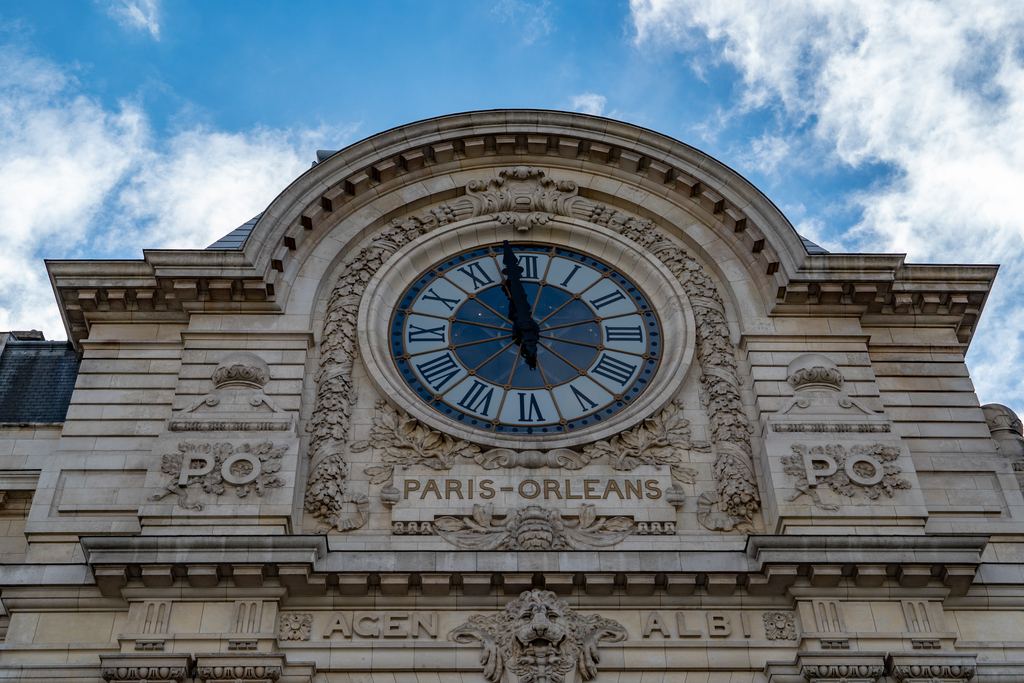
| Paris-Orléans Railway Company | This railway company operates the station, which was built between 1898 and 1900. Its name is displayed on the facade. | -- |
| Terminal station | This is a station where trains stop without continuing on to another destination. Orsay is the final stop on the Paris-Orléans line. | -- |
| Terminus Hotel, Orsay Hotel | A 370-room hotel, built alongside the train station and closed in 1973 (according to the Mérimée database). | -- |
| Glass enclosure, metal hall | According to the Musée d'Orsay and the Mérimée database, the glass roof covers the large metal hall of the former train station, which is 32 meters high, 40 meters wide, and 138 meters long. The stone facade conceals this structure from the exterior. | -- |
| Large clock | Large window on the Seine-facing facade. On the 5th floor, the floor plan indicates the clock room; the Campana Café overlooks one of the large exterior clocks (museum site). | -- |
| Campana Coffee | The café on the 5th floor, designed by the Campana brothers, offers a view of one of the large exterior clocks. | -- |
| Nape | The main hall of the former train station, now an avenue of sculptures, once housed an exhibition. According to the Ministry of Culture, the 1986 exhibition featured a juxtaposition of works by Couture and Courbet. | Couture, The Romans of Decadence (INV 3451) |
| Main gallery, central aisle | This area was designed by Gae Aulenti to welcome visitors. | -- |
| Upstream Pavilion | The extension, which opened in 2011, is dedicated to decorative arts and is organized by country. It houses foreign Art Nouveau collections on levels 3 and 4. | -- |
| Plaza | Esplanade in front of the museum, created in 1985. | Jacquemart, "Rhinocéros" (RF 3753), typeface from 1878 |
| Trim | Display wall for paintings in a museum. | -- |
| Orsay Museum Station (RER C line) | This is an underground station on Line C, operated by SNCF and located beneath the museum. According to Wikipedia, its full name includes the name of Valéry Giscard d'Estaing. | -- |
| ACT Architecture | The team (Bardon, Colboc, Philippon) won the 1979 competition for the project to transform the train station into a museum. | -- |
| Gae Aulenti | Italian interior designer, co-creator of interior designs with Italo Rota, Piero Castiglioni, and Richard Peduzzi. | -- |
| Opening and launch | The museum was inaugurated by François Mitterrand on December 1, 1986, and opened to the public on December 9th. | -- |
Data verified on . Definitions: Wikipedia (French version) and Joconde database entries, accessed on November 6, 2026. This is an independent website, not affiliated with the Musée d'Orsay. Politique éditoriale