
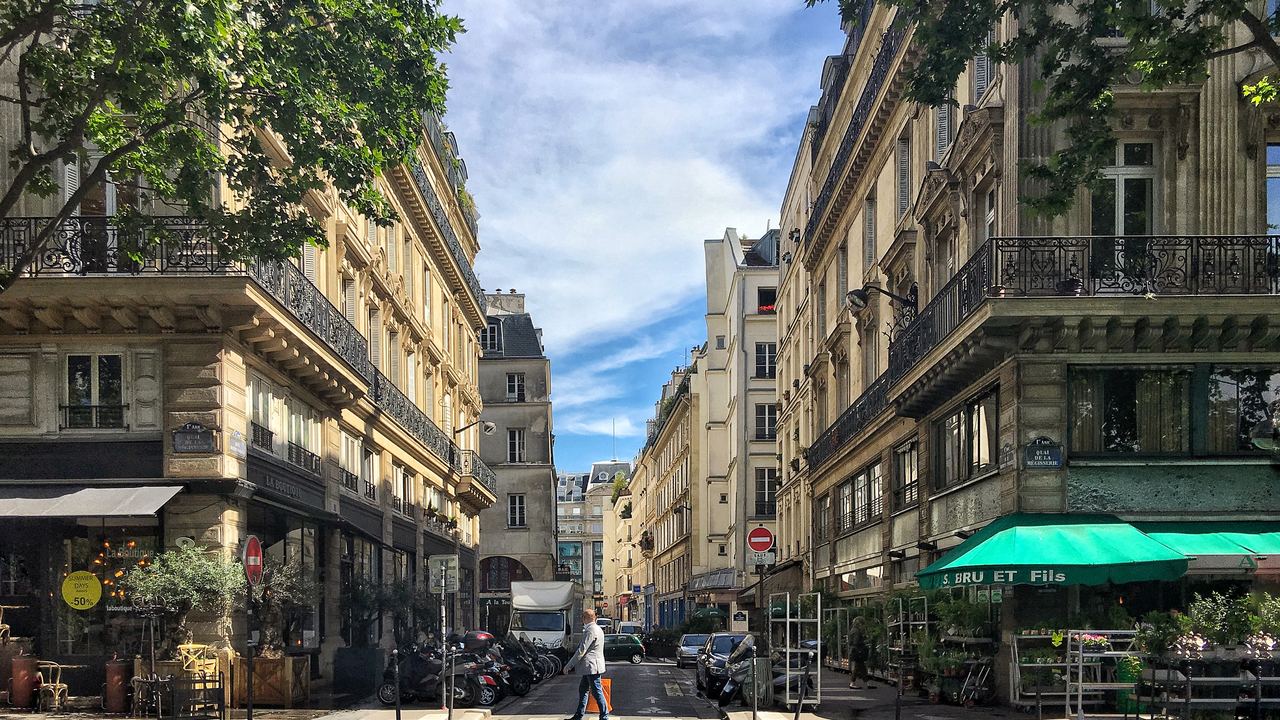
The first Impressionist exhibition opens on April 15, 1874, at 35 Boulevard des Capucines, in Paris. There will be eight in total, the last one from May 15 to June 15, 1886, organized by the artists themselves because the Salon jury often rejected their paintings. The Musée d'Orsay does not recreate any of these exhibitions, but it preserves paintings that were shown in them: this page lists which ones, based on information from the Ministry of Culture, and what happened before (the Salon, the Salon des Refusés of 1863) and after (the Caillebotte bequest, in 1894).
The Salon and the Academy: Why it was necessary to exhibit elsewhere
In the 19th century, the Salon was the official exhibition in Paris. Being accepted meant obtaining commissions, buyers, and a reputation; being rejected meant working in the shadows. The admission jury was appointed by the Académie des beaux-arts, which championed painting of noble subjects (history, mythology), with careful drawing and a smooth surface. Courbet was rejected in 1846; in 1855, he opened his own Pavilion of Realism. In 1859, the painter Bonvin opened a private salon for those who were rejected; in 1861, Théodore Véron presented a "petition of the rejected." These dates come from the Wikipedia page on the Salon des Refusés.
The Musée d'Orsay staged this conflict from its opening. According to the Ministry of Culture, the opening exhibition of 1986 placed a face-to-face encounter in the main nave between Thomas Couture's The Romans of the Decadence (1847, inv. INV 3451, purchased by the State after commission) and Gustave Courbet's A Burial at Ornans (inv. RF 325, entered the national collections in 1881 as a donation). Two major paintings that represent everything in opposition: an ancient subject on one side, a village burial on the other. For the concept of academic art and its nickname "academic," see the panorama of movements.
The Salon of the Rejected, May 15, 1863
In 1863, the jury rejected more than 3,000 works out of 5,000 submitted (Wikipedia). The protests were so strong that Napoleon III, advised by Viollet-le-Duc, authorized an "exhibition of works not admitted," which the press immediately dubbed the Salon des Refusés (Salon of the Rejected). It opened on May 15, 1863, in twelve rooms of the Palais des Champs-Élysées, an annex to the Palais de l'Industrie, and featured 1,200 works.
Édouard Manet submitted three paintings. One was then called Le Bain: this is what we now call Le Déjeuner sur l'herbe. The museum's record describes it as n° 363 in the 1863 catalog, "under the title Le bain." Étienne Moreau-Nélaton donated it to the state in 1906 (inv. RF 1668); its complete history is in the file of masterpieces. Among the other works rejected in 1863 were Camille Pissarro, Henri Fantin-Latour, and James Whistler (Wikipedia). Two years later, Olympia was accepted at the 1865 Salon, where it caused a scandal. It is now at Orsay (inv. RF 644), acquired through public subscription in 1890 at the initiative of Claude Monet.
The two are not the same: the Salon des refusés was an exhibition organized by the state, held once in 1863. The Impressionist exhibitions were private, funded by the artists, and they began eleven years later.
The Joint-Stock Company of 1873 and the Exhibition of 1874
On December 27, 1873, a group of painters founded in Paris the Société anonyme des artistes peintres, sculpteurs et graveurs (anonymous society of painters, sculptors, and engravers). Each member paid 5 francs per month, and the society took 10% of the sales (Wikipedia). It rented the studio of the photographer Nadar, located at 35 boulevard des Capucines, a large space illuminated by a skylight.
From April 15th to May 15th, 1874, 30 artists exhibited 165 works. There were approximately 3,500 visitors, with an entrance fee of 1 franc and a catalog for 0.50 francs. About a dozen paintings were sold, the most expensive one by Sisley, for 1,000 francs. The organizers also invited more traditional artists, so that the public would not see it as a second "Salon des Refusés" (Salon of the Rejected). The society, which was in deficit, was dissolved on December 14, 1874: each exhibitor had to pay 184.50 francs, according to the same source.
Who invented the word "Impressionist"?
No one in the group. The 1874 exhibition bore no official designation. The name comes from Louis Leroy, a painter, engraver, and journalist at Le Charivari. In his article of April 25, 1874, he used the title of a Monet painting, Impression, soleil levant (Impression, Sunrise), to mock the group. This painting is not at the Musée d'Orsay; it belongs to the Musée Marmottan Monet. Leroy was not the only one to use the word "impression" that spring: Philippe Burty and Jules-Antoine Castagnary also used it, in more favorable articles. The public retained Leroy's version, and the artists eventually adopted the label: in 1879, the title of the fourth exhibition still combined "independent, realist, and impressionist."
The term "Impressionists" was initially used by critics as a derogatory label, but it was later adopted by the public before being officially embraced by the artists themselves. However, the eighth exhibition in 1886 removed the term from the catalog.
Here's a summary of the eight exhibitions in a table
| No | Dates | Address | Artists | Key takeaways |
|---|---|---|---|---|
| 1 | April 15 - May 15, 1874 | 35 Boulevard des Capucines (Nadar's studio) | 30 | 165 works of art, approximately 3,500 visitors; the birth of the term "Impressionist." |
| 2 | March 30 - April 30, 1876 | 11 Rue Le Peletier (Durand-Ruel Gallery) | 19 | 252 works; Caillebotte arrives; 17 out of the 30 artists from 1874 do not return |
| 3 | April 4-30, 1877 | 6 Le Peletier Street (apartment) | 18 | 241 works of art, approximately 8,000 visitors; rent paid by Caillebotte; the journal "L'Impressionniste." |
| 4 | April 10 - May 11, 1879 | 28 Opera Avenue | 15 or 16 | Approximately 16,000 visitors at a price of 0.50 francs; profits were shared; Renoir, Sisley, and Cézanne were not present; Monet attended at the insistence of Caillebotte (who displayed 29 paintings) |
| 5 | April 1-30, 1880 | 10 Pyramid Street | 19 | Caillebotte organized and financed the exhibition, along with Cassatt and Morisot; Monet was absent |
| 6 | April 2 - May 1, 1881 | 35 Boulevard des Capucines (annex) | 13 | Financial failure; Degas depicts the fourteen-year-old Little Dancer |
| 7 | March 1-31, 1882 | 251 Saint-Honoré Street | 9 | Return to an Impressionist style; critical and commercial success; Degas was not present |
| 8 | May 15 - June 15, 1886 | Maison Dorée, 1 Laffitte Street | 17 | Last; "Impressionist" category discontinued; early Neo-Impressionists (Seurat, Signac) |
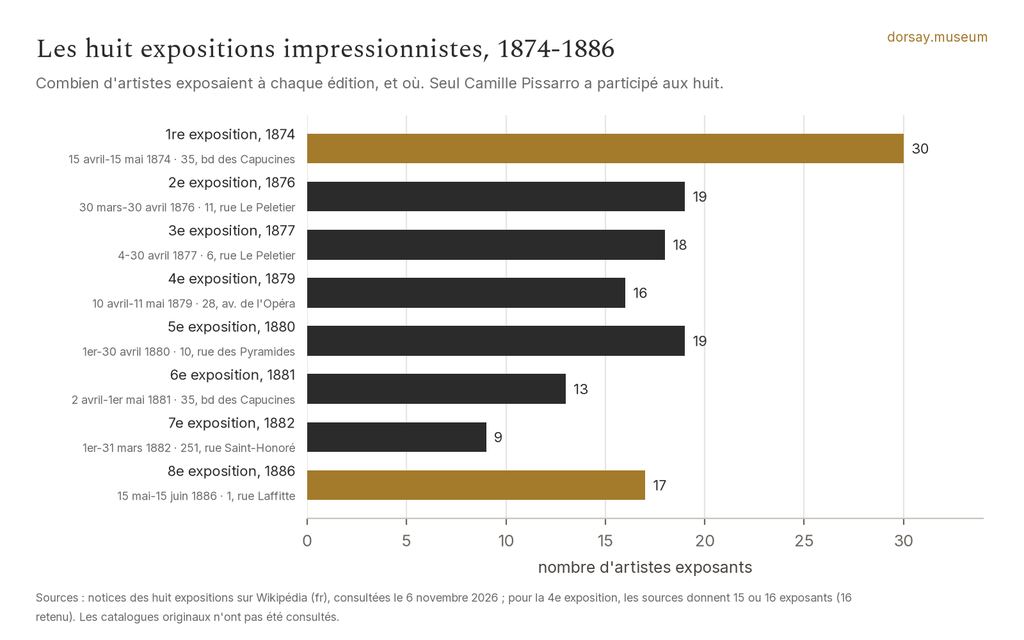
For the fourth exhibition, the Wikipedia page lists either fifteen or sixteen artists; we have included both numbers. The number of artworks for exhibitions 4 through 8 is missing from this source, and we have not fabricated those numbers.
The exhibitions, one by one, and what one sees at the Musée d'Orsay
The records in the Joconde database (a collective catalog of French museums) list, for each painting, the exhibitions in which it has been displayed. We examined the records (within a selection we consulted, and not the entire database) that mention an Impressionist exhibition. The inventory number (RF) and the acquisition method are those listed in the records. However, these records do not indicate where the artwork is currently located; a painting may be in storage, on loan, or have been moved to a different location.
1874: The first steps
Five works from the Musée d'Orsay are featured in the exhibition list mentioned in the notice: Les Coquelicots by Monet (1873, inv. RF 1676, donation Moreau-Nélaton 1906), Le Berceau by Berthe Morisot (1872, RF 2849, purchased 1930), Répétition d’un ballet sur la scène by Degas (RF 1978, no. 60 from the 1874 catalog; bequest Camondo 1911), and two works by Cézanne, La Maison du pendu, Auvers-sur-Oise (RF 1970, bequest Camondo 1911) and Une moderne Olympia (RF 1951 31, donation Manuel 1951).
1876 and 1877: Caillebotte, Renoir, the train station
In 1876, at Durand-Ruel, Gustave Caillebotte's The Floor Scrapers (RF 2718) and Sisley's The Flood at Port-Marly (RF 2020, bequeathed by Camondo in 1911) are exhibited. The Floor Scrapers are not part of the Caillebotte bequest: the description mentions a donation from the artist's heirs and Renoir, his executor.
The third exhibition (1877) is the best represented at Orsay: La Gare Saint-Lazare by Monet (RF 2775), Le Bal du moulin de la Galette (no. 186 from the catalog) and La Balançoire (no. 185) by Renoir (RF 2739 and RF 2738), Les Toits rouges by Pissarro (RF 2735), all from the Caillebotte bequest, plus Portrait de Madame Georges Charpentier by Renoir (RF 2244, Manuel donation, 1919). The catalog numbers are those provided in the descriptions.
1879-1882: A group that falls apart
In 1879, Roofs under Snow by Caillebotte (RF 876, donated in 1894 according to the label) is exhibited; Monet, Renoir, Sisley, and Cézanne are not included. In 1880, Young Woman in a Ballgown by Berthe Morisot (RF 843, purchased at a public sale in 1894) is displayed on Rue des Pyramides.
In 1881, Degas exhibited a wax sculpture, The Little Dancer of Fourteen Years, with a bodice, slipper, and tulle tutu. This is not the sculpture at the Musée d'Orsay: the museum possesses a bronze (RF 2137, a posthumous casting by the founder Hébrard, acquired in 1930), and the original wax sculpture is at the National Gallery of Art in Washington (Paul Mellon collection), according to the notes. The seventh exhibition, in 1882, does not correspond to any notes from the Musée d'Orsay that we have found: it is better to state that than to fill in the space.
1886: The eighth [painting], and one pastel, subject to confirmation
Only seventeen painters participated, including Marie Bracquemond, Mary Cassatt, Berthe Morisot, Degas, Gauguin, Pissarro and his son Lucien, Redon, Seurat, and Signac. Monet, Sisley, Renoir, and Caillebotte refused to come, annoyed by the presence of Gauguin and the young painters supported by Pissarro. Seurat exhibited A Sunday on La Grande Jatte, which is housed at the Art Institute of Chicago, not at Orsay. At Orsay, the description of Degas's Tub (pastel, RF 4046, Camondo bequest 1911) mentions the eighth exhibition with a question mark. It is a pastel held in the collections of the Louvre (graphic arts): fragile, it is not necessarily on display.
Who was there, and who was not
Camille Pissarro is the only one who participated in all eight exhibitions; the Wikipedia page about the eighth exhibition states this explicitly. Édouard Manet, whom many consider the leader of this "young school," never exhibited with it. Cézanne distanced himself after 1877 and lived in Provence. Degas, a great organizer, boycotted the seventh exhibition in 1882. Monet was absent in 1880, 1881, and 1886 (in 1879, he only came at the insistence of Caillebotte, with 29 paintings); Renoir and Sisley were absent in 1879, 1880, 1881, and 1886. Women were few but not absent: Berthe Morisot, Mary Cassatt, and Marie Bracquemond exhibited, with Morisot and her husband Eugène Manet largely financing the last edition.
A common misconception is that all of these exhibitions were failures. However, Wikipedia tells a different story: approximately 16,000 visitors and a profit in 1879, critical and commercial success in 1882; but losses or a negative balance in 1874, 1876, 1877, 1880, and 1881.
The Caillebotte Bequest: When the State Embraced the Impressionists
Gustave Caillebotte died on February 21, 1894, at the age of 45. In a codicil, he bequeathed to the State "the paintings by other artists" that he owned: paintings by Degas, Cézanne, Manet, Monet, Renoir, Pissarro, and Sisley. On March 11, 1894, Renoir, the executor of the will, wrote to the Directorate of Fine Arts. Sources indicate 65, 67, or 70 paintings, depending on whether one reads the letter, the accounts, or the summary table. Due to the lack of a precise count, we simply state: approximately forty works were accepted out of more than sixty offered.
| Date | Step |
|---|---|
| March 19, 1894 | The committee examined the paintings in a studio rented by Renoir, located at 11 Boulevard de Clichy |
| March 20, 1894 | The advisory committee voted to approve the acquisition, with the understanding that the works would be displayed at the Musée du Luxembourg. However, the administration raised concerns about space limitations and set a limit of three works per artist |
| January 17, 1895 | Meeting of the Fine Arts department, notaries, Martial Caillebotte, and Renoir: the state chooses which works to exhibit, while Martial keeps the rest |
| February 25, 1896 | Ministerial decree authorizing this option |
| November 23, 1896 | Official handover to the state; an annex in Luxembourg, located on the terrace, houses three rooms (construction began in 1897) |
| 1929 and 1947 | The paintings were first exhibited at the Louvre (1929) and then at the national gallery of the Jeu de Paume (1947) |
| 1986 | They will join Orsay when the museum opens |
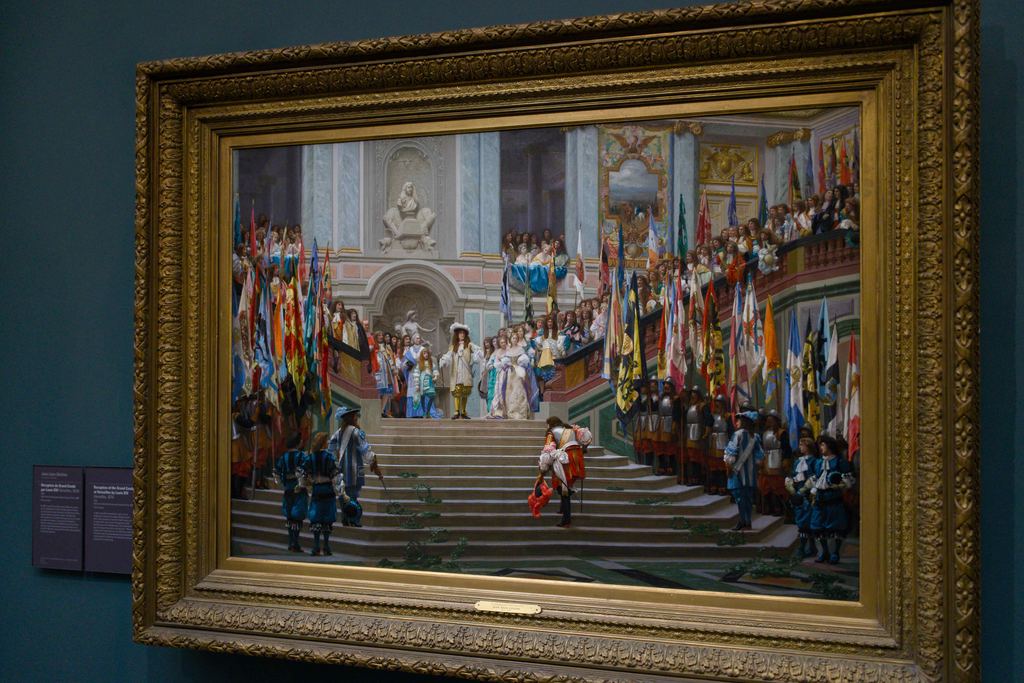
The protests are violent. The Academy of Fine Arts speaks of an "offense to the dignity of our school." The painter Jean-Léon Gérôme writes in the Journal des artistes:
We are living in a century of decline and stupidity... For the state to accept such garbage, it requires a profound moral decay.
The paintings from the bequest that are on display at the Musée d'Orsay
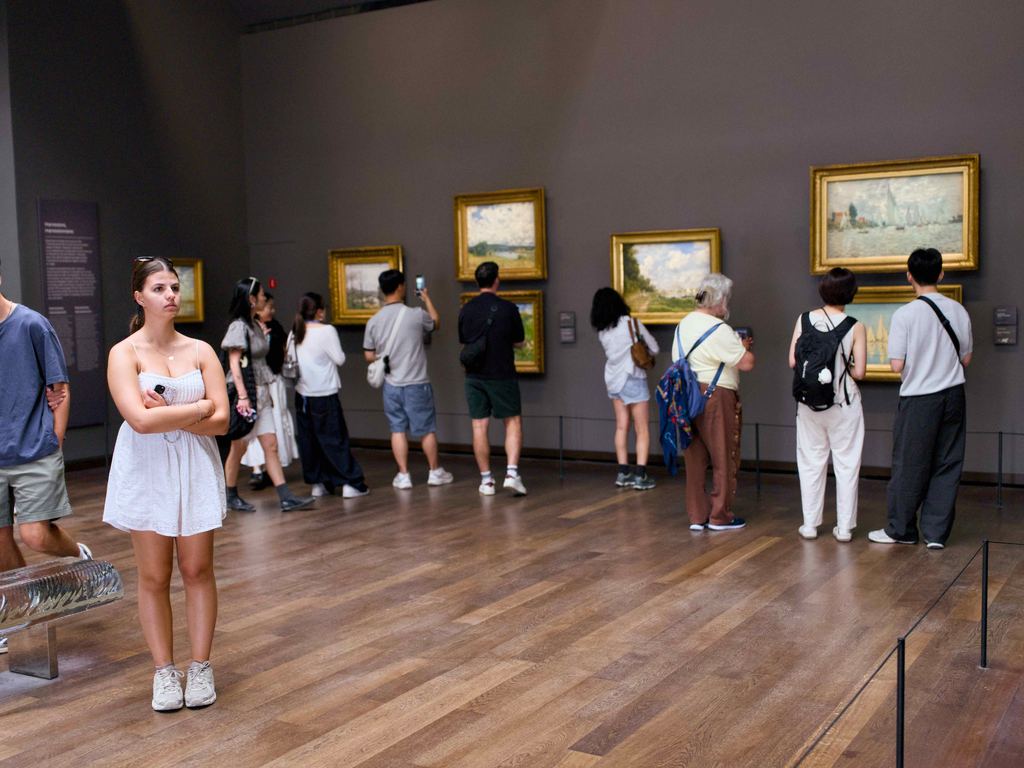
The Joconde records indicate that the works Le Bal du moulin de la Galette and La Balançoire by Renoir, La Gare Saint-Lazare and Régates à Argenteuil by Monet (RF 2778), Le Balcon by Manet (RF 2772), and Les Toits rouges by Pissarro, were acquired through "bequest" (1894, physical acquisition in 1896). The Jeu de Paume housed the Impressionists from 1947 to 1986, before their transfer to Orsay (Wikipedia).
Luxembourg has been, since 1818, the museum of living artists (Wikipedia), and it took a long time to exhibit Courbet and Millet. When the donation arrived, in 1897, most of the artists involved (Monet, Renoir, Pissarro, Degas) were still alive. Olympia had entered the collection in 1890. For the history of the building itself, read the page on the station that became a museum.
Where to see Impressionist art in Paris
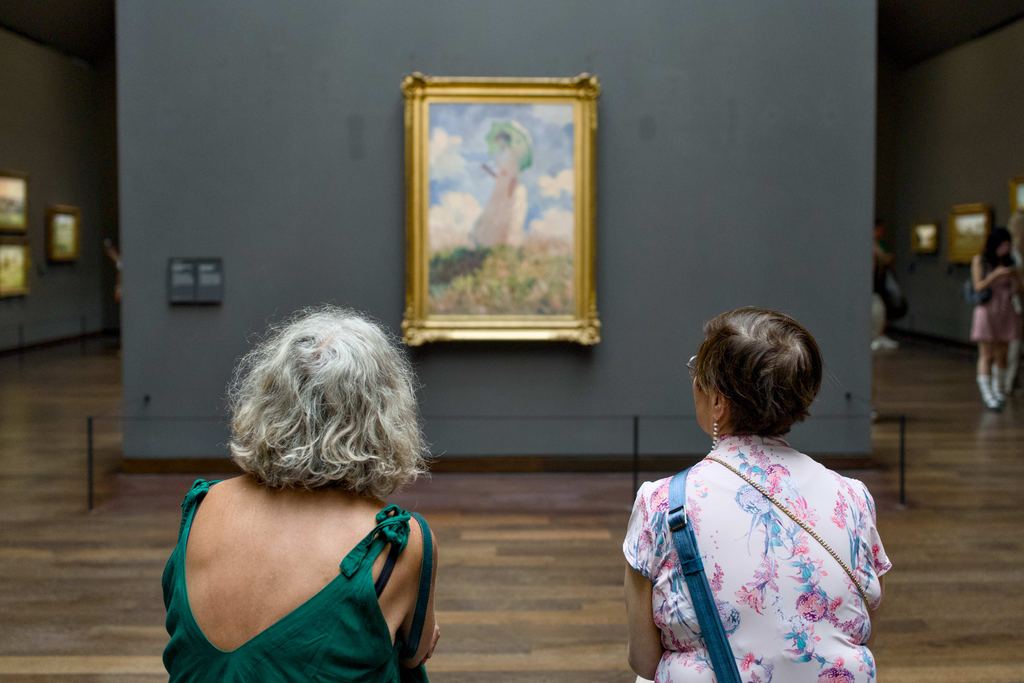
Orsay is the major venue for Impressionism in Paris, but it's not the only one: Impression, soleil levant is at the Musée Marmottan Monet, and the large collection of Water Lilies is at the Orangerie. To choose based on what you want to see, read our comparison Orsay, Louvre, Orangerie or Marmottan. For the places that these painters actually painted, the Paris of the paintings at Orsay.
FAQ
How many Impressionist exhibitions were there?
Eight exhibitions were held between April 15, 1874, and June 15, 1886, all in Paris. Only Camille Pissarro participated in every single one.
What is the difference between the Salon des Refusés and the Impressionist exhibitions?
The Salon des Refusés was an exhibition organized by the French government, held only once on May 15, 1863, to showcase works that had been rejected by the jury. The Impressionist exhibitions, on the other hand, were organized by the artists themselves, from 1874 to 1886.
Who gave their name to the Impressionist movement?
Louis Leroy, in Le Charivari on April 25, 1874, referring to Monet's painting Impression, soleil levant. The term was derogatory; the painters later adopted it.
Was Manet an Impressionist?
He never exhibited with the group, even though he was the eldest and most admired member. His Le Déjeuner sur l'herbe (Luncheon on the Grass) dates from 1863, eleven years before the first exhibition.
Was the Caillebotte bequest rejected?
In part. While the principle was accepted in March 1894, the selection was narrowed down to approximately forty works, out of more than sixty that were proposed (65, 67, or 70, depending on the source).
Is the painting Impression, soleil levant (Impression, Sunrise) in the Musée d'Orsay?
No. The painting belongs to the Musée Marmottan Monet in Paris.
Does the painting <i>The Floor Scrapers</i> originate from the Caillebotte collection?
No, according to the Joconde database: it was a donation from the heirs of the painter and Renoir, accepted in addition to the bequest.
Which works from the first exhibition of 1874 are currently on display at the Musée d'Orsay?
According to the Joconde database: Les Coquelicots (Poppies) by Monet, Le Berceau (The Cradle) by Berthe Morisot, Répétition d’un ballet sur la scène (Rehearsal of a Ballet on Stage) by Degas, and two works by Cézanne, La Maison du pendu (The House of the Hanged Man) and Une moderne Olympia (A Modern Olympia). Their presence in the exhibition depends on the arrangement of the artworks.
Data verified on . Dates and locations: Wikipedia (FR) (pages for each exhibition), artworks: information from the Joconde database. This is an independent website, not affiliated with the Musée d'Orsay. Politique éditoriale