
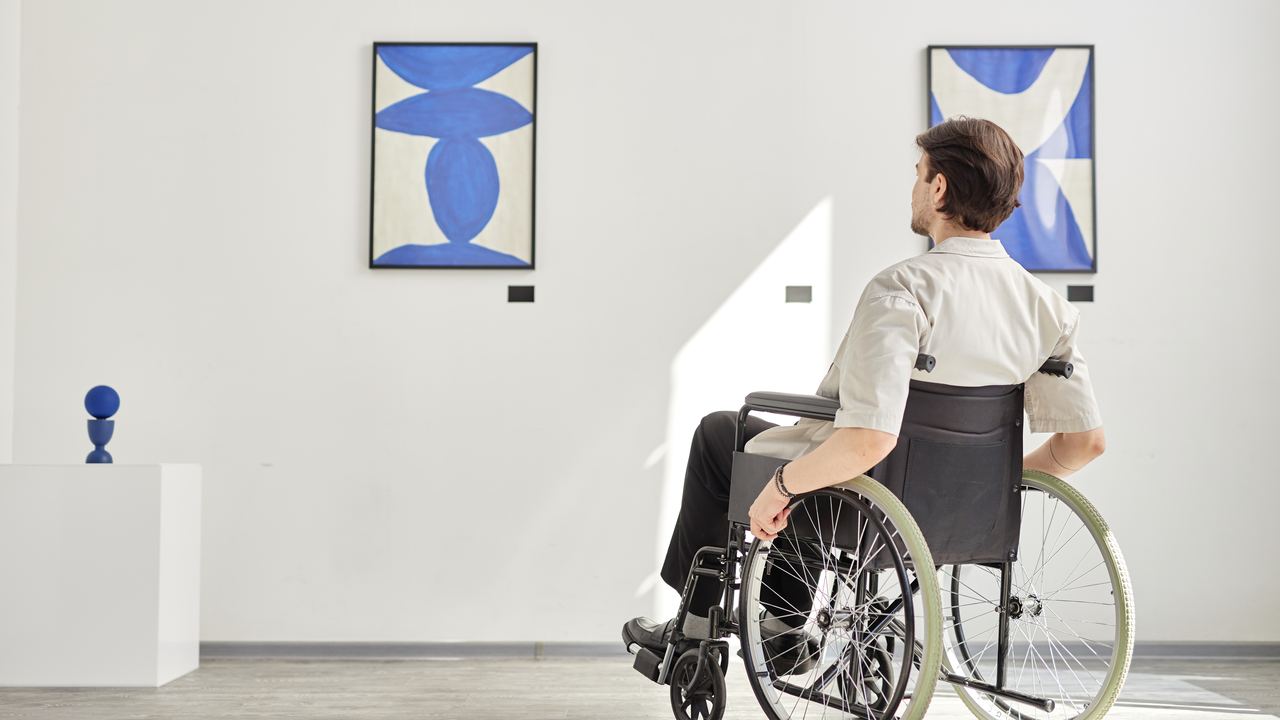
Is the Musée d'Orsay accessible? Yes, according to the museum: all exhibition spaces and all services (café, restaurant, bookstores, shops) are accessible to people with reduced mobility, thanks to elevators and ramps. During the renovations (from March 10, 2026, to the summer of 2028), visitors with disabilities will primarily enter through the Parvis Entrance. Admission is free for them and for one accompanying person of their choice, upon presentation of proof, without the need to book or go to the ticket counter. Wheelchairs and folding chairs are available free of charge at the cloakroom. This information was gathered on November 6, 2026, from the museum's accessibility pages.
dorsay.museum is an independent website, with no connection to the Musée d'Orsay: we make no decisions here; we simply organize the information that the museum publishes, using its own words when they are important. For any questions specific to you, the museum's accessibility service can be reached at accessibilite@musee-orsay.fr. The museum's website itself declares that it is "partially compliant" in terms of accessibility, and some pages date back to 2022.
How can people with disabilities access the Musée d'Orsay?
Visitors with disabilities and one accompanying person of their choice are entitled to free and priority admission, upon presentation of valid proof. The museum lists the following as acceptable proof: disability card, priority card, reserved parking card, mobility inclusion card, proof of receiving disability benefits for adults or supplementary disability allowance, or an equivalent foreign document. It is not necessary to book or go to the ticket counter: simply present the proof directly to the staff.
During the works, these visitors access the museum primarily through entrance 2, the Parvis, and staff will indicate the appropriate entrance if there is any doubt. If you are coming with more than one companion, the museum recommends booking additional tickets in advance to ensure that everyone can enter together. Groups from the disability and healthcare sectors, like all groups, are welcomed at the Parvis, by appointment; the exact entrance is specified on the museum's groups page. The complete list of both entrances is on the page about access and entrances, and other free admission options are explained with the first Sunday of the month.
Individuals with disabilities are not required to make a reservation or purchase a ticket (reservations are still possible and recommended). They should present their proof of disability to the staff at the main entrance, and their chosen companion can enter with them.
What's on offer: museum services based on your needs
| Need | What the museum offers | How to obtain it |
|---|---|---|
| Wheelchair or folding seat | Free rental service, available within the museum premises | Upon request at the coat check, and with presentation of identification; no advance reservations are possible |
| Museum navigation | Elevators, access ramps, automatic doors, priority access to elevators | On-site: A printed guide map is available free of charge at the reception desk |
| Walking with a cane | Cannes with attachments are permitted throughout the entire course | On site |
| Auditorium | 4 spaces for wheelchairs, magnetic induction loop available | View the "Orsay in Performance and Encounters" program |
| Visual impairment | Audio guide with audio description, free of charge | Audioguide service available upon presentation of valid identification |
| Visual impairment | "Image Interpreters" Service: A trained volunteer will guide you and describe the artworks, free of charge | Reservations are required at least 15 days in advance. Please find the contact information on the "Visual Impairment" page of the museum's website |
| Temporary exhibitions | Audio recordings of the text displayed in the meeting room (available via QR code), and large-print booklets | Information desk, ground floor, for inquiries about savings accounts |
| Hearing impairment | Magnetic induction loops are available at the ticket office, information desk, bookstore, and auditorium | Set the hearing aid to the "T" position |
| Hearing impairment | Induction neck loops for audio guides, free of charge | Available upon request at the audio guide counter |
| French Sign Language | Free video guides in French Sign Language (LSF) are available. Guided tours in LSF, led by a deaf speaker, are available for a fee | Audio guides: Available at the information desk, proof of purchase required; Tours: Museum schedule |
| Autism, neurodevelopmental disorders | Social scenarios, printable illustrations | Documents available for download on the museum's website |
| Intellectual disability | Access guide (easy to read and understand) | Document to download; please see the notes regarding the work below |
| Sensory hypersensitivity | Small blue bag: noise-canceling headphones, tinted sunglasses, stress-relieving items, complimentary | Available for immediate booking; cannot be reserved in advance |
Accessibility features: elevators, wheelchairs, seating, and accessible restrooms
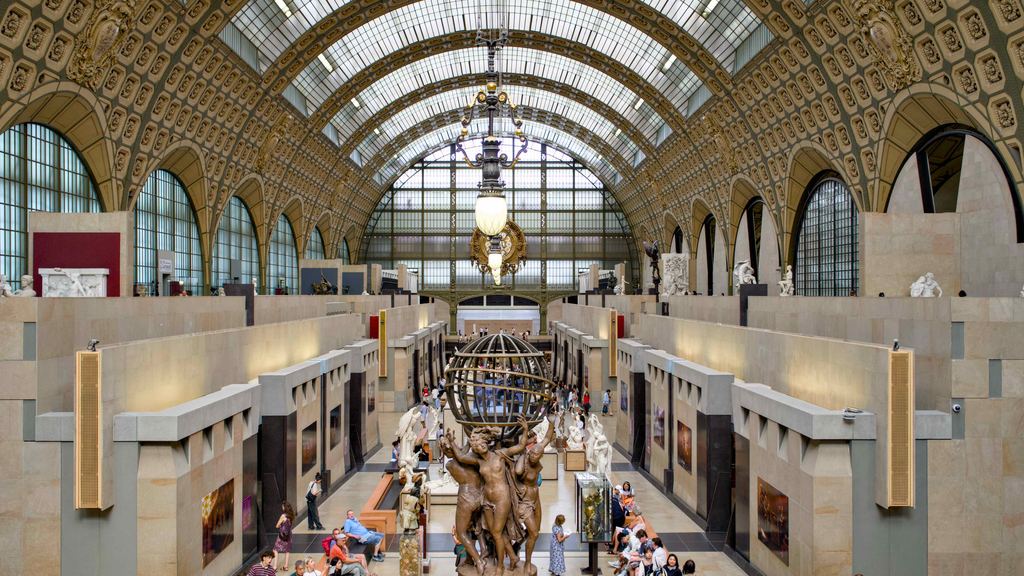
The museum's statement is clear: thanks to the elevators and ramps, "the entire museum route, including temporary exhibitions and commercial areas, is accessible to people with reduced mobility and to those with strollers." In addition, there are automatic doors, adapted restrooms ("many restrooms, some of which are adapted for people with disabilities"), and the rental of wheelchairs and folding seats: the cloakroom is located immediately to the right after the entrance control, and the rental is free, upon presentation of identification, and no reservation is possible.
Two safety rules apply. The regulations prohibit the use of escalators with a wheelchair or with a stroller, and using them in the wrong direction; elevators are available for this purpose, and the regulations (article 47) grant those concerned priority access to elevators. Canes with tips are permitted throughout the visit. People with reduced mobility can also participate in all tours of the museum's permanent collections and temporary exhibitions.
To arrange for drop-off, the museum indicates the quai Anatole-France, where taxis and specialized vehicles are dropped off and picked up. For parking, we do not publish any addresses for reserved spaces: two pages of the museum provide lists that do not match. The museum itself refers to the City of Paris's map of adapted parking spaces, available at handicap.paris.fr. The two parking lots mentioned by the museum are Carrousel du Louvre and Bac Montalembert.
The museum guide can be downloaded from the museum's website and is also available in a printed version, free of charge, at the information desk. It also indicates which rooms are closed for renovation, a detail that is important when planning your visit: see our page on the floor plans.
Visual impairment: audio description, volunteers, and booklets

Audio guide, trained volunteer staff, large-print texts
Visitors with visual impairments or blindness can borrow an audioguide with audio description free of charge at the Audioguide counter, upon presentation of proof. The museum recommends coming with a companion, and reminds visitors that both the person and their companion enter free of charge. Guide dogs and assistance dogs are welcome, as are dogs in training, although proof may be requested.
The Souffleurs d'Images service, created in collaboration with the Souffleurs de sens association, provides a trained volunteer to assist visitors by guiding them and describing the artworks in the permanent collections or temporary exhibitions. This service is free of charge, but reservations are mandatory, at least 15 days before the visit (contact information can be found on the museum's "Visual Impairment" page); the meeting location will be arranged with the volunteer.
For temporary exhibitions, the audio version of the exhibition texts can be found on the presentation page for each exhibition, or by scanning the QR code displayed at the entrance. Large-print booklets are also available upon request at the information desk, located on level 0. The museum also offers a family visit adapted for families with a member who has visual impairments, featuring tactile panels, audio descriptions, and material samples (for adults and children aged 6 to 12). The museum does not lend out optical aids, but it allows their use if reported to the security staff: the regulations, which prohibit binoculars and magnifying glasses, make an exception for visual impairments.
Hearing impairment and French Sign Language
Magnetic induction loops are installed at the ticket office, the information desk, and the bookstore, as well as in the auditorium, where hearing aids should be set to the T position. Audioguides can be equipped with induction neck loops, which are available free of charge upon request at the audioguide desk. During guided tours, the guides wear a microphone, and visitors wear a headset; the museum also provides induction neck loops free of charge at the reception desk.

Visual guides and tours in French Sign Language (LSF)
A portion of the audioguide content is available in LSF (French Sign Language). These videoguides are lent out free of charge at the audioguide counter, upon presentation of a valid form of identification. The museum also regularly offers paid guided tours in LSF, led by a deaf speaker: the dates and themes are listed in the calendar; tickets can be purchased on-site or online, and the tours depart from in front of the information desk. In the main temporary exhibitions, the exhibition texts are translated into LSF, and can be viewed online and via a QR code at the entrance. The artworks that are commented on in LSF are also available on the museum's YouTube channel.
Autism, intellectual disability, mental health: FALC (a social support program), "blue bag" (referring to a specific type of support)
Here, the essentials are prepared in advance. The booklet for accessing the museum (FALC) (easy to read and understand) describes the route by metro line 12 and the RER C; the museum recommends printing it single-sided for people with intellectual disabilities. However, it warns that, due to the ongoing work, the routes described may not be up-to-date: the booklet will be updated at the end of the construction. Read it for reference, and check the entrance to use on the construction updates page.
The social scenario is designed for individuals with autism spectrum disorder or other neurodevelopmental disorders: it outlines the main steps involved in visiting the museum. To create their own scenario, the museum provides all the illustrations to print online. The small blue bag contains sensory objects: noise-canceling headphones, tinted glasses, stress-relieving items; it is available for free, but cannot be reserved in advance.
The museum also offers inclusive family visits for families with a member who has an intellectual, cognitive, or psychological disability (adults and children aged 6 to 12). A trained mediator leads the group through the quieter areas; everyone is free to leave earlier or step away for a moment, and the map provided at the beginning of the visit helps to find the group again. "Relax" sessions, open to all audiences, regularly adapt the performances for people whose disability may lead to atypical behaviors. The museum does not reserve any "quiet" time slots, but it advises visiting when there are fewer people: on Wednesday mornings, on Friday mornings, or during evening hours on Thursdays. It also notes that there are more people in the central sculpture hall and on the Impressionist floor. To choose a day, see the page about visiting times.
Guided tours by third-party providers: five questions to ask before booking
Everything mentioned above applies to the museum and its own services. A visit sold by an independent operator, whether it's one of the group guided tours or a private tour that we offer, follows the rules of that operator; the museum is not responsible for them. These questions are ours, not those of the museum:
- Does the planned route use the lifts, or does it include stairs?
- How long do we remain debout, and is a folding seat provided in addition to those provided by the museum?
- Which entrance does the operator use, and is the meeting point accessible from the Parvis?
- Does the guide usually describe the artworks, or do they provide services with audiophones for people with hearing impairments?
- Does the booking confirmation indicate how to notify them of your situation, and can you cancel if the schedule doesn't work for you?
Group visits of seven people or more, excluding the person speaking, require the use of audio guides provided by the museum, and speaking is reserved for guides who hold the "guide-lecturer" card: the "How to choose your visit" page details these rules.
Frequently Asked Questions about Accessibility at the Musée d'Orsay
Is the Musée d'Orsay accessible to people in wheelchairs?
Yes: The museum indicates that the entire route, including temporary exhibitions and commercial areas, is accessible to people with reduced mobility, thanks to the elevators and ramps. Escalators are not permitted with a wheelchair.
Is it possible to borrow a wheelchair at the Musée d'Orsay?
Yes, free of charge, upon request at the cloakroom with a form of identification. It is not possible to reserve it in advance, and it remains within the museum premises. Folding chairs are also lent out under the same conditions.
What kind of entrance is available for people with mobility impairments?
During the works, please use the Entrée Parvis (entrance 2). The agents will indicate the appropriate entrance if you are unsure.
Does a companion or escort have to pay for admission?
No: A person with a disability and one accompanying person of their choice are admitted free of charge, upon presentation of proof. For other accompanying persons, the museum recommends booking tickets in advance.
Should you book a ticket in advance if you have a disability?
No. The museum specifies that it is not mandatory to book in advance or to go to the ticket counter (booking remains possible, and the museum recommends it for priority visitors): visitors should simply present their proof of eligibility directly to the staff.
Are guide dogs allowed?
Yes. Guide dogs and assistance dogs are welcome, as are dogs in training. Proof of status may be required.
Are there accessible restrooms available?
Yes: The museum has numerous restrooms, some of which are accessible to people with disabilities.
Is the museum accessible to people with autism?
The museum offers a social guide to visiting, including printable illustrations, a small blue sensory bag that is lent out for free, and an access booklet in Easy-to-Read French (FALC). It does not reserve time slots, but recommends visiting on Wednesday or Friday mornings, or on Thursday evenings, when it is less crowded.
Are there any tours available in French Sign Language?
Yes: paid tours in LSF with a deaf speaker are regularly offered, as well as free video guides in LSF available at the audioguide counter.
Where can I park using a parking permit?
The museum refers visitors to the City of Paris's map of accessible parking spaces (handicap.paris.fr). Its two pages provide different lists, and we do not include any specific addresses.
To continue preparation
Four neighboring pages, each covering a topic that this one does not.
Do you have a question that is specific to you?
The museum's accessibility department can be reached by email at accessibilite@musee-orsay.fr. Before your visit, please review the relevant information on the "Accessibility" page.
Data verified on . The services mentioned are listed on the accessibility pages of musee-orsay.fr and in the visitor regulations, as of November 6, 2026; some of the museum's pages date back to 2022. Politique éditoriale