
How long does it take to visit the Musée d'Orsay?
The museum is vast, but its sections are well separated by level: choosing a route means choosing levels. One hour is one level; two hours, two and a half levels; a half-day, all of them.
One-hour session: Level 5 only
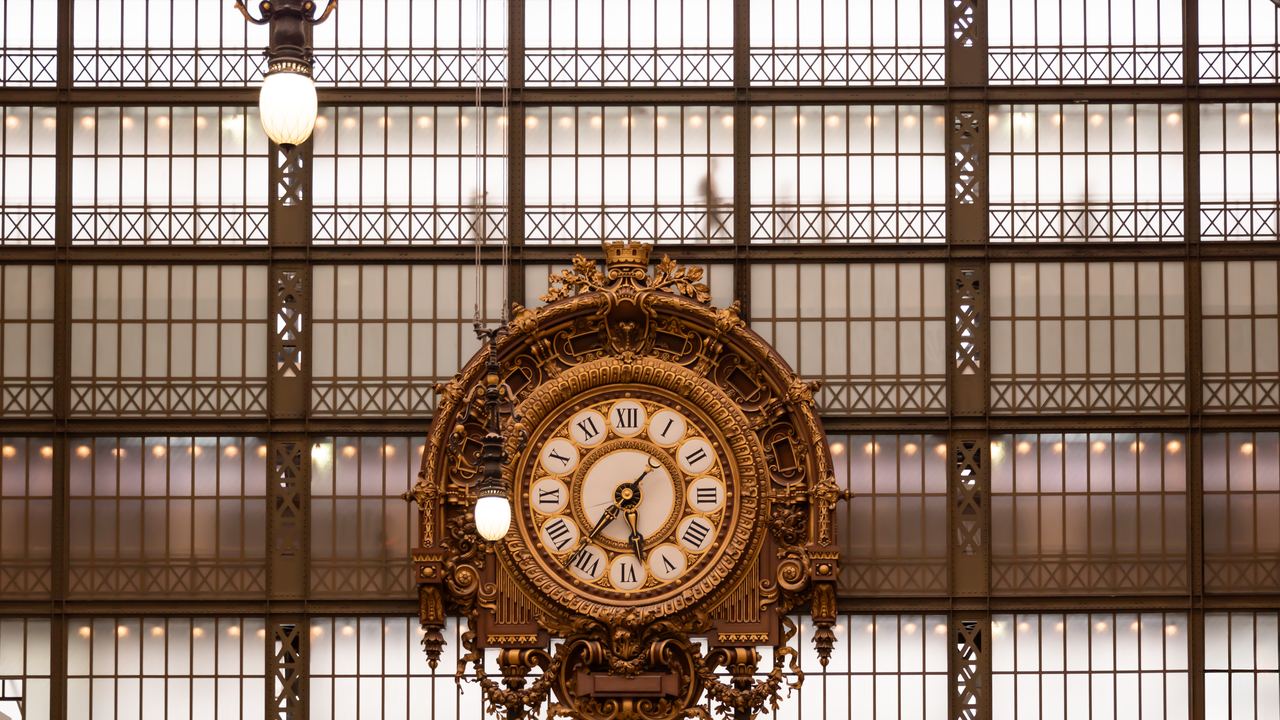
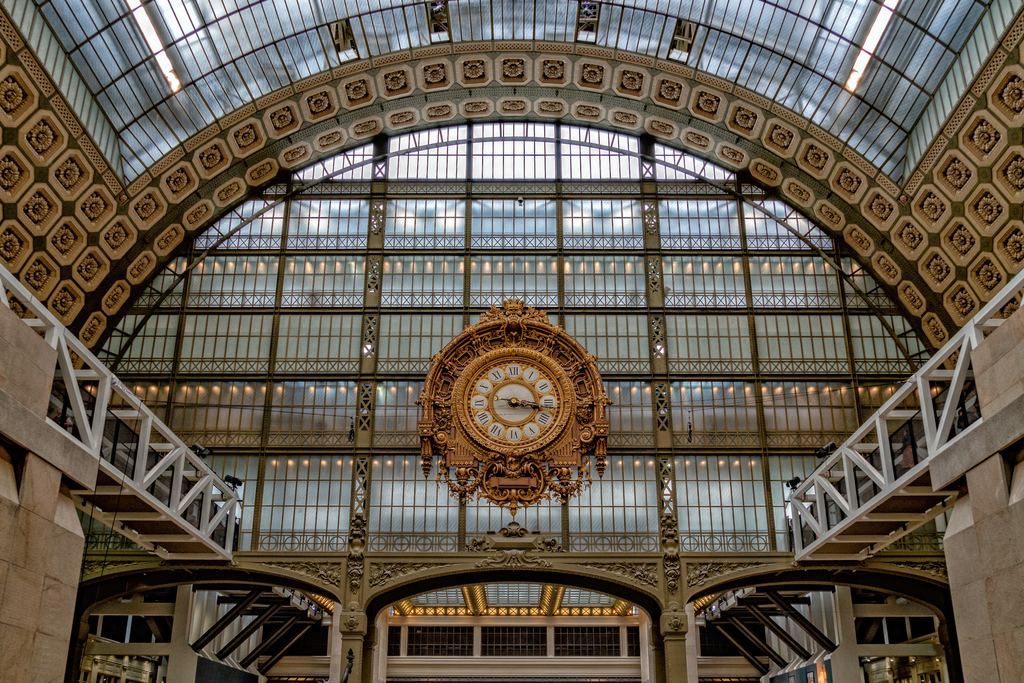
- The horloge (clock) on level 5, Seine side: the large clock from the old train station, with the "Salon de l'horloge" (Clock Salon), to help you locate the building before looking at the paintings.
- Claude Monet, Poppies (1873).
- Auguste Renoir, Bal du moulin de la Galette (1876).
- Edgar Degas, The Dance Class (between 1871 and 1874).
- Berthe Morisot, The Cradle (1872).
- Vincent van Gogh, The Starry Night (over the Rhône, 1888), and then The Church at Auvers-sur-Oise (1890).
- Georges Seurat, The Circus (1891), and Paul Gauguin, Women of Tahiti, or On the Beach (1891), if time permits.
The Starry Night will be lent to the Tokyo Metropolitan Art Museum from November 14, 2026, to March 28, 2027; the date of its return to display has not been announced.
Two-hour itinerary: three stages in chronological order
According to the sections of the summer 2026 exhibition guide (please note that the layout may change, and the exact location of a particular artwork cannot be guaranteed):
- Level 0: Gustave Courbet, A Burial at Ornans (1849-1850), Jean-François Millet, The Gleaners (1857), Édouard Manet, Olympia (1863).
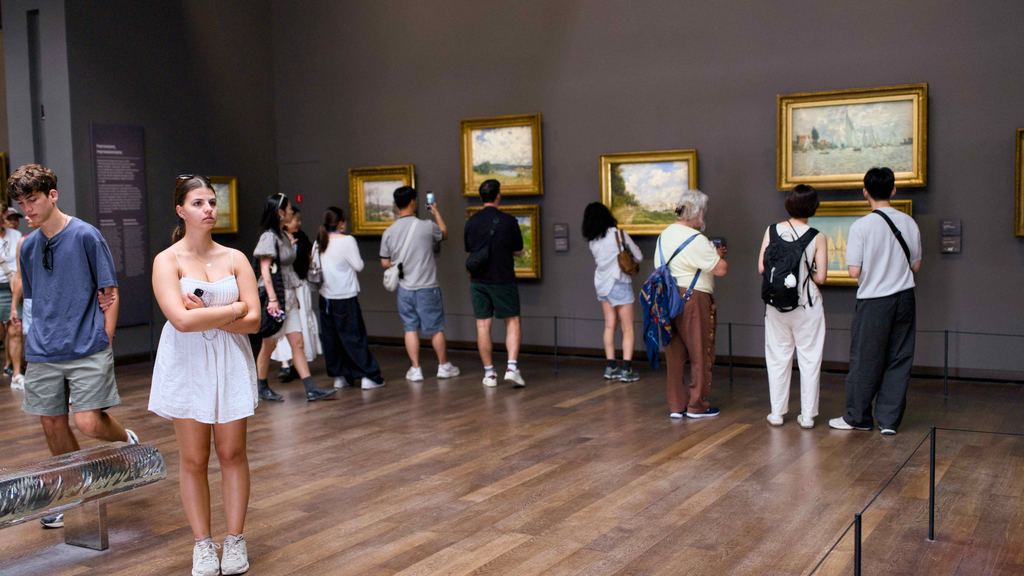
- Level 5: Monet, Poppies (1873); Renoir, Bal du moulin de la Galette (1876); Van Gogh, The Starry Night (over the Rhône, 1888); Seurat, The Circus (1891).
- Level 2: Henri de Toulouse-Lautrec, La Clownesse Cha-U-Kao (1895), and, in the section on symbolism, Gustave Moreau, Orphée (1865).
The Gleaners and The Starry Night are being lent to the Tokyo Metropolitan Art Museum from November 14, 2026, to March 28, 2027; the date of their return to the museum has not been announced.
Half-day: Suitable for all levels, with a break
The same reservations apply regarding the precise location of the artworks:
- Level 0: In addition to Courbet, Millet, and Manet, include Frédéric Bazille, Family Gathering (1867), and then the sculptures in the central walkway.
- Level 5: The complete short course, featuring Degas, In a Café, also known as The Absinthe (circa 1875-1876), Paul Cézanne, The Card Players (circa 1890-1895), and Gauguin, La Belle Angèle (1889).
- Take a break at the Café Campana, or on the Terrace during the season, when the weather permits.
- Level 2: The Nabis (Bonnard, Denis, Vallotton, Vuillard), Toulouse-Lautrec, Symbolism with Moreau, Orphée (1865), and Pierre Puvis de Chavannes, The Poor Fisherman (1881), the terraces of sculptures, and Art Nouveau.
- Pavillon Amont (levels 3 and 4 of the plan): Art Nouveau from Central and Northern Europe, if you still have the energy at the end.
Where should we start: the 5th floor or the ground floor?
A comparison of the three courses/paths
| Path | Duration | Levels | Steps | What you'll give up |
|---|---|---|---|---|
| Express | 1 hour | 5 | 6 to 7, less than ten minutes each | Before 1870, Level 2: Symbolism, sculptures, Amont pavilion |
| Balanced | 2 hours | 0.5, beginning of the 2nd [item/period/etc.] | 9 to 10 | Sculpture terraces, Art Nouveau, a section of Impressionist works |
| Complete | 3 to 4 hours | 0, 5, 2, Amont Pavilion | Approximately 20 minutes, including breaks | If the temporary exhibition interests you... |
What extends the visit without anyone noticing
- The security check at the entrance: the museum thanks its visitors for understanding the delay it causes, without providing an estimated duration.
- The cloakroom, which is free and self-service, is mandatory for large backpacks and carry-on suitcases up to 56 x 45 x 25 cm.
- The audioguide, during the renovation work, can be collected from the counter located at the top of the nave.
- The movement between levels: you don't move from one floor to another instantly; allow a few minutes each time.
- A temporary exhibition: the regulations stipulate that access to ground floor exhibitions is closed 45 minutes before the museum's closing time.
Before you go
Where are the levels being referred to?
The routes described above refer to levels, not specific rooms: the artworks are moved, and the floor plan changes with each season. To find out what's located behind each level number, how to move between levels, and where the elevators are, please refer to the floor plan page, which provides details for each level.
What is the duration, depending on the arrival time?
If you would prefer to have a guide for the entire two hours
A guided tour typically follows a route like this.
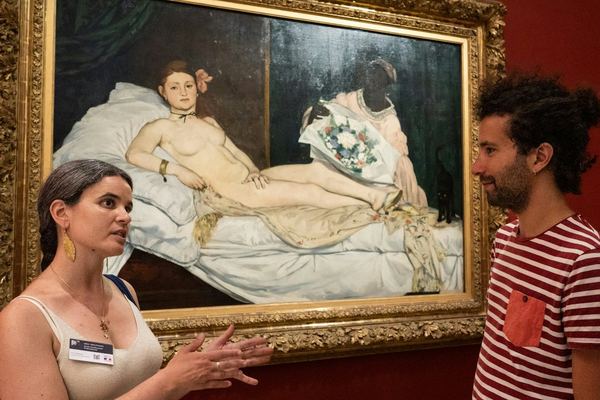
Admission ticket and a 2-hour guided group tour of the Musée d'Orsay
This package includes museum admission and a two-hour guided group tour focusing on the masterpieces of Manet, Monet, Renoir, and Van Gogh.
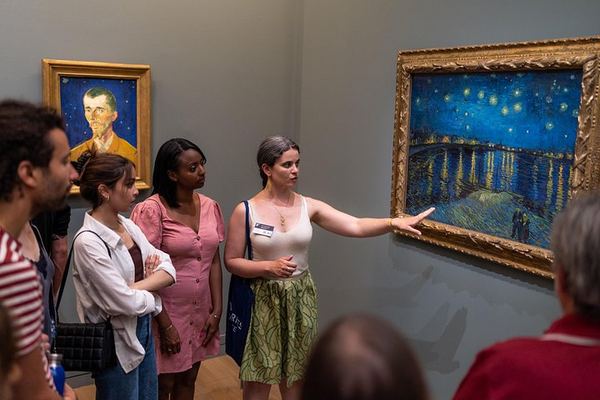
English-language tour of the Musée d'Orsay, lasting 1 hour and 45 minutes, in a small group with audio headsets
With headsets on, you follow an accredited art expert in English through the scandals of Impressionism and the lives of Monet, Manet, Renoir and Van Gogh.

From 2:00 PM to 2:30 PM, a private viewing of works ranging from Millet's "The Gleaners" to Van Gogh
Millet, Manet, Renoir, Van Gogh and Monet explained to six people at most, semi-private, in 2 to 2.5 hours. You skip the lines, and questions are welcome.
Ratings collected by Tiqets, Viator and Tripadvisor
Frequently asked questions about the duration of the visit
How long does it take to visit the Musée d'Orsay?
Allow approximately one hour for level 5 alone, two hours for a balanced experience, or three to four hours to see everything with a break. These are our estimates, not measured times.
Is it possible to see the highlights of the Musée d'Orsay in just one hour?
Yes, if your main interest is the Impressionists and Van Gogh, they are located on level 5. You will miss out on paintings from before 1870, as well as the works of the Nabis and Symbolist artists.
How long does it take to see just the Impressionist paintings?
Approximately one hour, including travel time. Beyond that, the time is spent on breaks and reading the informational panels, not on viewing additional artworks.
Where should we start: the 5th floor or the ground floor?
For one hour, you can directly advance to level 5. For two hours or more, the chronological order (0, then 5, then 2) tells the story better. The complete plan is on the plan page.
How early should you arrive before the scheduled departure time?
The museum requests that you arrive at least fifteen minutes before your scheduled time slot. Entry depends on your ticket: see the entrances.
Should the temporary exhibition be included in the calculation?
Yes: She requests her own time and access. According to the museum's visitor regulations, access to the temporary exhibitions on the ground floor is no longer permitted 45 minutes before the museum closes.
Is the Thursday evening opening sufficient for a two-hour visit?
Yes, if you arrive before 7 PM: the last entry is at 9 PM, and the rooms start closing at 9:15 PM.
Does an audio guide change the length of the visit?
It gets longer if you listen to every comment, and returning it is easy. The museum rents them out at the counter; compare with the guided tour in Choosing your tour.
Data verified on . Levels according to the summer 2026 guidelines; schedules and regulations as of November 6, 2026, as posted on the museum's website. Politique éditoriale