
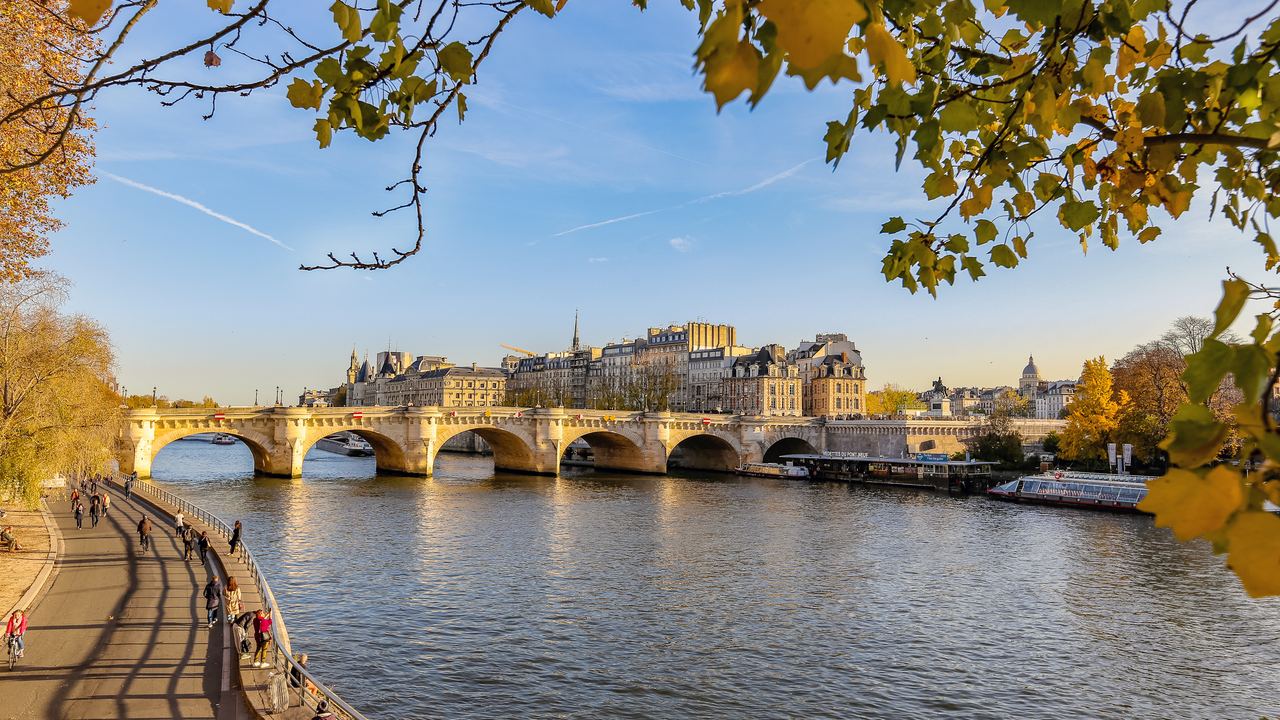
The Orsay paintings that depict a real location are distributed across three circles. Seven are located in Paris, from the Place du Carrousel to Montmartre. Seventeen are located in the Île-de-France region, from Argenteuil to Moret-sur-Loing. Nine come from other parts of France: Giverny, Rouen, Arles, Ornans. This page features thirty-three of them, one by one, with the depicted location, what remains of it, and how to get there by metro or train. Be careful of paintings that you think are at Orsay but are actually located elsewhere, starting with Rue de Paris, temps de pluie, which is in Chicago.
How we verified that these paintings actually belong to the Musée d'Orsay
The lists of "Orsay paintings" that are circulating mix everything up. Wikidata, for example, lists under Orsay paintings from the MNR (National Museums Recovery) series that are on deposit in other museums. We have excluded these. For the thirty-three paintings selected, we consulted the Joconde record from the Ministry of Culture, which indicates the location of storage ("Paris; Musée d'Orsay"), or the museum's own record. Both were reviewed for this page.
Two limitations. First, "conserved" does not mean "on display": the exhibition changes, and the museum itself specifies, on the information page for certain paintings, that the artwork is not currently on display. Please check the artwork's page before coming to see it. Secondly, identifying a location is different from attributing it to a museum: when the description does not mention the location, we write it down.
A location that a secondary source suggests is not a confirmed location. In the tables below, information originating from the museum or the Joconde database is presented as fact; the remaining information is attributed.
Paris within the city walls: seven museums within an hour's walk
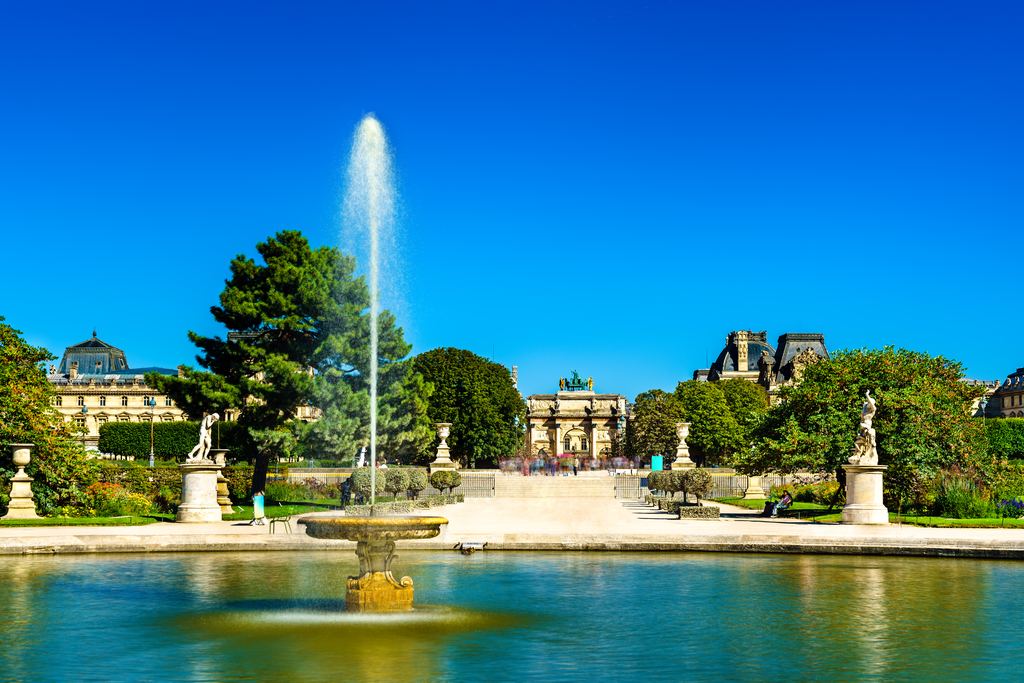
The closest one is the place du Carrousel, approximately 750 meters from the museum entrance: De Nittis himself inscribed "Ruins of the Tuileries in 1882" on the canvas. The palace no longer exists, but the square does. The walking distances from the painting below are calculated using OpenStreetMap, from the museum entrance to an approximate point at the location: they provide a general idea of the distance, not a specific route. If you only want to take one walk, take the shortest one, the one to the Carrousel.
| Artwork | Artist and date | Painted location | What remains | How to get there |
|---|---|---|---|---|
| Carousel Square (DO 2022 1) | Giuseppe De Nittis, 1882 | Place du Carrousel, 1st arrondissement | The painting is inscribed "Ruins of the Tuileries in 1882." The palace, which was burned down in 1871, is no longer there; however, the square, the Arc de Triomphe du Carrousel, and the wings of the Louvre are still visible. | Approximately 750 meters on foot from the museum entrance (calculated using OpenStreetMap). Metro lines 1 or 7, Palais-Royal–Musée du Louvre station. |
| Rue Montorgueil, Paris. Festival of June 30, 1878 (RF 1982 71) | Claude Monet, 1878 | Montorgueil Street, located between the 1st and 2nd arrondissements | The street exists and remains a commercial street. The flags were only there for the celebration. | Approximately 2 km on foot, 27 minutes (calculated using OpenStreetMap). Metro lines 4 (Étienne Marcel station) or 3 (Sentier station). |
| Saint-Lazare Station (RF 2775) | Claude Monet, 1877 | Saint-Lazare Station, 8th arrondissement | The station is still in operation. The current facade dates from 1885-1889, so it was built after the painting. The facades, roofs, waiting hall, and boarding hall have been listed as historical monuments since 1979 (according to the Mérimée database). | Approximately 2.6 km on foot, which is about 35 minutes (calculated using OpenStreetMap). Take Metro line 12, from Solférino to Saint-Lazare, with no changes required. |
| "In a café," says L'Absinthe (RF 1984) | Edgar Degas, c. 1875-1876 | Café de la Nouvelle Athènes, located on Place Pigalle, 9th arrondissement | According to Wikipedia, the café no longer exists; it was first a cabaret, and then a club called "New Moon." Degas painted the artwork in his studio, using models who posed as patrons of the café. | Approximately 3.1 km on foot, which is about 42 minutes (calculated using OpenStreetMap). Metro lines 2 or 12, Pigalle station. |
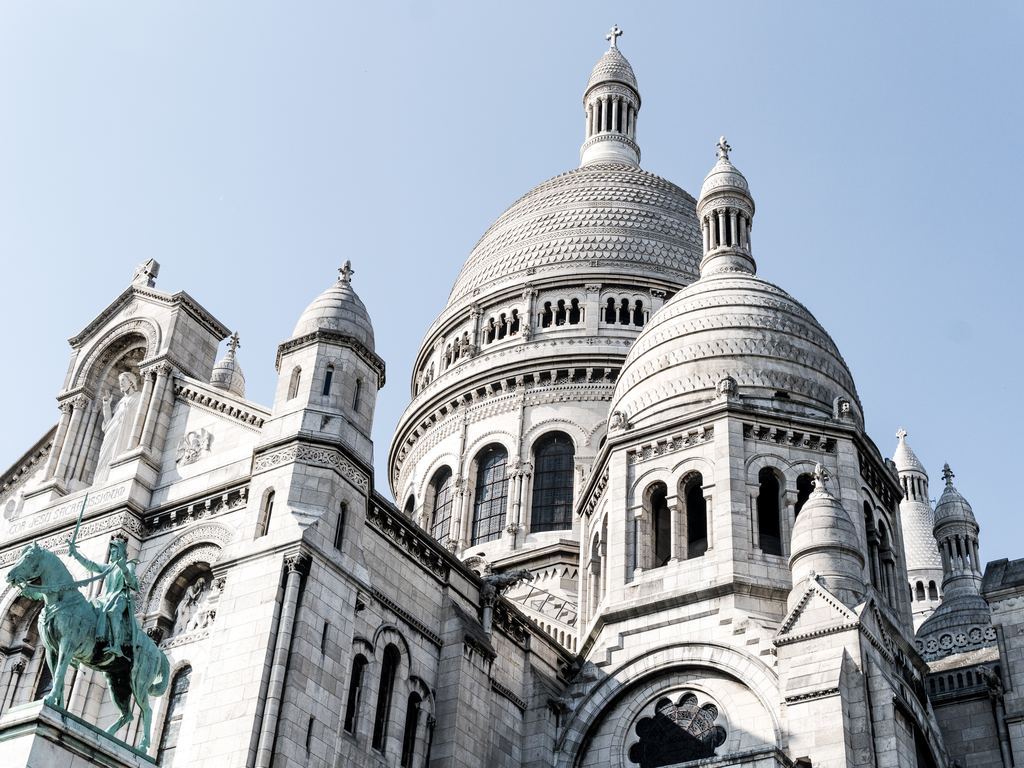
| Dance at Le Moulin de la Galette (RF 2739) | Auguste Renoir, 1876 | Montmartre, between Rue Lepic and Rue Girardon, 18th arrondissement | Two mills, the Blute-fin and the Radet, still stand. The public square that once lay between them has disappeared (Wikipedia). | Approximately 3.7 km on foot, which is about 50 minutes (calculated using OpenStreetMap). Metro lines 12, stations Lamarck–Caulaincourt or Abbesses. |
| Clichy Square, at night (RF 3121) | Eugène Carrière, 1899-1900 | Place de Clichy, located on the border of the 8th, 9th, 17th, and 18th arrondissements | The location exists. The museum's description indicates that Carrière lived on the second floor of number 5, which is likely where he painted it. | Approximately 3.3 km on foot, which is about 44 minutes (calculated using OpenStreetMap). Metro lines 2 or 13, Place de Clichy station. |
| The Saint-Martin Canal (RF 1701) | Alfred Sisley, 1872 | Canal Saint-Martin, 10th arrondissement | The canal exists; the exact viewpoint depicted in the painting is not established, and we are not providing that information. | Metro line 5, Jacques Bonsergent station, or République station. |
Certain Parisian locations remain off the map. No information is provided about where the garden of La Balançoire is located, nor which apartment features in Les Raboteurs de parquet, nor which tavern Van Gogh painted in 1886, nor which cabaret houses Jane Avril dansant. Guides often provide a street name; this is a hypothesis, not a fact.
Rue Montorgueil, June 30, 1878: a celebration that is often misdated
The title of Monet's painting provides the date, "Fête du 30 juin 1878", and it is sometimes read as "14 juillet" instead. These are not the same day. On June 30, 1878, during the World's Fair, the Republic celebrated "peace and work": the festivities began with the inauguration of the statue of the Republic by Clésinger at the Champ-de-Mars (Chantal Georgel, L'histoire par l'image; Wikipedia). July 14 only became an annual national holiday through the law of July 6, 1880. Monet recounts that he spotted a balcony in the decorated street and climbed up to it (cited by Georgel). According to the museum's record, the painting entered the Orsay collection in 1982 through donation.
The street is located in a market district: approximately 2 km on foot from the museum, which is twenty-seven minutes (according to OpenStreetMap). By metro, line 4 stops at Étienne Marcel.
Monet's Saint-Lazare Station: The same station, a different building
In 1877, Monet left Argenteuil to move to Paris, settling in the Nouvelle Athènes development, in the Saint-Georges district, near the train station (Wikipedia). He painted a series of works there. The one from Orsay (RF 2775) was exhibited at the third Impressionist exhibition, the same year, and later joined the national collections with the Caillebotte bequest, which was accepted in 1894 (Joconde record).
On site, the station is still operational, but the facade you see dates from 1885-1889: it didn't exist when Monet set up his easel. The facades, the roofs, the waiting hall, and the boarding hall are listed as historical monuments by decree of December 14, 1979; the facade on Rue de Rome has been listed since December 28, 1984 (Mérimée). The route is direct, via metro line 12: Solférino, then Saint-Lazare.
Le Moulin de la Galette: two windmills, no more dancing
Renoir painted "Sunday in Montmartre" in 1876 on a canvas measuring 131 × 175 cm. Between the streets of Lepic and Girardon, two windmills still existed: the Blute-fin to the west and the Radet to the east; the public dance hall located between them, owned by the Debray family of millers, has disappeared (Wikipedia). The painting, purchased in 1879 by Caillebotte, became part of the state collection with his bequest in 1894.
It's approximately 3.7 km on foot from the museum, or you can take metro line 12 to the Lamarck–Caulaincourt station.
Île-de-France: Seventeen different types of signage, from the RER lines to the suburban lines
This is where the lists of locations become blurred: the Land of the Impressionists stretches from Poissy to Moret. The routes below are based on the names of the stations and lines; we do not provide any schedules, which change from season to season. For a precise itinerary, the Île-de-France Mobilités route planner does the job.
| Artwork | Artist and date | Painted location | What remains | How to get there |
|---|---|---|---|---|
| Poppies (RF 1676) | Claude Monet, 1873 | Argenteuil (Val-d'Oise); the Joconde database lists Argenteuil as the location where the work was executed | No specific viewpoints are documented in the instructions. | Transilien J line, departing from Paris-Saint-Lazare station, stopping at Argenteuil station. |
| Regattas in Argenteuil (RF 2778) | Claude Monet, 1872 | The Seine in Argenteuil | The Seine River and its banks; the city has since been densely built up. | The route is the same as described above. |
| The Argenteuil Basin (RF 2010) | Claude Monet, circa 1872 | The Seine basin in Argenteuil | View of the Seine River with sailboats, as indicated in the description (sailboats, bridge, pedestrians). Exact location not verified. | Same route. |
| The Argenteuil Bridge (RF 1937 41) | Claude Monet, 1874 | The Argenteuil bridge, spanning the Seine River | We have not verified whether the current bridge is located in the same place as the one depicted in the painting. | Same route. |
| The Seine River in Argenteuil (France, 1951, painting number 14) | Auguste Renoir, 1873 | Road and riverbank of the Seine in Argenteuil | Riverbanks exist; there is no documented evidence to support this. | Same route. |
| Women in the garden (RF 2773) | Claude Monet, 1866 | Ville-d'Avray (Hauts-de-Seine); the description indicates that the work was created in Sèvres | A private garden, the location of which is not specified more precisely in the description. | Transilien L line, departing from Paris-Saint-Lazare station, serving the Sèvres–Ville-d'Avray station (also served by line U). |
| The Flood in Port-Marly (France, 2020) | Alfred Sisley, 1876 | Port-Marly (Yvelines), during the Seine River flood | Sisley painted several versions of the flood scene, one of which is in the Musée des Beaux-Arts in Rouen (Wikipedia). Reproductions of the painting are displayed along the route of the "Land of the Impressionists" trail. | There is no train station in Port-Marly; the nearest one is Marly-le-Roi, on line L (Wikipedia). |
| Snow in Louveciennes (France, 2022) | Alfred Sisley, 1878 | Louveciennes (Yvelines) | The village exists; however, the location of the path depicted in the painting is not specified in the accompanying notes. | Transilien L line, departing from Paris-Saint-Lazare station, stopping at Louveciennes station. |
| The island of Grande Jatte (RF 1937 63) | Alfred Sisley, 1873 | Île de la Jatte, located between Neuilly-sur-Seine and Levallois-Perret | The island has become a residential area; a bridge crosses it at Levallois (Wikipedia). | Metro Line 3, Pont de Levallois–Bécon station. |
| Red rooftops, village corner, winter scene (RF 2735) | Camille Pissarro, 1877 | Pontoise (Val-d'Oise) | Pissarro lived and painted in Pontoise; the description does not specify the exact location within the village. | Pontoise is served by the Transilien J (to Gare Saint-Lazare), the H (to Paris-Nord), and the RER C lines (according to Wikipedia). |
| The Church in Auvers-sur-Oise (RF 1951 42) | Vincent van Gogh, June 4th to 8th, 1890 | Notre-Dame-de-l'Assomption Church, Auvers-sur-Oise (Val-d'Oise) | The church is there. According to Wikipedia, it was listed as a historical monument in 1856, then delisted in 1874 after poorly executed renovations, and subsequently relisted; the current listing order dates from April 2, 1915 (Mérimée). | Take the Transilien train from Paris-Nord, with a change at Pontoise, Valmondois, or Saint-Ouen-l'Aumône. Wikipedia also mentions a direct train on certain days, but we haven't confirmed this information: it's best to check before you travel. |
| In the garden of Dr. Paul Gachet (RF 1954 15) | Vincent van Gogh, May 27, 1890 | Auvers-sur-Oise, Dr. Gachet's garden | The house where Dr. Gachet lived still exists in Auvers; it has been listed as a historical monument since 1991 (according to the Mérimée database). | The route is the same as described above. |
| The House of the Hanged Man (RF 1970) | Paul Cézanne, 1873 | Auvers-sur-Oise | We haven't checked what remains of the house. The painting was featured in the first Impressionist exhibition, in 1874. | The route is the same as the one to the church. |
| The Maincy Bridge (RF 1955 20) | Paul Cézanne, 1879 | Maincy (Seine-et-Marne), located near Vaux-le-Vicomte; the historical records referred to it as the "Mennecy bridge." | Nothing is verified on-site. | We have not verified a direct connection: please calculate the route on the Île-de-France Mobilités website. |
| "Le Déjeuner sur l'herbe" (French Radio, 1957, program 7; and French Radio, 1987, program 12) | Claude Monet, 1865-1866 | Chailly-en-Bière (Seine-et-Marne), located on the edge of the Fontainebleau forest | Monet cut the canvas in 1884, as it had been damaged by humidity (according to the Louvre's "Joconde" database). The Musée d'Orsay preserves two fragments of it. | No confirmed connection: please calculate the route on the Île-de-France Mobilités website. |
| The Turkeys (French Radio, 1944, No. 18) | Claude Monet, 1877 | Rottembourg Castle, Montgeron (Essonne) | Ernest Hoschedé commissioned it in 1876 for the grand salon of the château (as noted in the Joconde database). We have not verified what remains of the château. | RER D line, Montgeron–Crosne station (Wikipedia). |
| Moret Bridge (RF 1972 35) | Alfred Sisley, 1893 | Moret-sur-Loing (Seine-et-Marne): the bridge, the Loing river, and the church | Sisley settled in Moret in September 1882 and lived there until his death in 1899 (museum information). | Transilien R line, departing from Gare de Lyon station, serving the Moret–Veneux-les-Sablons station (Wikipedia). |

Argenteuil: Five paintings originating from a single residence
Monet settled in Argenteuil in December 1871 (Wikipedia). The Musée d'Orsay holds several of his works, including Les Coquelicots (The Poppies), Régates à Argenteuil (Regattas at Argenteuil), Le Bassin d’Argenteuil (The Basin of Argenteuil), and Le Pont d’Argenteuil (The Bridge of Argenteuil), to which is added La Seine à Argenteuil by Renoir. Three of these paintings were exhibited at the first two Impressionist exhibitions: Les Coquelicots in 1874, and Le Bassin and Le Pont in 1876 (Joconde database entries).
The Bridge of Argenteuil has another story. On the night of October 6, 2007, during the "White Night" event, vandals tore the canvas over ten centimeters; it has since been restored (Wikipedia). Don't expect to recognize the landscape: the city has been built around the riverbanks, which can be walked along in about an hour.
Auvers-sur-Oise: Van Gogh's final months
Van Gogh arrived in Auvers in May 1890, invited by Dr. Paul Gachet (Wikipedia), and there, according to Wikipedia, he painted 74 paintings in seventy days. On May 27th, he painted Gachet's garden; between June 4th and June 8th, he painted the church (Joconde notices). The latter entered the national collections in 1951, through a purchase in which a Canadian corporation and Paul Gachet Jr. participated. It is sometimes written that the church has been "listed since 1856." This is incomplete: listed in 1856, it was delisted in 1874 after clumsy restorations (Wikipedia), and then relisted by decree on April 2, 1915 (Mérimée).
Cézanne painted there before him, in 1873, The House of the Hanged Man, which is now at the Musée d'Orsay, and a view of the doctor Gachet's house, which is not there. The journey from Paris almost always requires a change; the precise details are shown in the table above.
Sisley, from the flood of Port-Marly to the banks of the Loing
Sisley lived in Seine-et-Oise starting in 1871. In 1880, he moved to Seine-et-Marne, and settled in Moret-sur-Loing in September 1882, where he remained until his death in 1899 (museum record). The Musée d'Orsay preserves four of these locations from his work: Port-Marly (1876), Louveciennes (1878), la Grande Jatte (1873), and Moret (1893).
The flood of 1876 gives its power to the first one: the Seine overflowed its banks, and the village was under water (Wikipedia). Sisley painted several versions of it, and The Flood at Port-Marly from the Orsay Museum (RF 2020) entered the collection in 1911 as a donation; the painting was exhibited at the second Impressionist exhibition, in 1876 (Joconde description).
Elsewhere in France: Nine artworks that require a train ticket
Beyond the Île-de-France region, travel time needs to be factored in. For these nine routes, we do not provide specific travel times, as they depend on the chosen connection. Please note only the departure station: Gare Saint-Lazare for Normandy, Gare de Lyon for Provence, and Montparnasse for Bordeaux.
| Artwork | Artist and date | Painted location | What remains | How to get there |
|---|---|---|---|---|
| The Artist's Garden at Giverny (RF 1983 6) | Claude Monet, 1900 | Giverny (Eure, Normandy) | Monet's house and gardens are open to visitors (Claude Monet Foundation). | Take the train from Paris-Saint-Lazare station to Vernon, and then travel a few kilometers to reach the village. |
| The Rouen Cathedral. The portal, bathed in the morning sun; a blue harmony (RF 2000) | Claude Monet, February-April 1893 | Facade of Notre-Dame Cathedral, Rouen (Seine-Maritime) | The facade is there. The Musée d'Orsay preserves five paintings from that series. | Train from Paris-Saint-Lazare station to Rouen-Rive-Droite station. |
| Port-en-Bessin, outer harbor, high tide (RF 1952 1) | Georges Seurat, 1888 | Port-en-Bessin-Huppain (Calvados) | The fishing port exists; the description depicts a view taken from above, showing the cliffs. | There is no train station at the port; the nearest one is in Bayeux, followed by a local train journey. |
| The Port of Bordeaux (RF 2716) | Eugène Boudin, 1874 | Quays of the Garonne River, Bordeaux (Gironde) | The river and the city are there; the description doesn't offer a perspective. | High-speed train (TGV) from Paris-Montparnasse to Bordeaux-Saint-Jean. |
| Mount Sainte-Victoire (RF 1969 30) | Paul Cézanne, circa 1890 | Aix-en-Provence (Bouches-du-Rhône) | The mountains are visible from Aix; however, the museum's information doesn't specify the exact location where Cézanne set up his easel. | High-speed train (TGV) from Paris Gare de Lyon to Aix-en-Provence. |
| The Starry Night (RF 1975 19) | Vincent van Gogh, 1888 | Arles, located on the banks of the Rhône River | The Rhône River still flows in Arles. The painting entered the national collections in 1975 as a donation with a reserved right of use, and in 1995 it was acquired by the Musée d'Orsay (museum record). | Arles station, accessible by high-speed TGV or regional TER trains from the southeast of France. |
| The Dance Studio in Arles (RF 1950 9) | Vincent van Gogh, 1888 | A traditional Arles dance | The instructions do not specify the room: we are unable to locate it. | Arles train station. |
| The Alyscamps (RF 1938 47) | Paul Gauguin, 1888 | Alyscamps Avenue, Arles | The Alyscamps necropolis exists and is open to visitors. | Arles train station. |
| A funeral in Ornans (RF 325) | Gustave Courbet, 1849-1850 | Ornans (Doubs) | The village where Courbet was born, and where the Courbet Museum is located. | There is no train station in Ornans; you must travel there from Besançon. |
Which paintings are believed to be at the Musée d'Orsay, but are actually located elsewhere?
Eight misconceptions constantly arise, and most can be resolved in a single sentence. A painting is not at the Musée d'Orsay simply because its painter is, nor because it depicts Paris, nor because it is part of a famous series. The Chambre de Van Gogh is a special case: the Musée d'Orsay does indeed have a version, but it was painted in Saint-Rémy in 1889, not in Arles.
| Table | Where it is | Why do people believe in it at the Musée d'Orsay? |
|---|---|---|
| Paris Street, Rainy Day (Caillebotte) | Art Institute of Chicago | Caillebotte's paintings are at the Musée d'Orsay (including "The Floor Scrapers" and "Roofs Under Snow"), and the subject matter is Parisian. |
| The Bridge of Europe (Caillebotte) | Petit Palais, Museum of Modern Art, Geneva (a study conducted in Rennes) | The same artist, and the Saint-Lazare train station district that Monet painted. |
| A Sunday afternoon on the island of La Grande Jatte (Seurat) | Art Institute of Chicago | The Musée d'Orsay has Seurat's "Circus" and a "Grande Jatte" by Sisley, another painter, another canvas. |
| The Starry Night, Saint-Rémy, 1889 (Van Gogh) | MoMA, New York | The Musée d'Orsay has a "Starry Night" from 1888, painted in Arles on the Rhône: another painting, another sky. |
| Van Gogh's Room in Arles | The Musée d'Orsay holds one version, painted in Saint-Rémy in 1889 (the location of its creation, according to the Louvre's online catalogue) | The title says "Arles," and the room depicted is indeed from Arles, but this particular painting was not painted in Arles. |
| Impression, Sunrise (Monet) | Musée Marmottan Monet, Paris | This is the painting that gave its name to the movement, and it is believed to be in the Musée des Impressionnistes. |
| Saint-Lazare Station, arrival of a train (Monet) | Fogg Art Museum, Harvard, according to Wikidata | The Musée d'Orsay also possesses another painting from the same series, with the inventory number RF 2775. |
| The Dance at the Moulin Rouge (by Toulouse-Lautrec, 1890) | Philadelphia Museum of Art, according to Wikidata | The Musée d'Orsay does indeed possess a "Dance at the Moulin Rouge" (RF 2826 A), but it's a different painting: a 1895 canvas depicting a scene from La Goulue's cabaret, featuring Valentin le Désossé. |
A point of confusion deserves attention: The Starry Night. The one at the Musée d'Orsay (RF 1975 19) dates from 1888; it was painted in Arles, on the banks of the Rhône. The painting that the whole world knows, with the cypresses and the village under the swirling sky, is from 1889, painted in Saint-Rémy, and it is at the MoMA.
"The Starry Night" by Van Gogh, currently held at the Musée d'Orsay, will be loaned to the Tokyo Metropolitan Art Museum from November 14, 2026, to March 28, 2027; the date of its return to the Musée d'Orsay has not yet been announced.
Frequently Asked Questions about the Locations Depicted
Which paintings in the Musée d'Orsay were painted in Paris?
Seven paintings are featured here: The Carousel Square, Montorgueil Street, Saint-Lazare Station, The Absinthe, Bal du moulin de la Galette, Place Clichy, at night, and The Canal Saint-Martin. The location of each is given in the first table on the page.
Is it possible to visit the places that Monet painted in Argenteuil?
You can still visit the location: the banks of the Seine still exist, and the Transilien J line connects Paris-Saint-Lazare station to Argenteuil station. However, the landscape has changed, as the city has developed around it. No information available indicates the exact viewpoint from which these paintings were created.
How do I get to Auvers-sur-Oise from Paris?
From Paris-Nord, Paris-Saint-Lazare, or the RER C line, you generally need to change trains at Pontoise, Valmondois, or Saint-Ouen-l'Aumône. Wikipedia also mentions a direct train from Gare du Nord at certain times, which we were unable to confirm on the SNCF website. Please check this before you travel.
Is "Rainy Day on the Rue de Paris" currently on display at the Musée d'Orsay?
No. The Caillebotte painting is at the Art Institute of Chicago. The Musée d'Orsay holds other works by the same painter, including The Floor Scrapers.
Is Seurat's "A Sunday on La Grande Jatte" located at the Musée d'Orsay?
No, it is at the Art Institute of Chicago. The Musée d'Orsay has Seurat's Le Cirque, and a L'Île de la Grande Jatte by Sisley, which is another painting.
Is the "Starry Night" painting at the Musée d'Orsay the same one as the "Starry Night" painted in Saint-Rémy?
No. The one at the Musée d'Orsay is from 1888 and was painted in Arles, on the Rhône river. The one from Saint-Rémy, from 1889, is at the MoMA in New York.
Are all of these paintings on display in the gallery?
Not necessarily. They are stored at the Orsay Museum, but the exhibits change, and some works are in storage. The page for each artwork on the museum's website indicates whether it is currently on display.
Where is "Impression, Sunrise" located?
At the Marmottan Monet Museum, in Paris, and not at Orsay. See our page on Orsay, Louvre, Orangerie, or Marmottan.
Learn more
Museum masterpieces
More than sixty works, along with their inventory numbers and the manner in which they were acquired by the museum.
The eight Impressionist exhibitions
Where and when were these paintings first exhibited?
Exploring the museum district on foot
The Legion of Honor, the Voltaire Quay, and the Tuileries Garden, all measured on foot.
View these tables with
Guided tours of the Musée d'Orsay and of Paris are offered by third-party providers. These are listed on a comparison page.
Data verified on . Storage locations: details available in the Joconde database and in the Musée d'Orsay's records. Distances: calculated using OpenStreetMap. Politique éditoriale