
Mary Cassatt: The Independent Woman
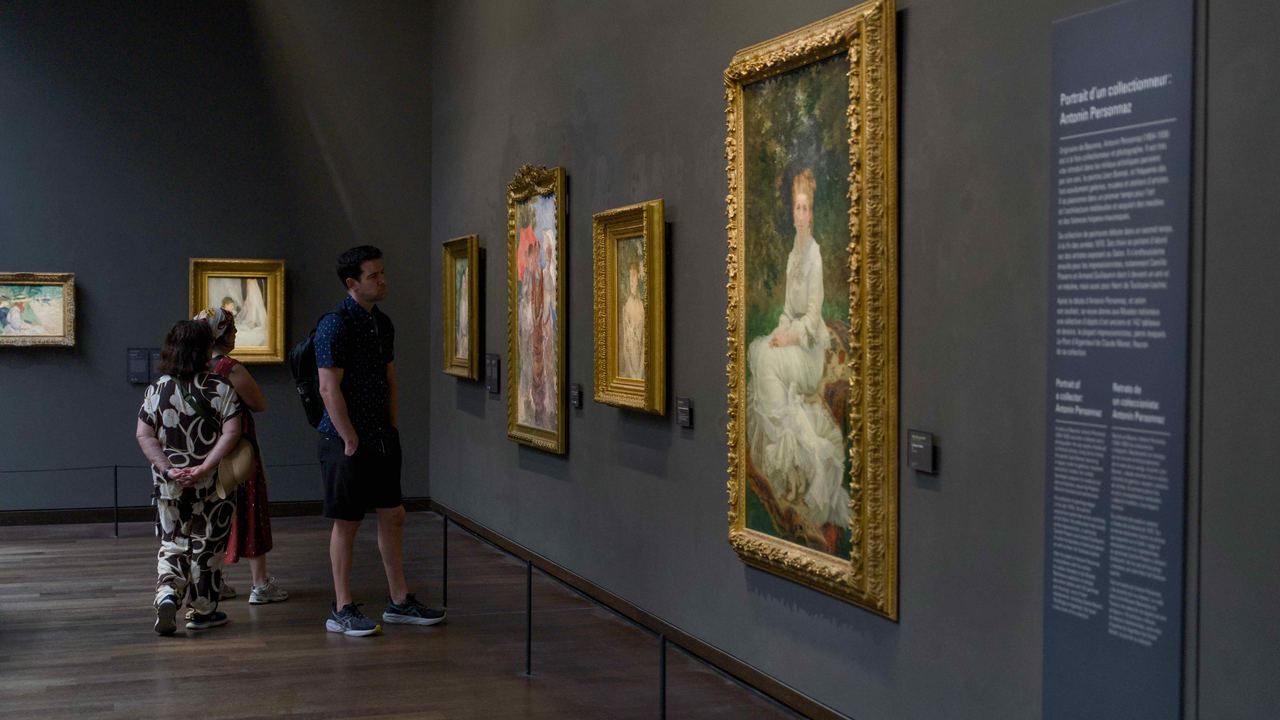
To commemorate the centenary of Mary Cassatt's death (1844-1926), the Musée d'Orsay is bringing together nearly eighty paintings, pastels, and prints that span her entire career. Unpublished letters and recently studied sources accompany loans from public and private collections in Europe, as well as American works rarely exhibited outside the United States. The artist's independence is the central theme that guides the chronological and thematic exhibition.
Cassatt identified as American, even though she lived for six decades in France. Her early works and portraits of loved ones reveal the importance of her European travels, her knowledge of the Old Masters, and her family background. She established her own studio, paid her models, and built a professional career in a predominantly male environment, which was also marked by nationalism.
Her paintings, whether depicting women in salons, at the theater, or in their homes, offer a glimpse into modern life. At Degas' invitation, she participated in four Impressionist exhibitions starting in 1879. The exhibition traces her contribution to the movement and then explores her commercial activities: commissioned portraits, scenes of mothers and children, and advice given to American collectors who helped to spread Impressionism in the United States.
In the early 1890s, his income allowed him to purchase a château in the Oise region. The estate grounds became the setting for numerous scenes featuring women and children. The commission for "Modern Woman" for the Woman's Building at the 1893 World's Columbian Exposition in Chicago marked another significant milestone. This 4-meter by 18-meter backdrop is now lost, but a digital reconstruction is available in a film, along with pastels and prints related to the project.
The ten color prints shed light on her technical research and her ideas about women's education. The exhibition concludes with her commitment to women's suffrage: in 1915, together with Louisine Havemeyer, Cassatt organized an exhibition in New York to support women's right to vote. Several paintings presented on that occasion are now on display at the Musée d'Orsay.
The museum is partnering with Caroline Corbeau-Parsons and Anne Robbins for the Paris section, Sarah Moulden from the National Portrait Gallery for the London section, and Erica Hirshler from the Museum of Fine Arts in Boston. This exhibition is part of the museum's celebrations for its fortieth anniversary.